 Pin it
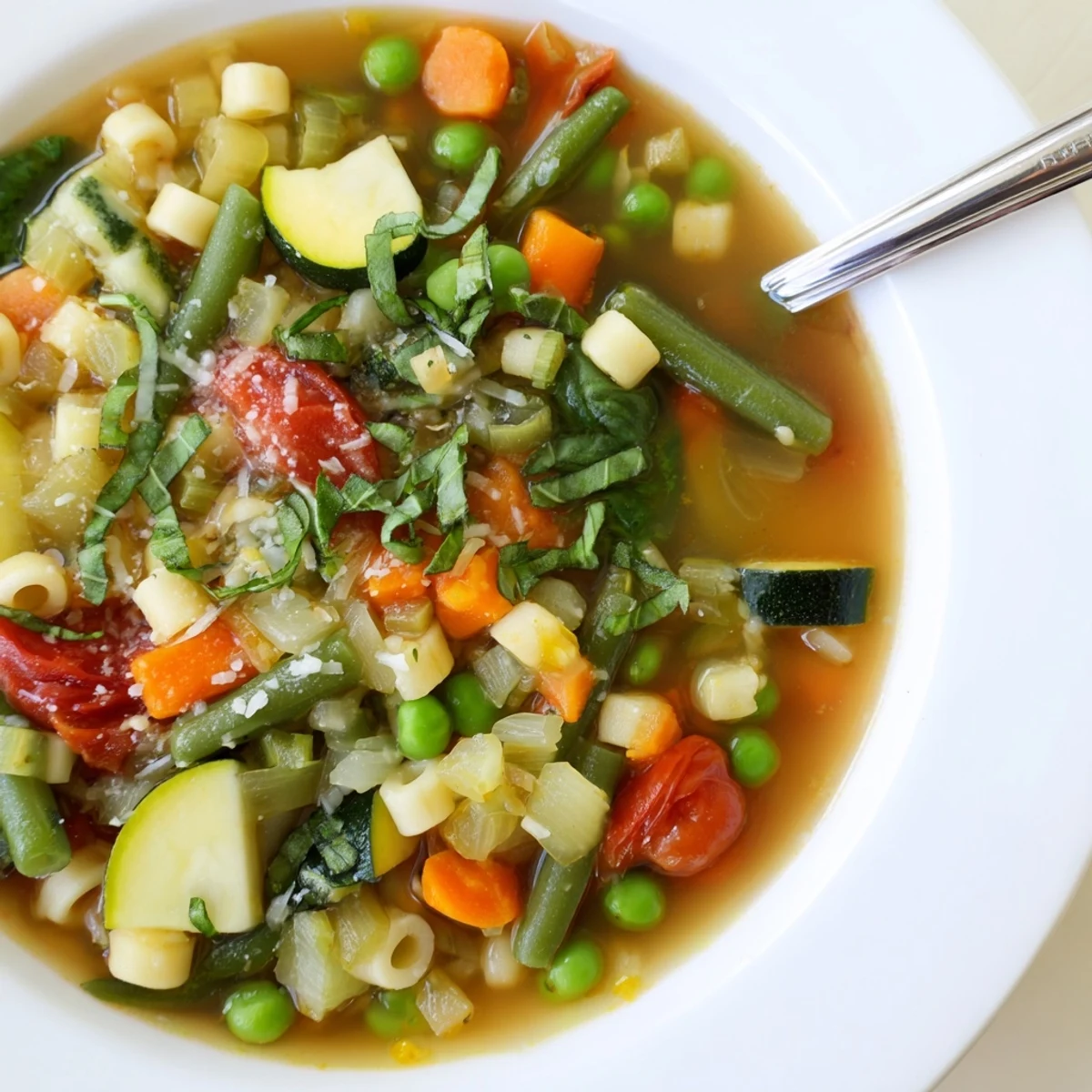
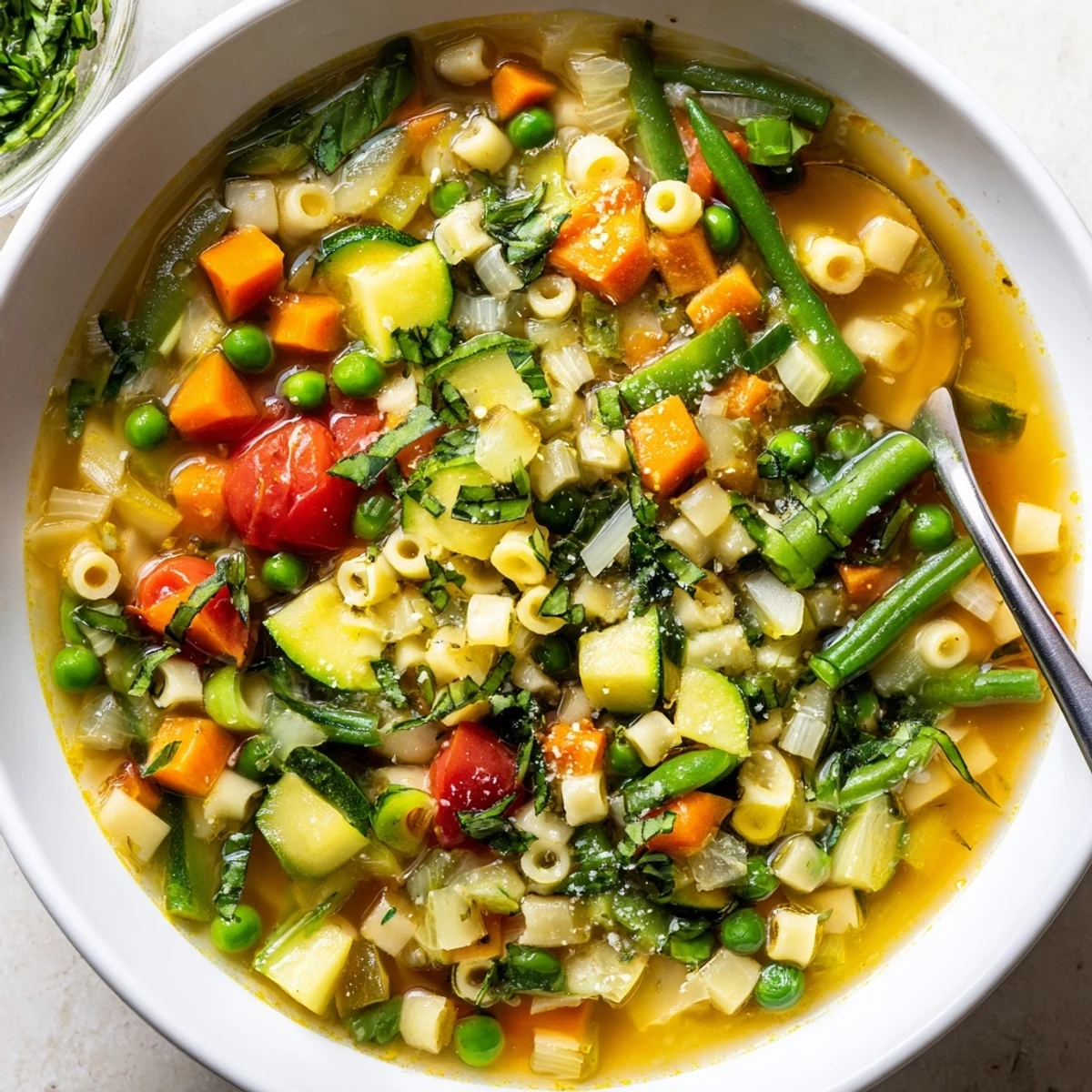
 This vibrant spring minestrone begins by sautéing onion and garlic, then building flavor with carrots, celery, zucchini, green beans and cherry tomatoes in a gentle vegetable broth. Add small pasta and peas, simmer until al dente, then fold in spinach and fresh herbs. Finish with a drizzle of olive oil and grated Parmesan for a bright, nourishing meal in about 50 minutes.
If you had visited my kitchen last April, you'd have found windows wide open, breezes carrying in garden scents, and a pot of spring minestrone bubbling away. The recipe was a last-minute inspiration after I saw the first green beans and baby spinach appear at our local market. There was something almost playful about tossing in handfuls of bright vegetables and letting their colors swirl with tiny pasta. Watching everything come together, it felt like finding an edible celebration of spring’s arrival.
Sometime last year, I made a big batch for friends visiting from out of town. We sipped wine, sliced bread, and someone kept stealing tastes straight from the pot—none of us could resist the savory broth and soft, colorful veggies. The kitchen was full of chatter and steam, and I remember feeling like dinner cooked itself.
Ingredients
- Olive oil: The foundation for coaxing out the sweetness of onions and garlic—I’ve learned a gentle sizzle is better than a scorching pan.
- Yellow onion: Sweet and aromatic, makes the broth base taste just right, so chop it finely for even cooking.
- Garlic: Adds warmth and depth; pressing or mincing ensures it melts into the soup.
- Carrots & Celery: This classic pair adds subtle sweetness and crunch, so dice them similar in size for a pleasing texture.
- Zucchini: I love how zucchini soaks up all the broth flavors without overpowering the soup.
- Shelled peas: Burst with freshness—if using frozen, add them straight in, no need to thaw.
- Green beans: Their snap signals spring; trim and cut evenly, it really makes a difference.
- Baby spinach: Wilts right at the end, keeping its vibrant green bite.
- Cherry tomatoes: Their tangy sweetness balances the mild broth; halving helps them release juices quickly.
- Vegetable broth: Use a good quality one—it’s the soul of this soup.
- Small pasta: Ditalini or orzo nestle alongside veggies with every spoonful; cook until just al dente.
- Salt & black pepper: Season gradually, tasting as you go for full flavor.
- Red pepper flakes: Optional, but I love a tiny tingle of heat (just a pinch does wonders).
- Fresh basil, parsley & dill: These herbs scream spring—add right at the end for fragrance.
- Parmesan cheese: For a finishing flourish—grate fresh over hot soup so it melts in.
- Extra virgin olive oil: That extra drizzle before serving tastes luxurious.
Instructions
- Get your pot ready:
- Pour the olive oil into a large soup pot and set over medium heat. When the oil shimmers, add the chopped onion and garlic, stirring until their aroma fills the air—about 3 minutes, just until softened.
- Build the base:
- Tip in the diced carrots and celery. Sauté for another 5 minutes, letting the veggies sizzle and mellow, turning ever so slightly golden.
- Add vibrant veggies:
- Now stir in zucchini, green beans, and cherry tomatoes. The colors will pop as you mix, and after about 2–3 minutes, you'll smell the tomatoes starting to sweeten.
- Broth time:
- Pour in the vegetable broth—it’ll steam up beautifully. Bring the mixture to a gentle boil, listening for the simmering bubble.
- Pasta & peas join:
- Drop in the small pasta and shelled peas. Simmer uncovered 8–10 minutes, just until the pasta softens and peas turn bright green.
- Add spinach and herbs:
- Stir in baby spinach, basil, parsley, and dill (if using). The greens wilt almost instantly; then season generously with salt, pepper, and red pepper flakes if you like spice.
- Serve and garnish:
- Ladle the soup into bowls. Top each portion with freshly grated Parmesan and a drizzle of olive oil—don’t forget a shower of extra herbs for a fragrant finish.
 Pin it
 The first time I made this for just myself, I remember blowing on each steaming spoonful, savoring something so colorful and full of life it almost seemed to glow. There is a quiet pride in sitting down with a bowl that feels just a little special, even on a regular weeknight.
Vegetable Choices Change Everything
I’ve swapped in asparagus, baby kale, or fava beans whenever the market inspired me—spring minestrone welcomes whatever you have. Sometimes I’ll add a can of cannellini beans if I want a heartier meal; it always works.
About That Pasta Trick
One trick learned after a few soggy leftovers: boil the small pasta separately and stir it into bowls just before serving if you want to keep your soup brothy. This keeps textures perfect, especially the next day.
Finishing Touches Bring It Together
Don’t be shy with that sprinkle of Parmesan or a swirl of olive oil—simple garnishes really make each serving restaurant-worthy. I keep extra herbs on the table because there’s something joyful about adding a little more green, right at the end.
- If you’re going vegan, try a sprinkle of nutritional yeast instead of cheese.
- Crusty bread is practically mandatory for dunking in the fragrant broth.
- Leftovers taste even brighter with a fresh splash of lemon juice before reheating.
 Pin it
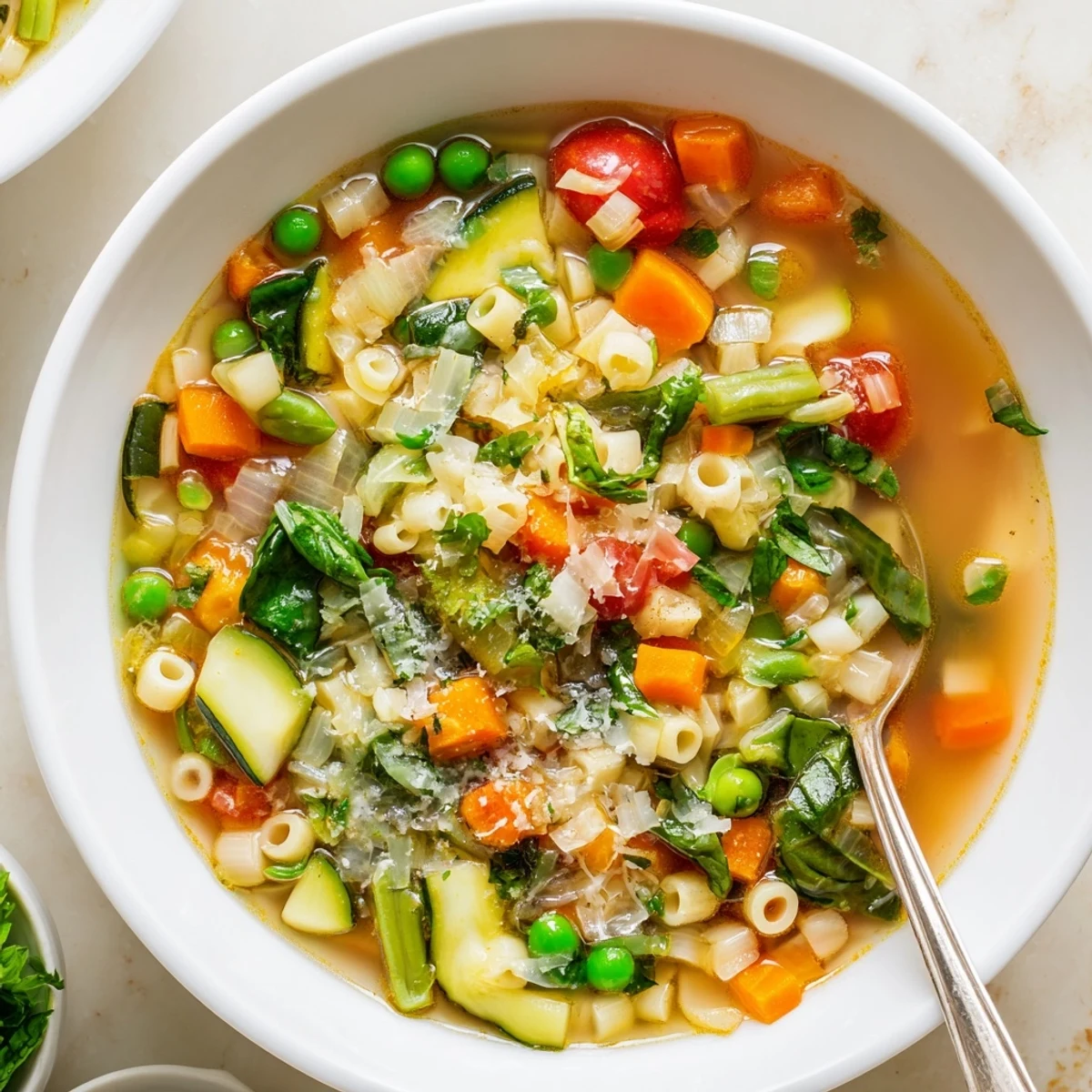
 This minestrone brings all the lightness of spring straight into your kitchen—and honestly, it impresses even on quiet nights in. I hope you’ll find the cooking just as joyful as the first bite.
Recipe FAQs
- → Which pasta works best?
-
Small shapes such as ditalini or orzo hold up well in the broth and blend with the vegetables. If substituting, choose short pasta to maintain texture.
- → How can I make it vegan?
-
Omit the Parmesan or swap it for a plant-based grated cheese, and ensure the broth is vegetable-based. A drizzle of good olive oil adds richness without dairy.
- → Can I freeze the soup?
-
Freeze the broth and vegetables before adding pasta and spinach to avoid a mushy texture. Store up to 3 months; reheat gently and cook pasta fresh or add cooked pasta when serving.
- → How do I keep vegetables bright and tender?
-
Add delicate greens and tender vegetables toward the end of simmering, and avoid overcooking. Brief simmering preserves color and a slight bite.
- → What are good protein additions?
-
Stir in canned cannellini beans or chickpeas for extra protein and heartiness, or add cooked white beans just before serving to heat through without breaking down.
- → How to make it gluten-free?
-
Use gluten-free small pasta or substitute with cooked rice or quinoa. Also check the vegetable broth label to ensure it contains no gluten-derived ingredients.