 Pin it
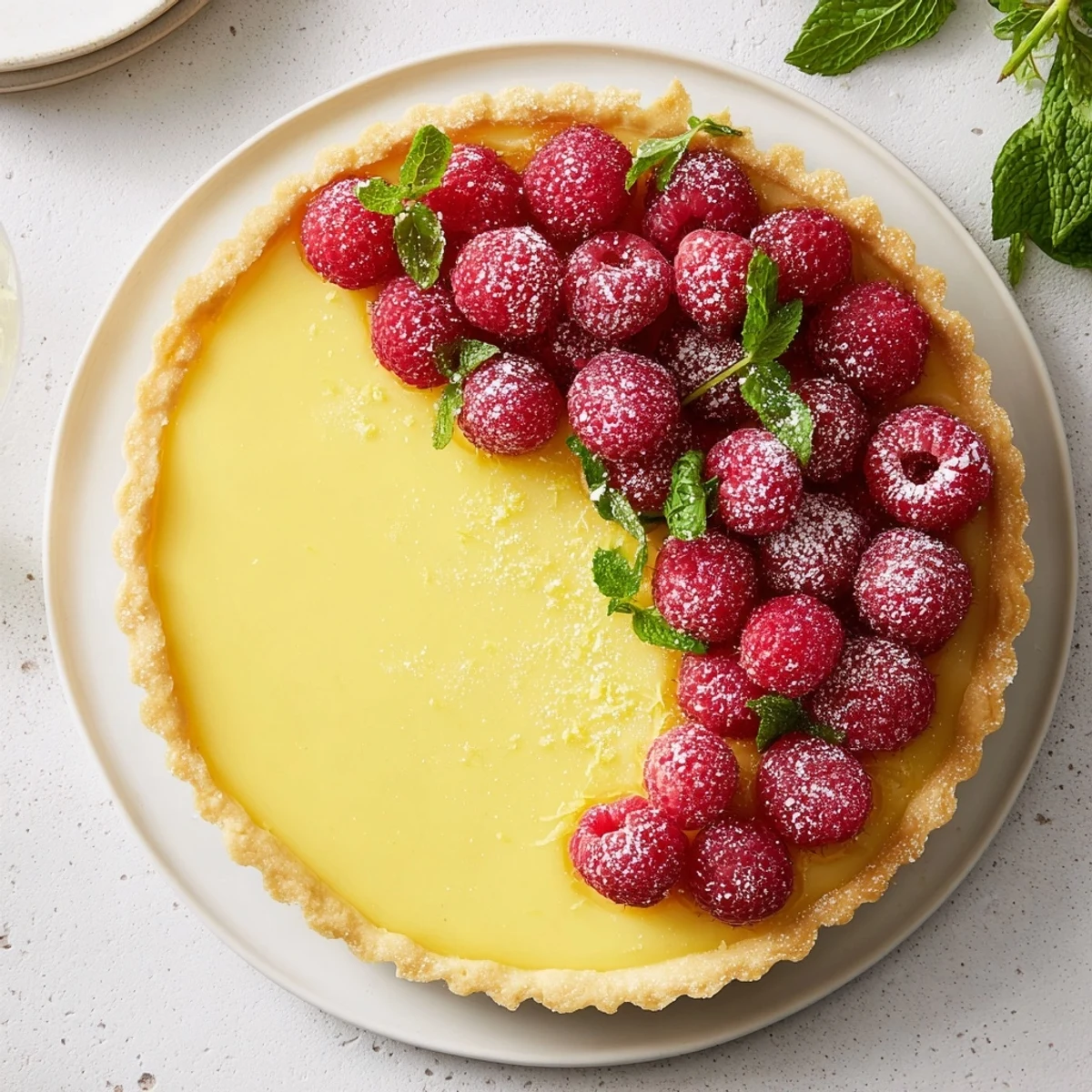
 This bright lemon tart features a crisp, buttery crust filled with tangy lemon custard. Fresh raspberries add sweetness and vibrant color on top, creating a delightful balance of tart and sweet flavors. The tart requires chilling time for the filling to set perfectly, making it a refreshing dessert choice that is suitable for vegetarians. Its method includes preparing a flaky crust, a creamy lemon filling, and a final topping of fresh raspberries, perfect for gatherings or special occasions.
I stumbled on this recipe during a rainy spring afternoon when I had too many lemons from a neighbor's tree and no idea what to do with them. The first tart I made cracked slightly in the center, but once I piled on the raspberries, no one noticed. That imperfect dessert taught me that citrus and berries don't just look beautiful together—they balance each other in a way that feels effortless.
I served this at a summer dinner once, and my friend who normally skips dessert ate two slices. She said the lemon reminded her of her grandmother's kitchen in Provence, even though I'd never set foot in France. Sometimes a recipe just carries that kind of memory, whether it's yours or someone else's.
Ingredients
- All-purpose flour: Forms the structure of the crust, and using cold butter with it creates those flaky layers that shatter when you bite down.
- Unsalted butter, cold and cubed: The key to tenderness—keep it cold so it doesn't melt into the flour before baking, or you'll lose that crumbly texture.
- Powdered sugar: Sweetens the crust without adding grittiness, and it helps the dough stay tender instead of tough.
- Egg yolk: Binds the dough and adds richness, plus it gives the crust a golden color once baked.
- Ice water: Brings the dough together without warming the butter—add it slowly so you don't overhydrate.
- Salt: Just a pinch balances the sweetness and makes the buttery flavor more pronounced.
- Large eggs: The backbone of the filling, giving it body and that silky custard texture when baked.
- Granulated sugar: Sweetens the tart filling and helps it set properly without crystallizing.
- Fresh lemon juice: The star of the show—use freshly squeezed for the brightest, cleanest flavor.
- Lemon zest: Adds aromatic oils that deepen the citrus flavor beyond what juice alone can do.
- Heavy cream: Smooths out the filling and adds a luxurious richness that balances the tartness.
- Fresh raspberries: Their slight tartness and soft texture complement the lemon without competing with it.
- Powdered sugar: A light dusting makes the tart look bakery-ready and adds a whisper of extra sweetness.
- Fresh mint leaves: Optional, but a sprig on top gives a pop of color and a hint of freshness when you breathe in.
Instructions
- Make the dough:
- Pulse the flour, powdered sugar, and salt in a food processor until combined, then scatter in the cold butter cubes and pulse until the mix looks like wet sand. Add the egg yolk and pulse again, then drizzle in ice water one tablespoon at a time until the dough just starts to clump—don't overmix or it'll turn tough.
- Chill the dough:
- Press the dough into a flat disk, wrap it tightly in plastic, and let it rest in the fridge for at least 30 minutes. This firms up the butter and relaxes the gluten so the crust doesn't shrink when you bake it.
- Roll and fit the crust:
- On a floured surface, roll the chilled dough into a circle slightly larger than your tart pan, then drape it over the pan and press it gently into the corners. Trim any overhang with a knife and prick the bottom all over with a fork to prevent bubbling.
- Blind bake the crust:
- Line the dough with parchment and fill with pie weights or dried beans, then bake at 350°F for 15 minutes. Remove the weights and parchment and bake another 10 minutes until the crust is lightly golden—this step keeps it crisp under the filling.
- Whisk the filling:
- In a bowl, whisk eggs and sugar until smooth and pale, then stir in the lemon juice and zest. Pour in the heavy cream and whisk until everything is silky and uniform—no lumps or streaks.
- Bake the filling:
- Pour the lemon mixture into the warm crust and slide it into the oven for 18 to 20 minutes. The center should jiggle just a little when you tap the pan—it'll firm up as it cools.
- Cool and chill:
- Let the tart cool completely on the counter, then cover and refrigerate for at least an hour. Chilling sets the filling so it slices cleanly instead of oozing.
- Top and serve:
- Right before serving, scatter fresh raspberries over the surface and dust with powdered sugar. Add a few mint leaves if you want a touch of color and fragrance.
 Pin it
 One evening I brought this tart to a potluck, and it disappeared before the main course was cleared. A woman I barely knew asked for the recipe, and we ended up talking about our favorite citrus desserts for twenty minutes. That's what I love about this tart—it starts conversations and turns strangers into friends over shared bites.
How to Store and Serve
Keep the tart covered in the fridge for up to three days, though the crust stays crispest on day one. If you're making it ahead, bake the crust and prepare the filling separately, then assemble and bake the day you plan to serve. Add the raspberries and powdered sugar just before slicing so the berries stay plump and the sugar doesn't dissolve into streaks.
Flavor Swaps and Variations
Swap raspberries for blueberries or blackberries if that's what you have, or mix all three for a berry medley. You can fold a tablespoon of limoncello into the filling for an extra citrus kick, or brush the baked crust with a thin layer of white chocolate before adding the lemon custard. For a gluten-free version, use a one-to-one gluten-free flour blend in the crust—it works surprisingly well and no one will guess the difference.
Pairing and Presentation Ideas
This tart shines alongside a glass of chilled Moscato or a dry sparkling wine that won't compete with the tartness. If you're serving it at a dinner party, slice it at the table so everyone sees the clean layers and bright filling. A small dollop of lightly sweetened whipped cream on the side never hurts, and neither does a sprig of fresh thyme tucked under the raspberries for an unexpected herbal note.
- Chill your serving plates for a few minutes so the tart stays cool and firm when you plate it.
- Use a hot, dry knife to slice—wipe it clean between cuts for picture-perfect edges.
- If you have leftover filling, bake it in small ramekins for individual lemon custards.
 Pin it
 Every time I make this tart, I'm reminded that the best desserts don't need to be complicated—they just need good ingredients and a little patience. I hope this one finds a place in your kitchen the way it has in mine.
Recipe FAQs
- → What kind of crust is used for the lemon tart?
-
A crisp, buttery tart crust made from all-purpose flour, powdered sugar, cold unsalted butter, egg yolk, and ice water creates a flaky base.
- → How is the lemon filling prepared?
-
The filling combines eggs, granulated sugar, fresh lemon juice and zest, along with heavy cream, whisked smooth for a tangy, creamy texture.
- → Can the tart be made gluten-free?
-
Yes, substituting the all-purpose flour with a gluten-free flour blend can adapt the tart while keeping its flaky texture.
- → What are some alternative toppings to raspberries?
-
Blueberries or blackberries can be used instead to provide a different sweetness and color contrast on top.
- → How long should the tart be chilled before serving?
-
The lemon tart should be refrigerated for at least 1 hour to set the filling and develop the best texture.
- → What tools are needed to prepare the tart?
-
A food processor or pastry cutter, tart pan, rolling pin, whisk, mixing bowls, parchment paper, and pie weights are recommended.