 Pin it
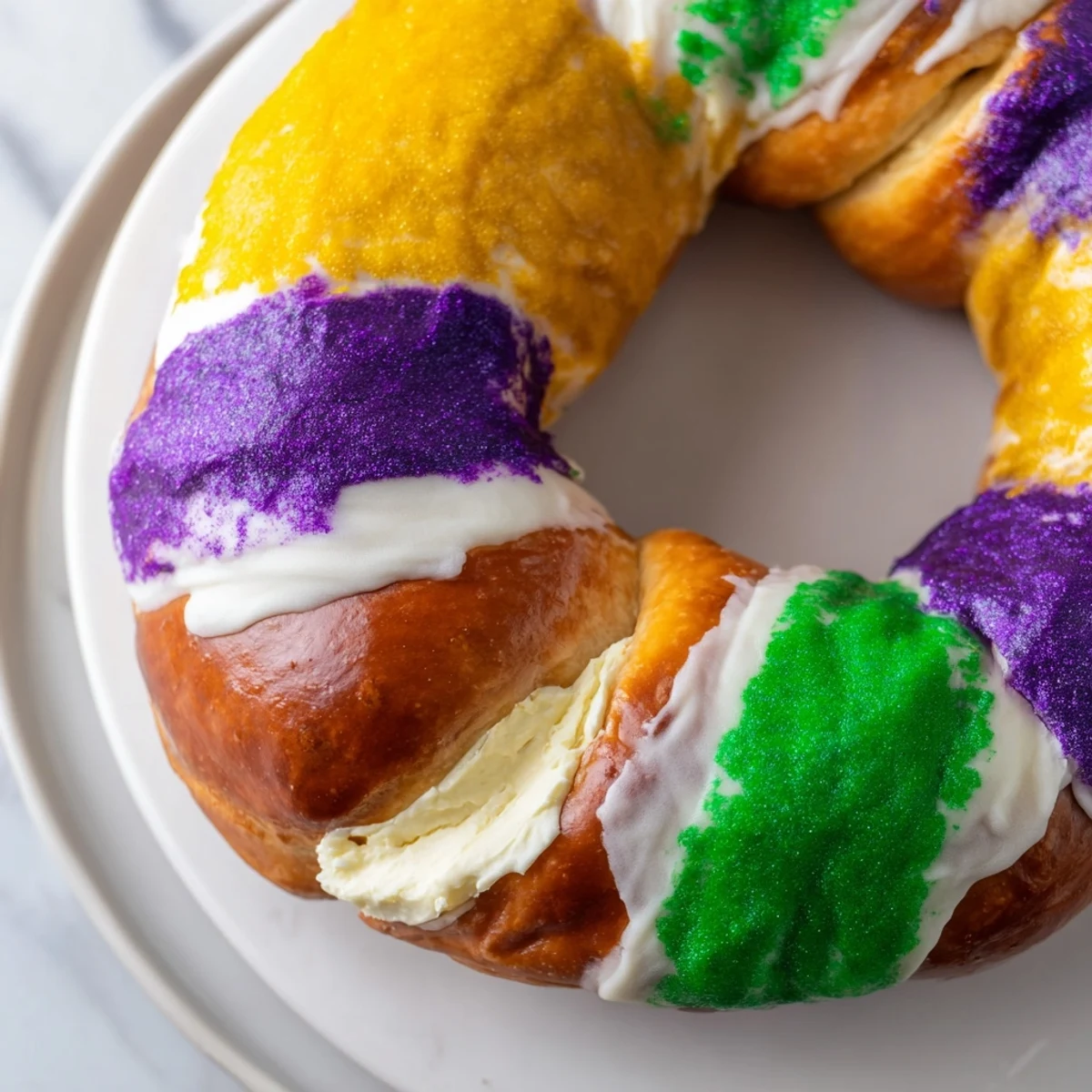
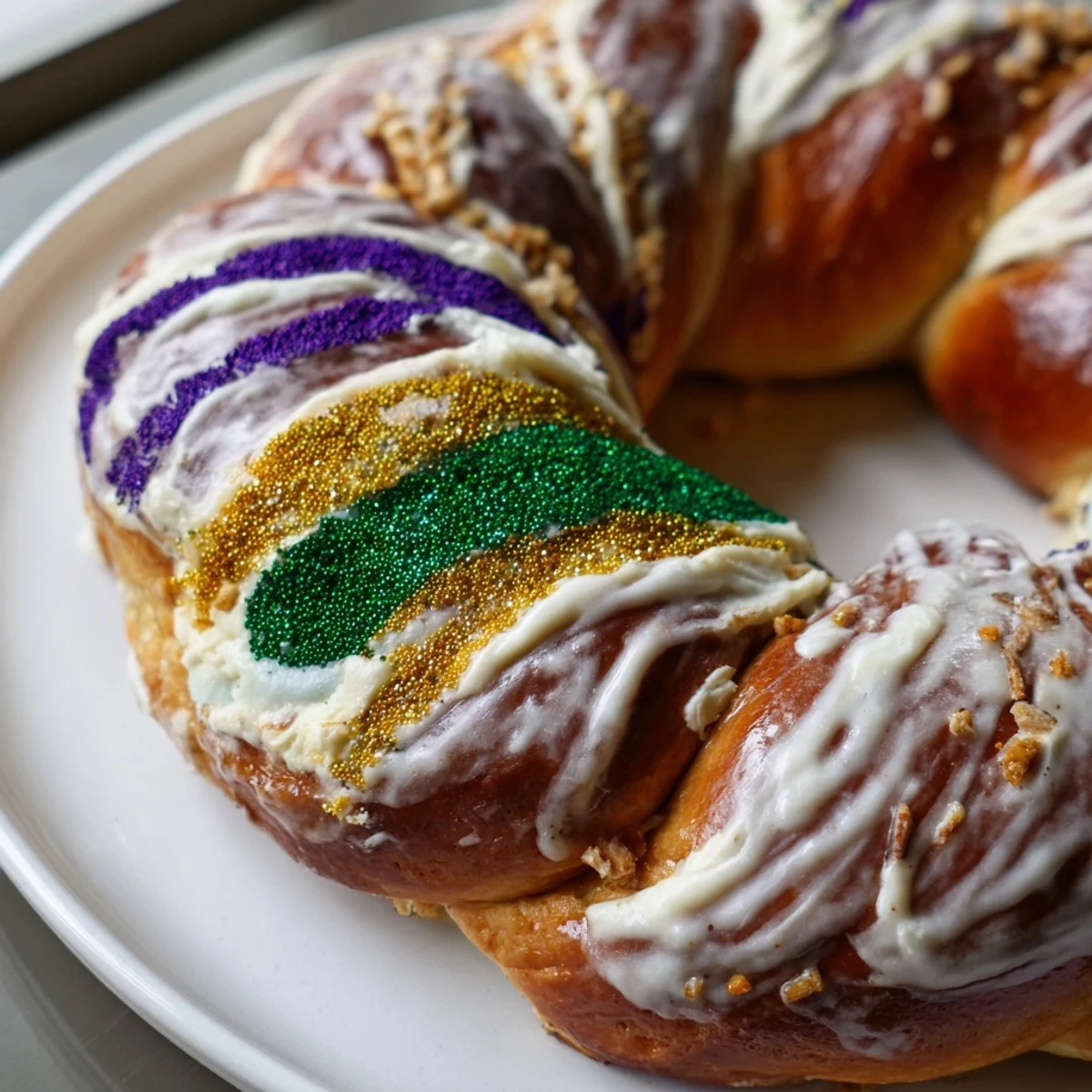
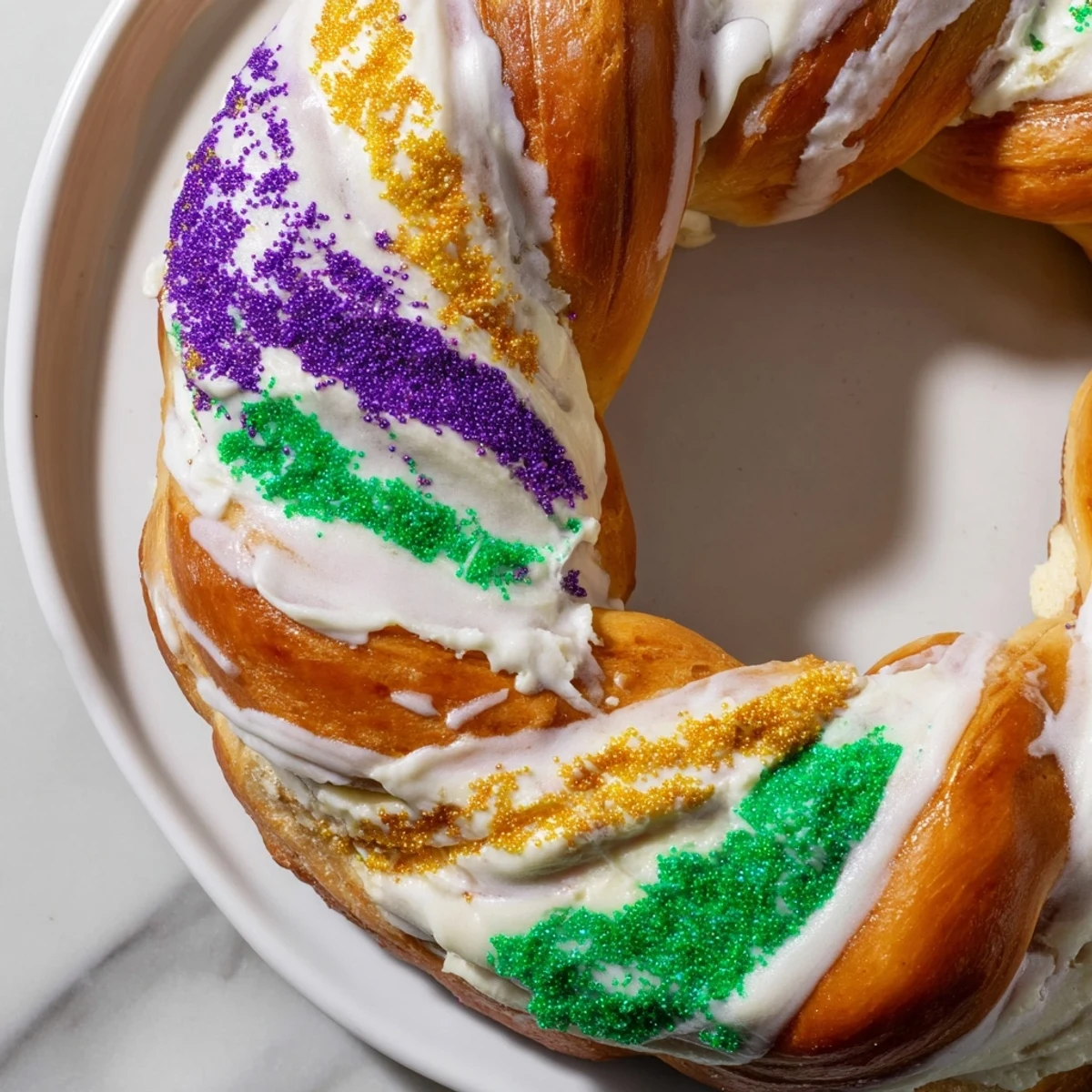
 This Mardi Gras King Cake brings a traditional New Orleans touch with a soft, enriched dough enveloping a creamy, vanilla-scented cream cheese filling. The dough is rolled, sprinkled with a cinnamon sugar blend, then shaped into a ring before baking to a golden finish. After cooling, it's glazed with a smooth vanilla icing and adorned with vibrant purple, green, and gold sanding sugars, evoking festival colors. Optional touches include adding lemon zest or pecans for extra flavor. Ideal for sharing during festive occasions, this cake pairs beautifully with coffee or sparkling wine.
The first time I brought a King Cake to my office breakroom, everyone looked at me like I'd brought in a party game. Someone found the plastic baby in their slice and acted like they'd won the lottery, even though tradition says they're just responsible for next year's cake. Now it's the most anticipated February morning of the year, and I start getting asked about it right after New Year's.
My daughter helped me make this last year and decided the purple, green, and gold sugar needed to be absolutely everywhere. The kitchen counter looked like a craft project exploded, but she was so proud of that cake. The best part was watching her carefully place each color in perfect sections like she was painting something.
Ingredients
- Warm milk: This temperature matters too much to guess, I use a thermometer and aim for exactly 110°F because anything hotter kills the yeast
- Active dry yeast: Give it the full 5 minutes to get foamy before moving on, that's how you know it's alive and ready to work
- Granulated sugar: The sugar feeds the yeast and helps create that beautiful golden brown crust we all want
- All purpose flour: I've tried bread flour but it makes the cake too dense, regular flour gives the right tender crumb
- Unsalted butter melted: Let it cool completely before adding or you might scramble those eggs, which I may have learned from experience
- Room temperature eggs: Cold eggs can shock the dough, so set them out about 30 minutes before you start mixing
- Vanilla and almond extract: The almond is optional but it gives this subtle background note that makes people ask what's different
- Salt and freshly grated nutmeg: Fresh nutmeg is worth the extra 30 seconds with the microplane, it's warmer and more fragrant than the pre-ground stuff
- Cream cheese softened: Let it sit out for a full hour so it blends into a silky smooth filling without any lumps
- Powdered sugar: Sift it first for the filling to avoid those tiny sugar lumps that never quite disappear
- Ground cinnamon mixed with sugar: This little dusting between the dough and filling creates this incredible cinnamon roll inspired layer
- Milk for icing: Start with 2 tablespoons and add more only if needed, thick icing spreads better than you'd think
- Purple green and gold sanding sugars: The order matters traditionally but honestly they all taste the same, so arrange them however makes you happy
Instructions
- Wake up the yeast:
- Combine the warm milk and yeast in your largest bowl, then walk away for exactly 5 minutes and come back to find it foamy and alive.
- Build the base:
- Add everything except the flour and stir it until it's one cohesive mixture, the eggs should disappear completely.
- Bring in the flour:
- Work in the flour gradually because the dough will go from shaggy to smooth right before your eyes, then knead for about 6 minutes until it springs back when you poke it.
- First rise:
- Put the dough in a bowl you've greased with butter, cover it with a warm damp towel, and find the warmest corner of your kitchen.
- Make the fillings:
- Beat the cream cheese with powdered sugar and vanilla until it's impossibly smooth, then mix your cinnamon sugar in a separate little bowl.
- Roll it out:
- Punch down the dough gently and roll it into a rectangle, aiming for even thickness so the filling doesn't escape during baking.
- Layer the goodness:
- Spread that cream cheese down the center third like you're frosting a very narrow cake, then dust it with cinnamon sugar.
- Form the ring:
- Fold the sides over the filling and pinch them tight, then carefully move it to your baking sheet and connect the ends into a circle.
- Second rise:
- Let it get puffy for about 45 minutes while you preheat the oven, the dough should feel airy when you touch it.
- Bake until golden:
- Slide it into the oven and check at 25 minutes, you want a deep golden brown that sounds hollow when you tap it.
- Make it beautiful:
- Whisk the icing ingredients until it's thick but pourable, then drizzle it generously while the cake is still slightly warm.
- Add the colors:
- Sprinkle your colored sugars in alternating sections while the icing is wet so they stick, then carefully hide the baby underneath if you're using one.
 Pin it
 Last year my brother found the baby and proceeded to buy the most elaborate King Cake I've ever seen for his office party. He sent me a photo and it had three different fillings and enough edible gold to make it look like something from a bakery window. Sometimes these traditions snowball in the best way.
Make It Ahead
The dough actually develops better flavor if you make it the night before and let it do its first rise in the refrigerator overnight. Just bring it to room temperature for about 30 minutes before rolling, and you'll have the most developed flavor with zero extra effort.
Flavor Variations
I've experimented with different fillings over the years and some combinations are surprisingly good. A bit of lemon zest in the cream cheese cuts through the richness beautifully, and chopped pecans add this incredible texture that people always ask about.
Serving Suggestions
This cake wants to be the star of the show, so serve it on a pretty platter with coffee in the morning or maybe sparkling wine if you're feeling fancy. Cut it into generous slices and let people serve themselves, the anticipation of who might get the baby is half the fun.
- Warn your guests about the hidden baby before they start eating
- Have a small prize ready for whoever finds it
- Keep the recipe handy because someone will ask for it
 Pin it
 Whatever you do, don't forget where you hid that baby or someone's going to get an unexpected crunch with their morning coffee. Happy Mardi Gras, and may the best luck find you.
Recipe FAQs
- → What type of yeast is used for the dough?
-
Active dry yeast is used to help the dough rise and develop a light, fluffy texture.
- → Can I add flavors to the cream cheese filling?
-
Yes, lemon zest or chopped pecans can be added to the filling for extra brightness or a nutty twist.
- → How long should the dough rise before baking?
-
The dough requires about 1 to 1½ hours for the first rise and an additional 45 minutes after shaping into a ring.
- → What is the purpose of the colored sugars on top?
-
The purple, green, and gold sanding sugars provide festive color and a light sweet crunch, honoring Mardi Gras traditions.
- → Is this cake suitable for vegetarians?
-
Yes, it contains no meat products and is suitable for a vegetarian diet.
- → How should the cake be stored after baking?
-
Store the cake covered at room temperature to maintain freshness for up to two days.