 Pin it
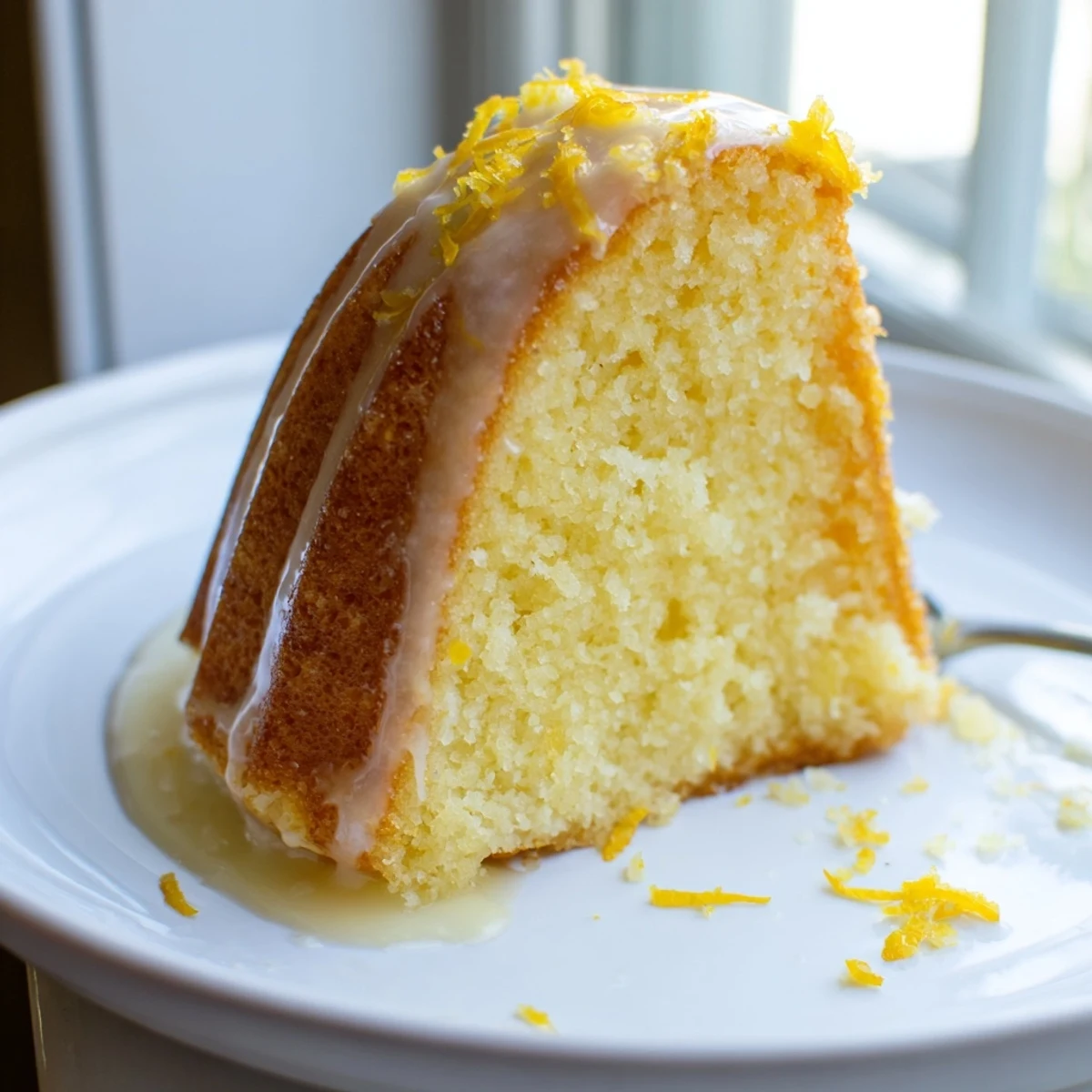
 This Bundt cake brings a burst of fresh lemon flavor with a soft, moist crumb and a tangy lemon glaze drizzled atop. Creamed butter and sugar provide a fluffy base, while lemon zest and juice infuse the cake with lively citrus notes. Baked evenly in a Bundt pan, it offers a visually stunning presentation perfect for gatherings. The glaze adds a sweet-tart finish, balancing richness with bright acidity. Optional whipped cream or fresh berries brighten each serving, making it a charming centerpiece for any occasion.
I discovered this Lemon Drizzle Bundt Cake on a grey English afternoon when my grandmother pressed a handwritten recipe card into my palm, its corners worn soft from years of kitchen use. She'd made this cake every spring for decades, and watching the golden batter transform into something so impossibly moist and fragrant felt like inheriting her kitchen magic. Now, whenever I bake this cake, I'm right back in her kitchen, the scent of fresh lemon filling the air while she hums and tells me secrets about getting the crumb just right.
I'll never forget baking this for my daughter's school bake sale—three cakes lined up on cooling racks, their glaze setting into a glossy coat while she watched with wide eyes. By afternoon, they were the first to sell out, and a mother I'd never met came back to ask for the recipe. That moment taught me that good food is really about the joy you share.
Ingredients
- Unsalted butter (250g): Use softened butter at room temperature—this is non-negotiable for a light, fluffy crumb. Cold butter won't cream properly, and you'll end up with a dense cake.
- Granulated sugar (300g): The white sugar helps create structure and that delicate tender crumb that makes this cake special.
- Large eggs (4), room temperature: Cold eggs won't incorporate smoothly into the batter. Leave them on the counter for 30 minutes—this small step changes everything.
- All-purpose flour (300g): Measure by spooning flour into the cup and leveling it off, never scoop directly. Scooping packs the flour and makes your cake dry.
- Baking powder (2 tsp): This gives the cake its tender rise. Fresh baking powder matters more than you'd think—replace it if it's been open for six months.
- Salt (1/2 tsp): A small pinch that amplifies the lemon flavor. Don't skip it.
- Fresh lemons (2), zested and juiced: Use lemons at room temperature and roll them gently on the counter before cutting—you'll get more juice. The zest must be bright yellow, not white pith.
- Whole milk (120ml): The milk keeps the crumb tender and delicate. Don't use buttermilk or substitutes for this recipe.
- Vanilla extract (1 tsp): Just enough to deepen the flavor without announcing itself.
- Powdered sugar (100g): For the glaze—sift it if it's lumpy, or you'll have a textured drizzle instead of silky smooth.
- Freshly squeezed lemon juice (2-3 tbsp): For the glaze, and it must be fresh. Bottled juice won't give you the bright, alive taste you're after.
Instructions
- Prepare your stage:
- Preheat your oven to 180°C and take time with the Bundt pan—this is where patience pays off. Butter it generously, getting into every ridge and corner. Dust lightly with flour, then tap it upside down over the sink. You want just enough flour to prevent sticking, not a thick coat.
- Cream the butter and sugar:
- In a large bowl, beat the softened butter and sugar together until it's pale, fluffy, and looks almost mousse-like. This takes about 3 to 4 minutes. Stop and scrape down the sides halfway through. This step incorporates air into your batter, and that's what makes the cake light and tender.
- Introduce the eggs gently:
- Add eggs one at a time, beating well after each addition. This prevents the mixture from curdling and ensures everything emulsifies smoothly. If it looks a bit separated after adding an egg, don't panic—keep beating until it comes back together.
- Combine your dry ingredients:
- In a separate bowl, whisk together the flour, baking powder, and salt. This distributes the leavening evenly and prevents streaks of baking powder in your cake.
- Alternate your wet and dry:
- Here's the technique that changed everything for me: add the dry ingredients in three additions, alternating with the milk. Begin with the dry, then milk, then dry, then milk, then dry. Mix until just combined—overmixing develops gluten and makes the cake tough. Think of it like you're folding in rather than beating in.
- Add the bright notes:
- Fold in the lemon zest, lemon juice, and vanilla extract gently. The batter might look slightly thin—that's exactly right. The juice adds moisture and flavor.
- Pour with confidence:
- Divide the batter evenly into your prepared Bundt pan and smooth the top with a spatula. Make sure the batter settles evenly so your cake will be level.
- Bake until golden:
- Slide the pan into the oven for 45 to 50 minutes. You're looking for a deep golden color and a skewer inserted into the center that comes out clean or with just a few moist crumbs—not wet batter. Every oven bakes differently, so start checking at 45 minutes.
- Cool with patience:
- Let the cake rest in the pan for 10 minutes—this allows the edges to set slightly so it doesn't fall apart when you invert it. Run a thin knife around the edges, then place a wire rack on top and flip the whole thing over. The cake should slide out smoothly. If it doesn't, wait another minute and try again.
- Create the glaze:
- Whisk the powdered sugar with 2 tablespoons of fresh lemon juice until smooth and pourable. If it's too thick, add juice one teaspoon at a time. You want it to flow gently but not be runny.
- The final touch:
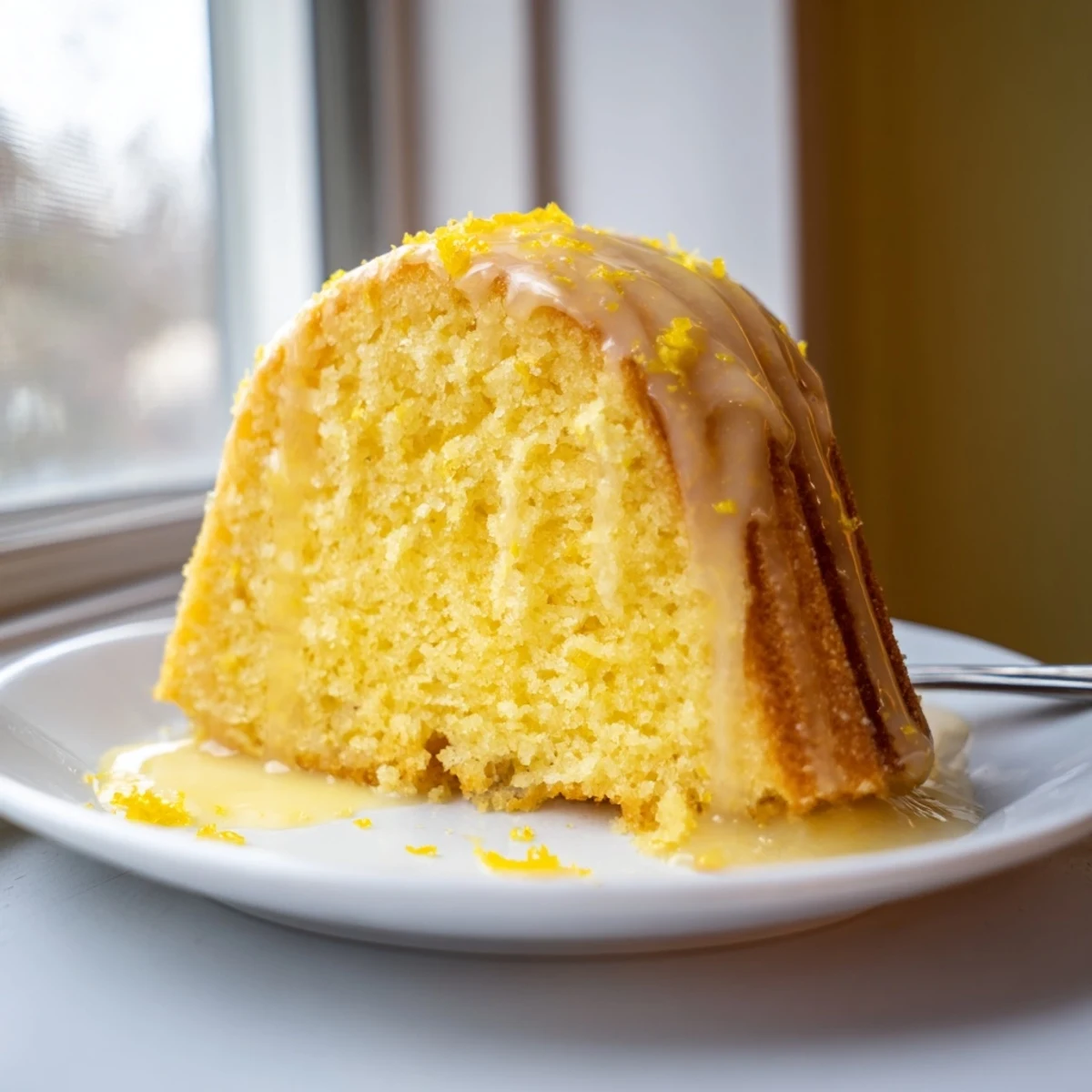
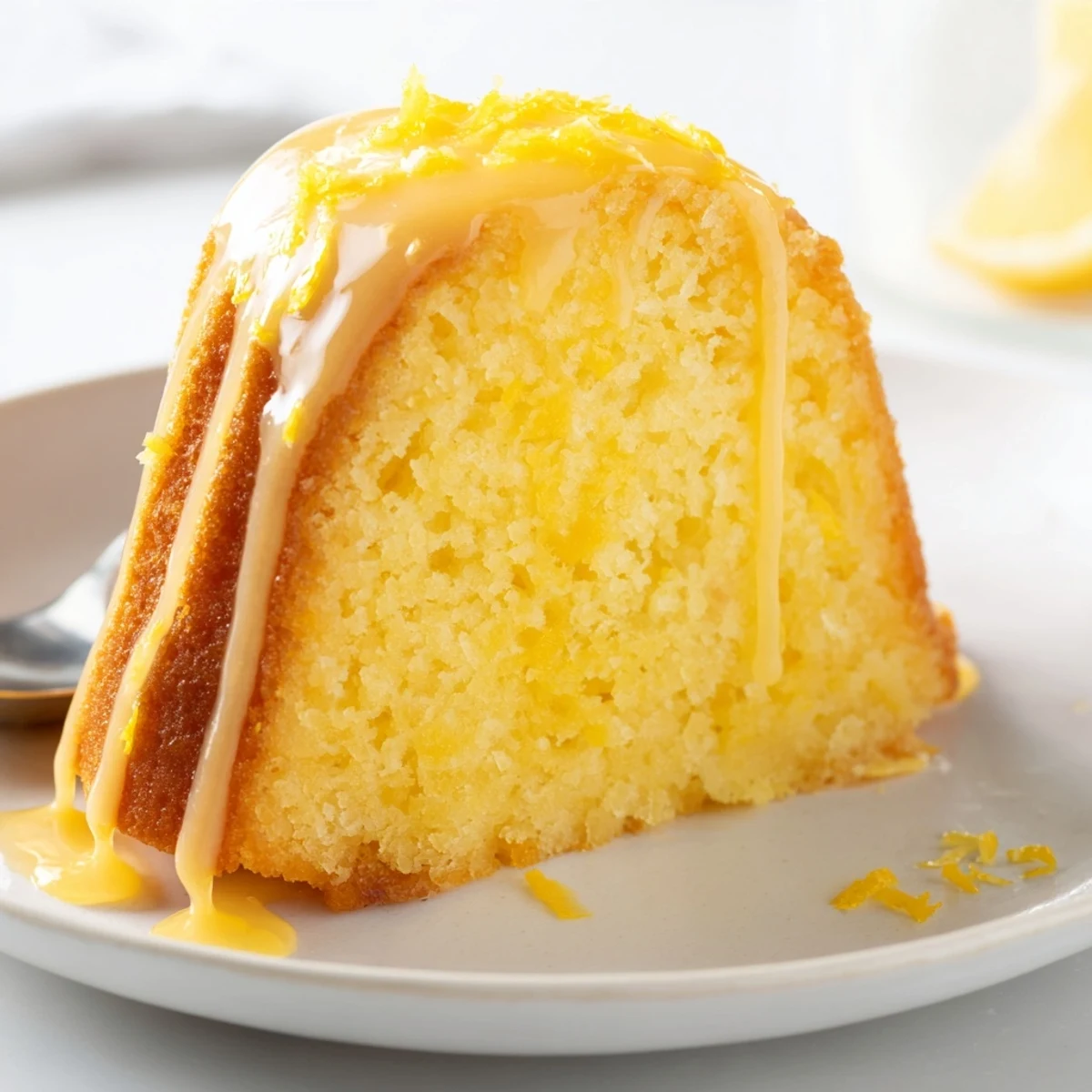
- Once the cake is completely cooled, drizzle the glaze over the top, letting it cascade down the sides. It will set into a beautiful satin finish.
 Pin it
 I remember my mother-in-law taking a bite of this cake at a family gathering and her eyes lighting up with that quiet recognition—the kind that happens when something tastes exactly like comfort and home. She asked if I made it, and when I said yes, she smiled in a way that made me feel like I'd just been welcomed into an invisible circle of women who know how to make food matter.
The Magic of Bundt Pans
There's something about a Bundt pan that transforms a simple cake into something that looks showstopping. The fluted shape catches the light, and that glaze becomes part of the design rather than just a topping. I learned to respect this pan—to treat it kindly by greasing it properly and not rushing the cooling process. A Bundt cake doesn't need frosting or fondant; it's complete and elegant on its own.
Lemon: The Flavor That Grows
Fresh lemon is alive in this cake—it wakes up your palate with every bite. What I've discovered is that lemon flavor develops as the cake sits. The first day, the citrus is bright and sharp. By day two or three, the flavor has mellowed and deepened, becoming part of the cake's fabric rather than sitting on top of it. This is why storing it in an airtight container makes sense—the moisture and flavor intensify.
Serving and Keeping This Cake
This cake is a keeper in the best sense. It stays moist and fresh for up to three days at room temperature, wrapped loosely under a cake dome or in an airtight container. I always slice it the day after baking, when the crumb has settled and the flavors have mingled. Serve it plain with afternoon tea, or dress it up with whipped cream and fresh berries if you're feeling festive. Some mornings I grab a slice with my coffee, standing in the kitchen before anyone else wakes up—that's when this cake tastes like pure happiness.
- Keep your cake uncovered while it cools completely, then store it covered to prevent it from drying out.
- If you add a teaspoon of lemon extract to the batter, the flavor deepens beautifully—but go gently, as extract is concentrated.
- Bring slices to room temperature before serving if you've refrigerated them, and the crumb will taste softer and more tender.
 Pin it
 This Lemon Drizzle Bundt Cake has taught me that the most memorable desserts are often the simplest ones—made with good ingredients, respect for technique, and a generous pour of lemon juice. Bake it for someone you love, and watch their face when they taste that first tender, citrusy bite.
Recipe FAQs
- → What type of pan is best for this cake?
-
A 10-cup Bundt pan works best to create the characteristic ring shape and ensures even baking.
- → How do I prevent the cake from sticking?
-
Grease the pan thoroughly with butter and dust it lightly with flour, tapping out any excess before pouring in the batter.
- → Can I use bottled lemon juice instead of fresh?
-
Fresh lemon juice is preferred for vibrant flavor, but bottled juice can be used if fresh is unavailable.
- → How is the glaze made?
-
Mix powdered sugar with freshly squeezed lemon juice until smooth and pourable, adjusting consistency as needed.
- → What can I serve with this cake?
-
It pairs well with whipped cream or fresh berries to complement the lemon's brightness.
- → How should leftovers be stored?
-
Keep the cake in an airtight container at room temperature for up to 3 days to maintain freshness.