 Pin it
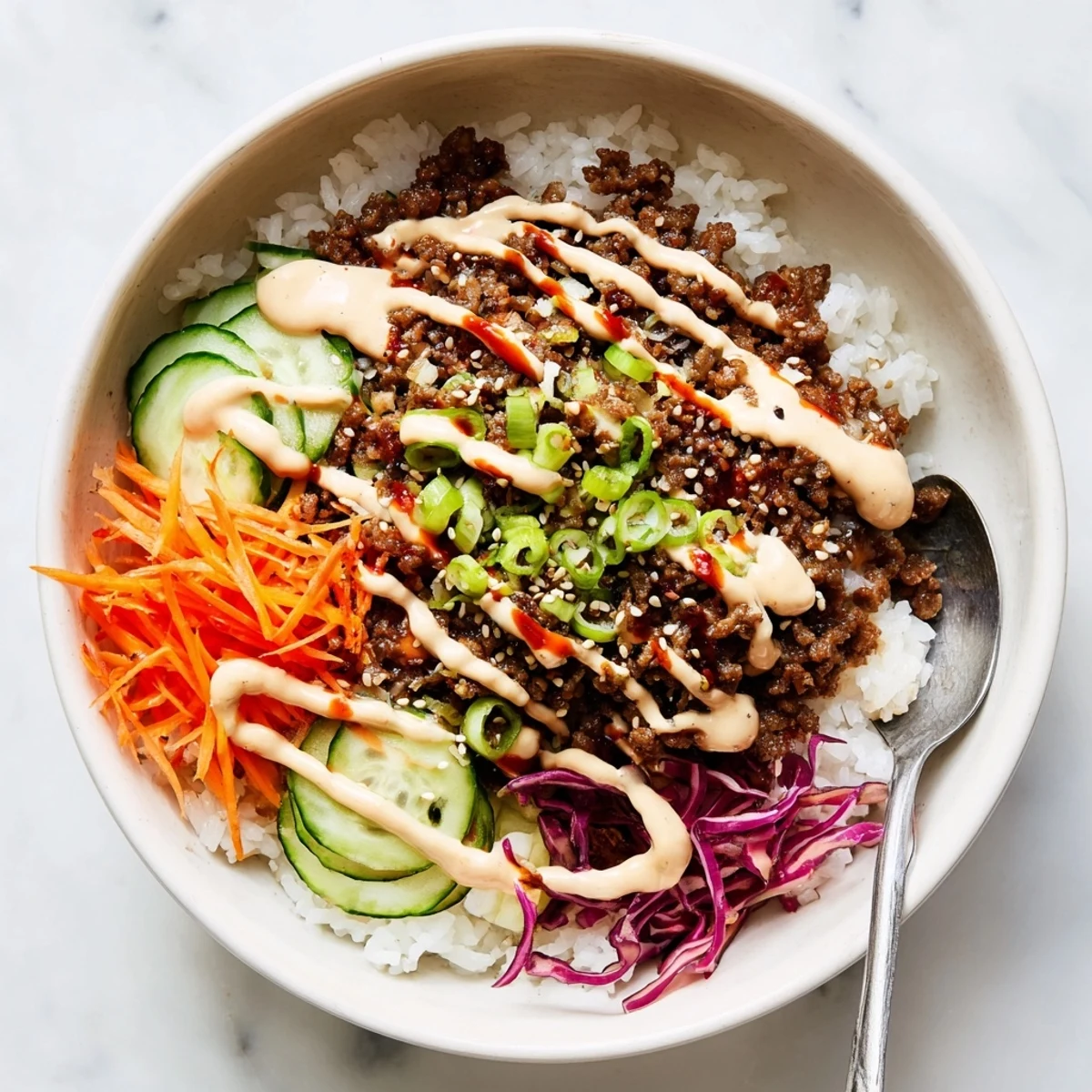
 This vibrant bowl combines tender Korean-seasoned ground beef with fluffy white rice and crisp, colorful vegetables. The beef gets its signature flavor from a blend of soy sauce, sesame oil, garlic, ginger, and gochujang Korean chili paste, creating a perfect balance of sweet and savory notes. A homemade spicy mayo drizzle adds creaminess and gentle heat that ties everything together.
Preparation comes together in just 30 minutes, making it ideal for busy weeknights. The beef cooks quickly in a skillet while the vegetables provide fresh crunch and visual appeal. Each bowl is customizable—add kimchi, a fried egg, or extra vegetables based on preference.
Leftovers store well for lunch the next day, though the vegetables stay crispest when added fresh. The spicy mayo can be made ahead and kept refrigerated for up to a week.
The first time I made these bowls, my kitchen smelled like a Seoul street market at midnight, and I haven't looked back since. There's something about the combination of sweet-spicy beef against cool crisp vegetables that makes this feel like a restaurant meal you somehow pulled together on a Tuesday night. I've started keeping gochujang in my fridge just for these moments when comfort needs a little kick.
Last winter, when my sister was recovering from surgery and needed meals she could actually get excited about, I brought her a batch of this beef. She texted me at 11 PM that night saying she'd just had round three, and I realized this wasn't just dinner, it was the kind of food that makes people feel taken care of without being heavy.
Ingredients
- 1 lb lean ground beef: The foundation that soaks up all those Korean flavors, though I've used 90/10 when that's what was on sale and it still works beautifully
- 2 tablespoons soy sauce: This provides the salty base, but don't be tempted to add more or you'll throw off the sweet-spicy balance
- 1 tablespoon brown sugar: The secret to that restaurant-style glaze that caramelizes against the beef
- 2 teaspoons sesame oil: Use toasted sesame oil here, not the plain stuff, because that nutty fragrance is half the magic
- 2 cloves garlic, minced: Fresh garlic is non-negotiable here, the jarred stuff never quite disappears into the beef the same way
- 1 teaspoon fresh ginger, grated:I keep a chunk of ginger in my freezer and grate it frozen, which makes it practically dissolve into the meat
- 1 tablespoon gochujang: This Korean chili paste adds depth that sriracha alone can't match, but if you're in a pinch, sriracha will work
- 1/2 teaspoon black pepper: Adds a subtle heat that layers nicely with the gochujang without overwhelming
- 1/3 cup mayonnaise: Real mayo makes the spicy mayo creamy enough to cling to every bite
- 1 tablespoon sriracha: Adjust this based on your heat tolerance, but don't skip it entirely
- 1 teaspoon rice vinegar: Just enough brightness to cut through the rich mayo and beef
- 1 teaspoon honey: Optional, but I add it to tame the heat and help the sauce cling to the bowl
- 4 cups cooked white rice: Short-grain rice feels more authentic, but whatever rice you have works fine
- 1 cup shredded carrots: These add sweetness and crunch that balance the savory beef
- 1 cup cucumber, thinly sliced: English cucumbers work best because they're less watery and stay crisp longer
- 1/2 cup red cabbage, shredded: The pop of color makes the whole bowl feel vibrant and fresh
- 2 green onions, sliced: Both white and green parts add different kinds of sharpness
- 1 tablespoon toasted sesame seeds: Toast them yourself in a dry pan for 30 seconds, the difference is worth it
Instructions
- Get your rice ready first:
- Cook it however you usually do and fluff it with a fork so it's ready to build your bowls, nothing worse than beef waiting on rice
- Make the spicy mayo while the rice cooks:
- Whisk together the mayo, sriracha, rice vinegar, and honey until it's smooth and uniformly orange, then set it aside to let the flavors meld
- Crank the heat and start the beef:
- Heat the sesame oil in your largest skillet over medium-high until it shimmers, then add the ground beef and break it up with your spoon as it browns
- Add the aromatics:
- Once the beef is cooked through, toss in the garlic and ginger and stir for exactly one minute until your kitchen smells incredible
- Build the glaze:
- Pour in the soy sauce, brown sugar, gochujang, and pepper, then let everything cook together for another 2-3 minutes until the sauce coats the beef and looks glossy
- Assemble your bowls:
- Divide the warm rice among four bowls, pile the beef on one side, and arrange the carrots, cucumber, and cabbage in sections around it
- Finish with flair:
- Drizzle that spicy mayo across the beef in stripes, scatter the green onions and sesame seeds on top, and serve while everything's still warm
 Pin it
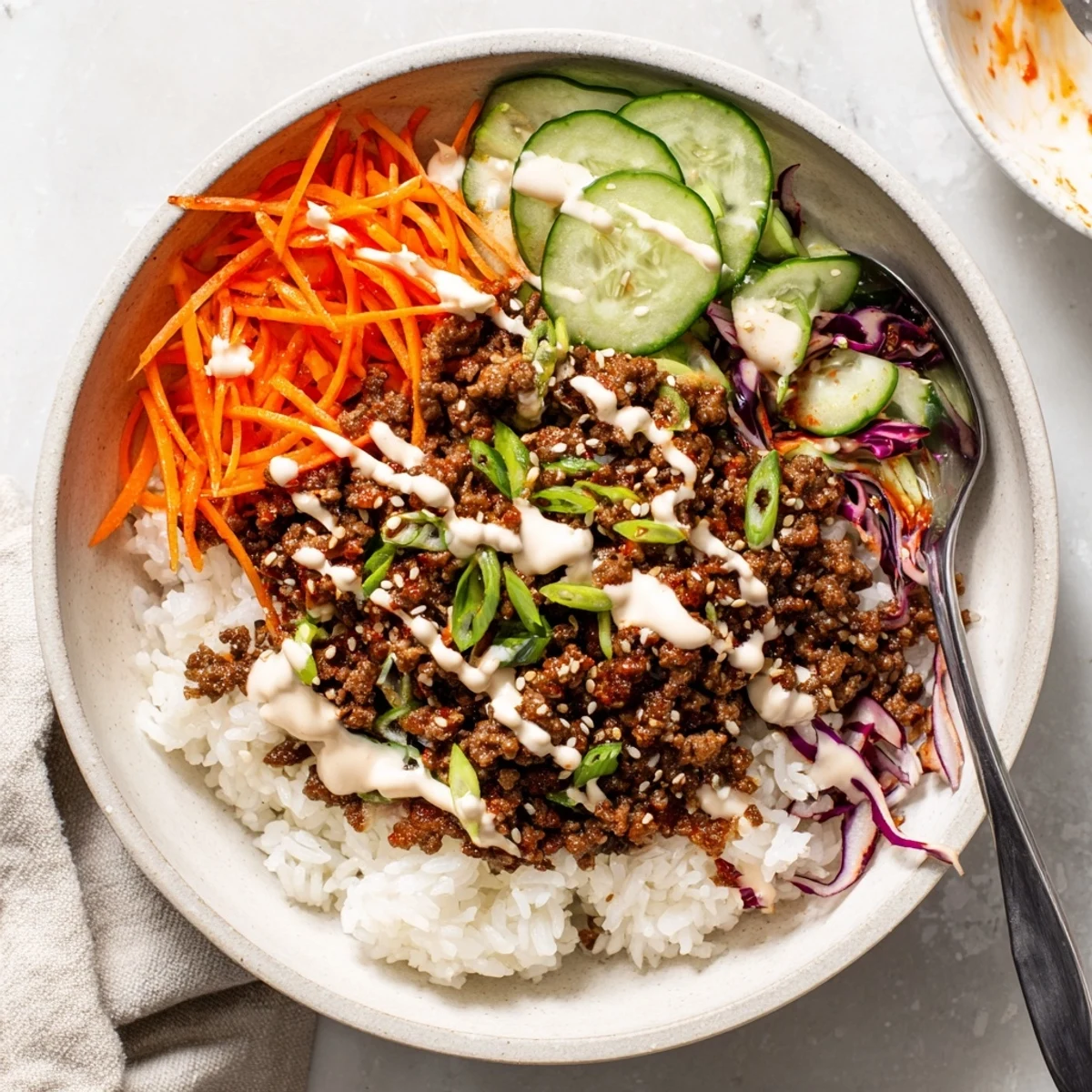
 My roommate walked in while I was photographing this bowl and ended up eating it right out of the prop bowl with a fork, standing at the counter. That's when I knew this wasn't just a recipe, it was the kind of food that makes people abandon all manners.
Making It Yours
I've used ground turkey when beef felt too heavy, and honestly, the spices carry it beautifully. Ground chicken works too, just watch the pan because lean meat can dry out faster. For a vegetarian version, crumbled extra-firm tofu or Impossible meat both absorb the Korean flavors surprisingly well, though you might want to increase the gochujang slightly to compensate for the missing beef richness.
Vegetable Swaps That Work
Sometimes I use whatever needs to get used up, like bell pepper strips or shredded radish when they're languishing in the fridge. Pickled vegetables add a whole other dimension—quick-pickled radishes or even jarred kimchi make excellent additions when you want more tang. In summer, fresh cilantro and a squeeze of lime over the whole bowl turn it into something entirely different but equally delicious.
Serving Ideas
These bowls are substantial enough to stand alone, but a simple cucumber salad dressed with rice vinegar makes a refreshing side if you're feeding a crowd. Sometimes I'll put out small bowls of extra kimchi or pickled vegetables so people can customize their own spice levels and textures.
- Set out the spicy mayo in a small bowl so guests can add more to taste
- A cold Korean beer or dry riesling cuts through the richness perfectly
- Fresh fruit for dessert balances the savory heat nicely
 Pin it
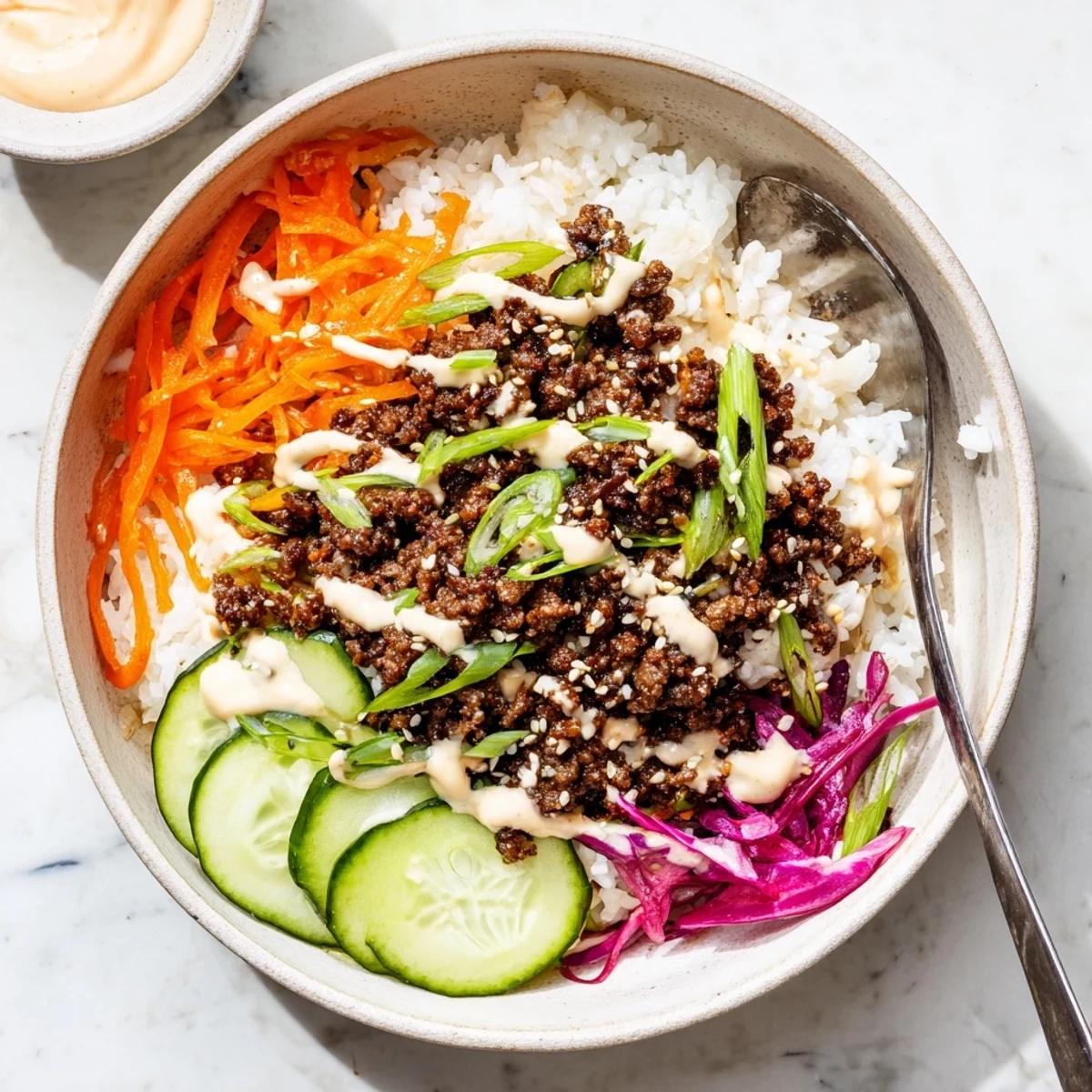
 There's something deeply satisfying about a meal that looks impressive but comes together faster than delivery would arrive. I hope these Korean beef bowls find their way into your regular rotation.
Recipe FAQs
- → Can I make this gluten-free?
-
Yes, substitute tamari for soy sauce and verify your gochujang is gluten-free. Many brands now offer certified gluten-free versions of Korean chili paste.
- → What can I substitute for gochujang?
-
Sriracha works well as a substitute, though it lacks the fermented depth of gochujang. For a closer match, mix sriracha with a small amount of miso paste.
- → How long do leftovers keep?
-
Store components separately in airtight containers. The beef stays fresh for 3-4 days, while vegetables are best enjoyed within 2 days. Add fresh vegetables when reheating.
- → Can I use a different protein?
-
Ground turkey, chicken, or even crumbled tofu work beautifully with these seasonings. Adjust cooking time slightly—turkey and chicken may need an extra minute or two.
- → Is the spicy mayo very hot?
-
The heat level is mild to medium, providing a gentle warming sensation rather than overwhelming spice. Adjust sriracha quantity to your preference—start with less and add more gradually.
- → What rice works best?
-
Short-grain white rice is traditional, but brown rice adds nutty flavor and extra fiber. Jasmine rice also pairs nicely with the Korean flavors.