 Pin it
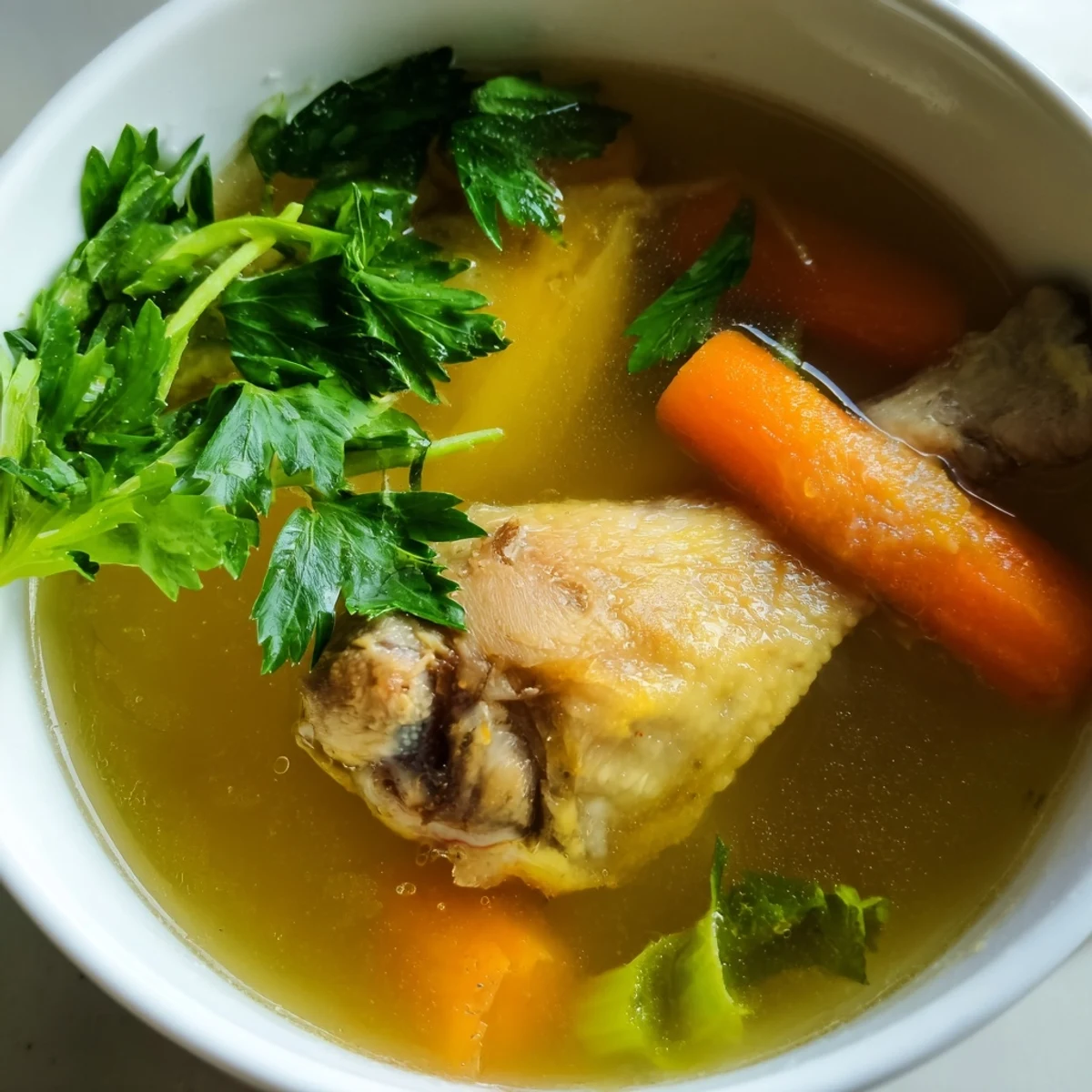
 This nourishing broth gently simmers chicken bones with fresh ginger, onion, carrots, celery, garlic, and seasonings for hours. The slow cooking extracts deep flavors and nutrients, resulting in a rich, aromatic liquid ideal for sipping warm or as a base for soups and sauces. Optional herbs added near the end enhance the freshness. The broth can be strained and stored chilled, making it a versatile staple for wholesome cooking.
I discovered the magic of bone broth on a cold morning when I had nothing but leftover chicken bones and a stubborn craving for something warm and healing. My grandmother used to simmer bones for hours, filling the kitchen with this gentle, golden aroma that somehow made everything feel better. Years later, I realized she wasn't just making stock—she was building flavor and nourishment from what most people throw away. Now I make this ginger-infused version whenever I need something that feels like a hug from the inside.
I'll never forget the day my partner came home sick and found me straining a pot of this broth, and the way they sipped it quietly at the kitchen table while steam curled up toward their face. Something about offering someone a cup of broth you made yourself feels different from anything else you can cook. They asked for it again the next day, and then the next, and suddenly this became the thing I make when people need caring for.
Ingredients
- Chicken bones: Use whatever you have—carcasses, wings, necks, or a mix—they all contribute gelatin and flavor that simmers into silky richness.
- Onion: Leave the papery skin on; it adds subtle color and minerals that would otherwise be wasted.
- Carrots and celery: Roughly chopped is perfect because they're breaking down into the broth anyway, so precision doesn't matter.
- Garlic: Halving the whole head crosswise lets it perfume the broth without falling apart into the liquid.
- Fresh ginger: Slice it rather than peel it so you capture all the bright, warming oils just under the skin.
- Bay leaves and peppercorns: These are the quiet backbone of flavor that people taste but never quite name.
- Sea salt: Trust your own taste buds here; you can always add more at the end.
- Cold water: Starting cold helps extract flavor gradually and creates a clearer, cleaner-tasting broth.
- Apple cider vinegar: This sounds strange, but a tablespoon helps coax minerals from the bones in a way plain water cannot.
- Fresh herbs: Thyme or parsley added near the end brighten the broth with a whisper of freshness.
Instructions
- Gather your bones and aromatics:
- Place your chicken bones in a large pot and scatter the onion, carrots, celery, garlic, and ginger around them. This step takes five minutes but sets up everything that comes next.
- Build the liquid foundation:
- Pour in cold water until everything is just covered, then add bay leaves, peppercorns, salt, and vinegar if you're using it. The vinegar is your secret weapon for extracting deep mineral richness.
- Wake it up gently:
- Bring the whole pot to a gentle boil over medium-high heat, then immediately turn the heat down to the lowest simmer you can manage. For the first 30 minutes, skim away any gray foam that rises to the surface—this keeps the broth clear and clean-tasting.
- Let time do the work:
- Now you walk away for four hours, checking occasionally and skimming if more foam appears. Add a splash of water now and then if the bones start to peek above the surface.
- A final whisper of herbs:
- In the last half hour, scatter fresh thyme or parsley over the top if you want that herbaceous note lingering through every cup.
- Strain with care:
- Pour everything through a fine-mesh sieve or cheesecloth into a bowl, letting the liquid drip through slowly without forcing it. The vegetables and bones have given everything they have.
- Taste and adjust:
- Once it cools slightly, sip a small spoonful and add more salt if it needs it. This is your moment to make it taste like home.
- Cool, store, and skim:
- Let it cool completely, then refrigerate overnight. A layer of fat will solidify on top; you can skim it off if you want, or leave it for extra richness and protection.
 Pin it
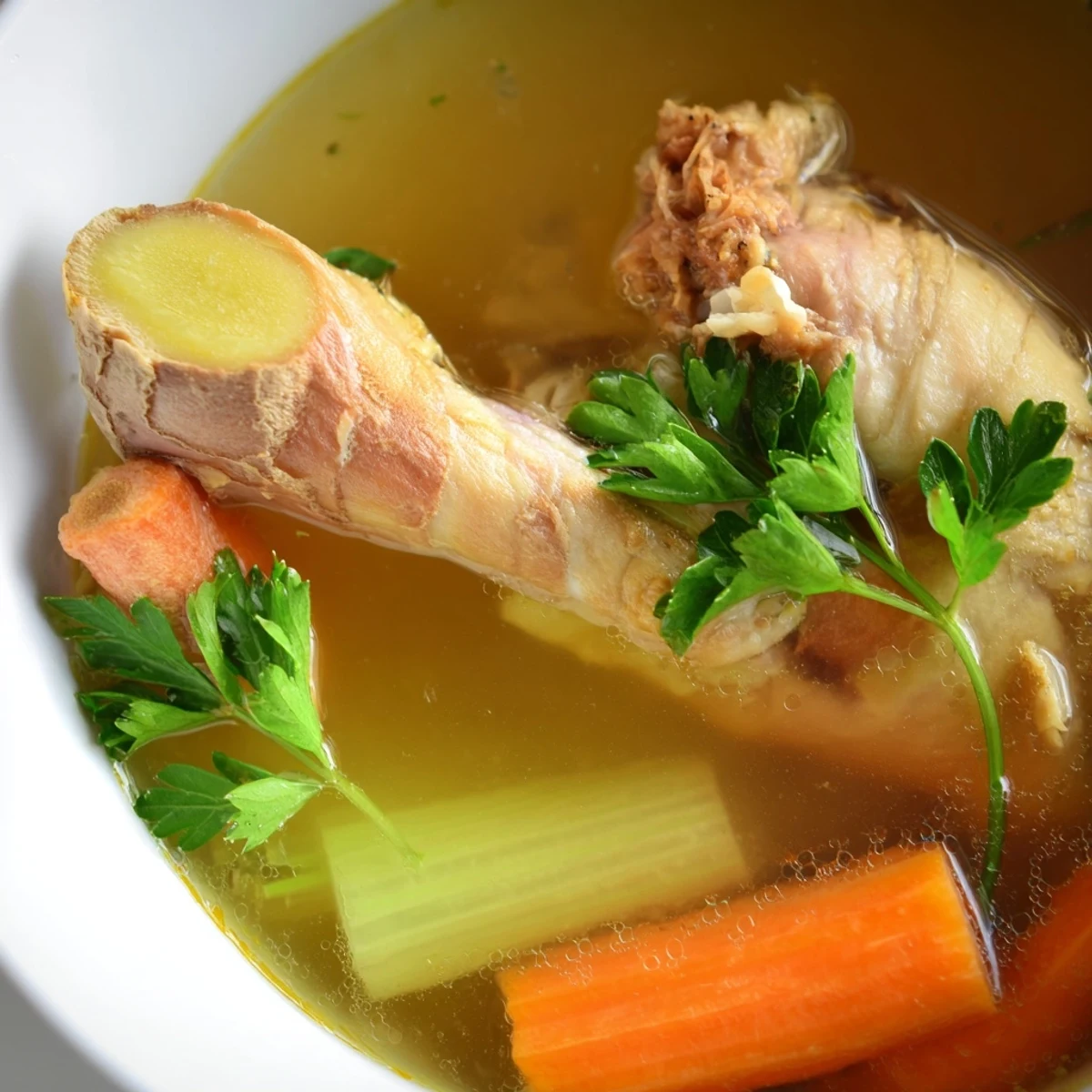
 One winter evening, I poured this broth into bowls and served it with nothing but a pinch of sea salt and a few slices of ginger on top, and it became the simplest, most perfect meal. No one asked for bread or anything else—the broth was enough, warm and alive and somehow exactly what the moment needed.
When to Roast First
If you want a deeper, richer broth with hints of caramelization, roast your bones and vegetables at 220°C for 30 minutes before adding them to the pot. The bones will turn golden and the vegetables will char slightly at the edges, creating a more complex, restaurant-quality depth. This step adds 30 minutes but transforms the broth into something more assertive and bold—choose this version when you want it as a standalone sip rather than a delicate cooking base.
How to Use It
This broth is gloriously versatile, almost more valuable than the recipe itself. Pour it into a mug with nothing but salt and sip it when you need comfort, or use it as the foundation for soups, risottos, grains, and sauces where it will carry its ginger warmth into every dish.
Storage and Umami Upgrades
Let the broth cool completely before freezing it in portions—ice cube trays work perfectly for small amounts you can grab quickly. If you want to elevate it further, add a splash of soy sauce or a piece of kombu kelp in the final moments of simmering for an umami depth that tastes almost meaty. Frozen broth keeps for up to three months and transforms any rushed weeknight into something that tastes like you spent hours in the kitchen.
- Freeze in portions you'll actually use—mug-sized containers are often perfect.
- Leave a tiny bit of room in freezer containers for expansion, or your lids won't seal properly.
- Thaw overnight in the refrigerator, or gently warm it straight from frozen if you're in a hurry.
 Pin it
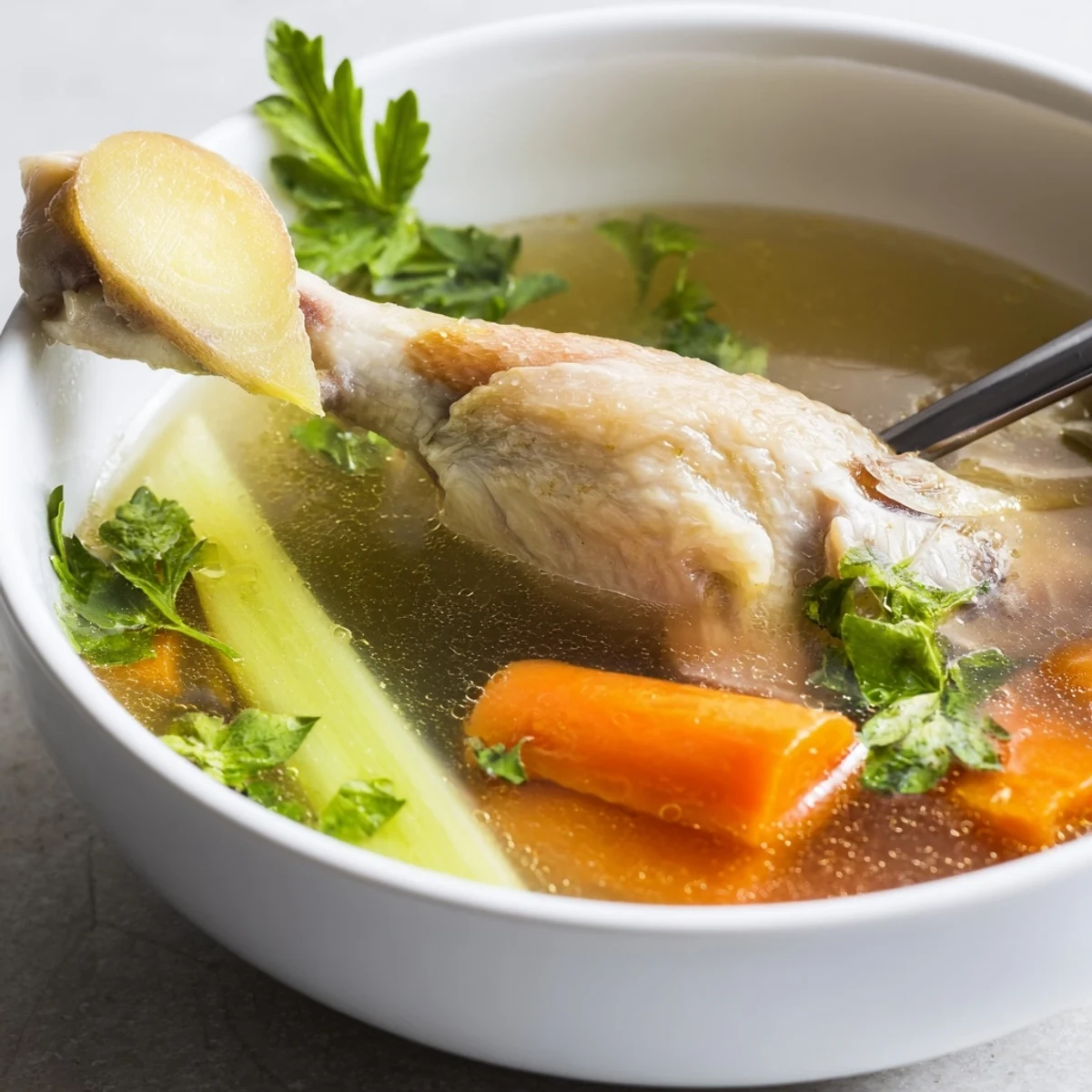
 There's something grounding about making broth that asks for nothing but patience and attention. This golden liquid becomes whatever you need it to be—a restorative drink on a quiet morning, a foundation for something bigger, or a gift you give someone when words aren't quite enough.
Recipe FAQs
- → What is the best way to prepare the bones for richer flavor?
-
Roasting chicken bones and vegetables at 220°C (425°F) for 30 minutes before simmering enhances the depth and complexity of the broth.
- → How long should the broth simmer for optimal flavor?
-
Simmering gently for about 4 hours allows the bones and aromatics to fully release their flavors and nutrients.
- → Can I use fresh herbs in the broth?
-
Yes, adding fresh herbs like thyme or parsley in the last 30 minutes of simmering brightens the flavor without overpowering the broth.
- → How should the broth be stored after cooking?
-
After cooling, strain the liquid and refrigerate. It can also be frozen in portions for up to 3 months for convenience.
- → What are some ways to enhance the umami taste?
-
Adding a splash of soy sauce or a piece of kombu seaweed during simmering enriches the savory umami notes.
- → Is it important to skim foam during simmering?
-
Yes, skimming off foam and impurities during the first 30 minutes results in a clearer, cleaner broth flavor and appearance.