 Pin it
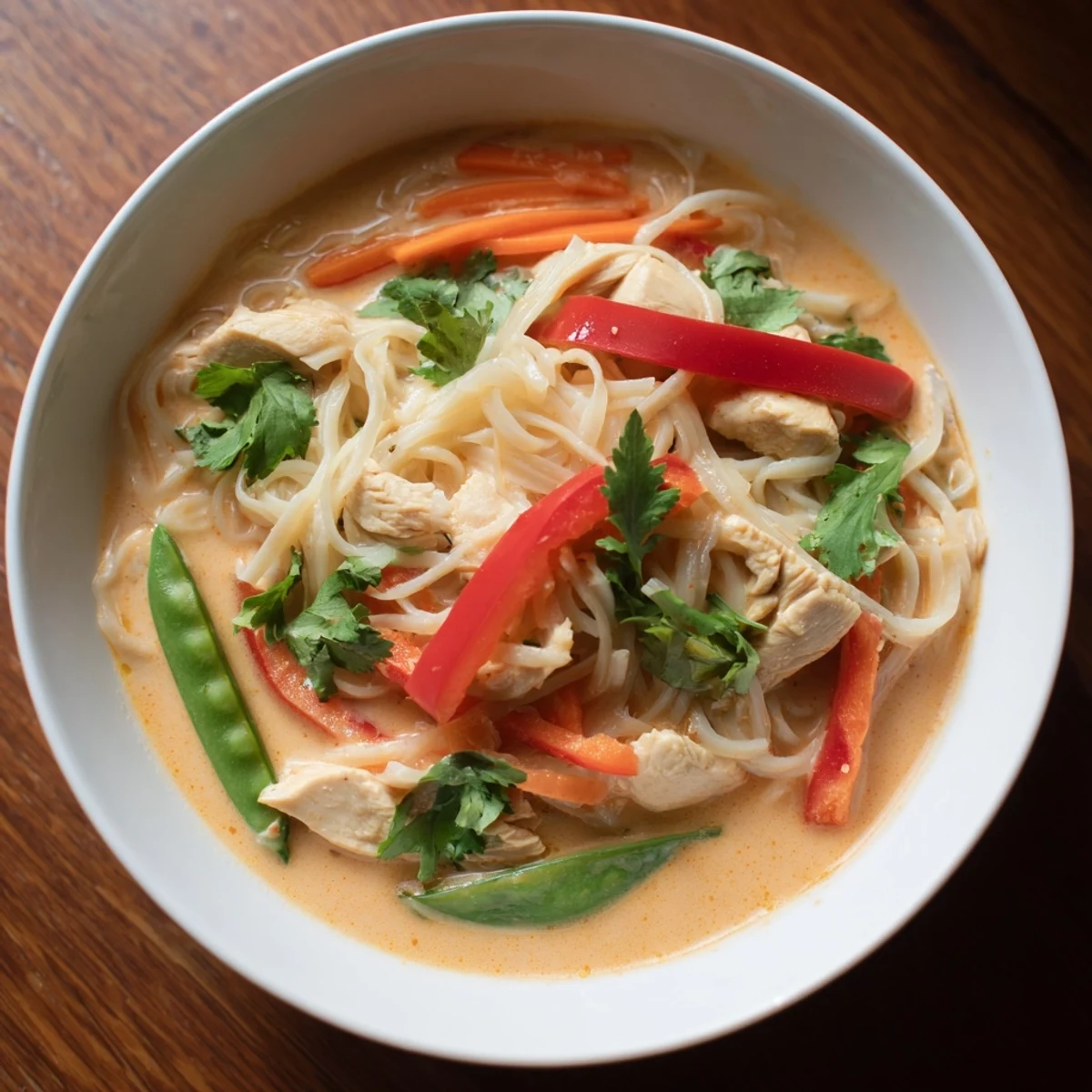
 This vibrant dish combines tender chicken slices with medium-width rice noodles and a mix of fresh vegetables like bell pepper, carrot, and sugar snap peas. Aromatic garlic, ginger, and Thai red curry paste create a creamy, spicy coconut milk broth balanced with fish and soy sauces. The soup simmers gently to infuse bold flavors before finishing with a splash of lime juice and fresh herbs, making a satisfying and fragrant meal.
A friend once arrived at my door on a rainy Bangkok evening with a bowl of this curry soup, and I remember thinking how something so simple—just noodles and broth—could taste like pure comfort and complexity all at once. That first spoonful, with the coconut richness hitting first and then the curry heat following, made me understand why she'd learned to make it by heart. Now whenever I'm craving something that feels both restaurant-quality and deeply personal, this is what I reach for. It takes barely 45 minutes, but tastes like you've been simmering it all day.
I made this for my sister during her first week in a new apartment, when her kitchen was still mostly empty boxes. She sat at the counter with a bowl cradled in both hands, and I watched her shoulders relax with each sip—sometimes a meal isn't really about the food, it's about feeling seen. That's when I realized this recipe was one I'd always want in my back pocket for moments that needed a little magic.
Ingredients
- Chicken breast or thighs (400g): Thighs stay more tender during simmering, but breasts work beautifully if you slice them thin—the key is not letting them overcook in the broth.
- Dried rice noodles (200g): Medium-width noodles soak up the broth without turning mushy; watch them closely as they soften, they're forgiving but only up to a point.
- Red bell pepper and carrot: Cut them thin so they stay slightly crisp in the heat—that textural contrast is what makes each spoonful interesting.
- Sugar snap peas (100g): These are my secret to keeping things fresh; they add sweetness and a little snap that balances the spice.
- Thai red curry paste (2 tablespoons): This is where all the flavor lives, so don't skip toasting it in the oil first—that minute transforms it from sharp to mellow.
- Garlic and ginger: Mince them fine and add them early; they should be soft and almost melted into the broth by the time everything else goes in.
- Coconut milk (400ml) and chicken stock (750ml): Full-fat coconut milk is non-negotiable here—it creates that silky texture that makes the soup feel indulgent.
- Fish sauce, soy sauce, and brown sugar: These three work together to deepen the broth; don't be scared of the fish sauce, it disappears into the background and just makes everything taste more like itself.
- Fresh lime juice: Add this at the end to brighten everything; it's the difference between a soup that tastes flat and one that tastes alive.
- Cilantro and Thai basil: These are the final flourish that make people think you spent hours on this—they're worth seeking out.
Instructions
- Soften the noodles gently:
- Pour hot water over the rice noodles and let them sit until they're tender but still have the slightest resistance when you bend one—usually 8 to 12 minutes depending on thickness. Drain and set them aside; they'll finish cooking in the warm broth later.
- Build the aromatic base:
- Heat a little oil in a large pot over medium heat until it shimmers, then add the sliced onion, minced garlic, and grated ginger. Let them soften and become fragrant for about 2 to 3 minutes, stirring gently—you want them to release their oils without browning.
- Bloom the curry paste:
- Stir in the Thai red curry paste and cook it in the oil for about a minute, stirring constantly. This step unlocks all the aromatic depth in the paste and keeps it from tasting raw or harsh in the finished soup.
- Sear the chicken briefly:
- Add the sliced chicken and stir it into the curry mixture, cooking for about 2 to 3 minutes until the outside turns opaque and it starts releasing its juices. You're not cooking it through yet, just sealing it and letting it absorb some of that curry flavor.
- Pour in the liquid base:
- Add the full-fat coconut milk and chicken stock together, stirring well so everything combines smoothly and there are no streaks of curry paste. This becomes the heart of your soup.
- Season and simmer gently:
- Stir in the fish sauce, soy sauce, and brown sugar, then bring the whole thing to a gentle boil before dropping the heat down to a simmer. Let it bubble softly for about 10 minutes, which gives the chicken time to cook through and all the flavors to meld together.
- Add the vegetables with timing:
- Drop in the sliced bell pepper, julienned carrot, and sugar snap peas, then simmer for another 5 minutes until the vegetables are tender but still have a little firmness. The goal is that moment when everything is hot but hasn't lost its individual character.
- Finish with the noodles:
- Add your pre-soaked noodles to the pot and stir gently for about 2 minutes until they're heated through and have absorbed some of the broth. Taste the soup now and adjust salt and spice as needed.
- Brighten with lime:
- Remove the pot from heat and squeeze in the lime juice, stirring once to distribute it evenly. That acid is the final note that brings everything into focus.
 Pin it
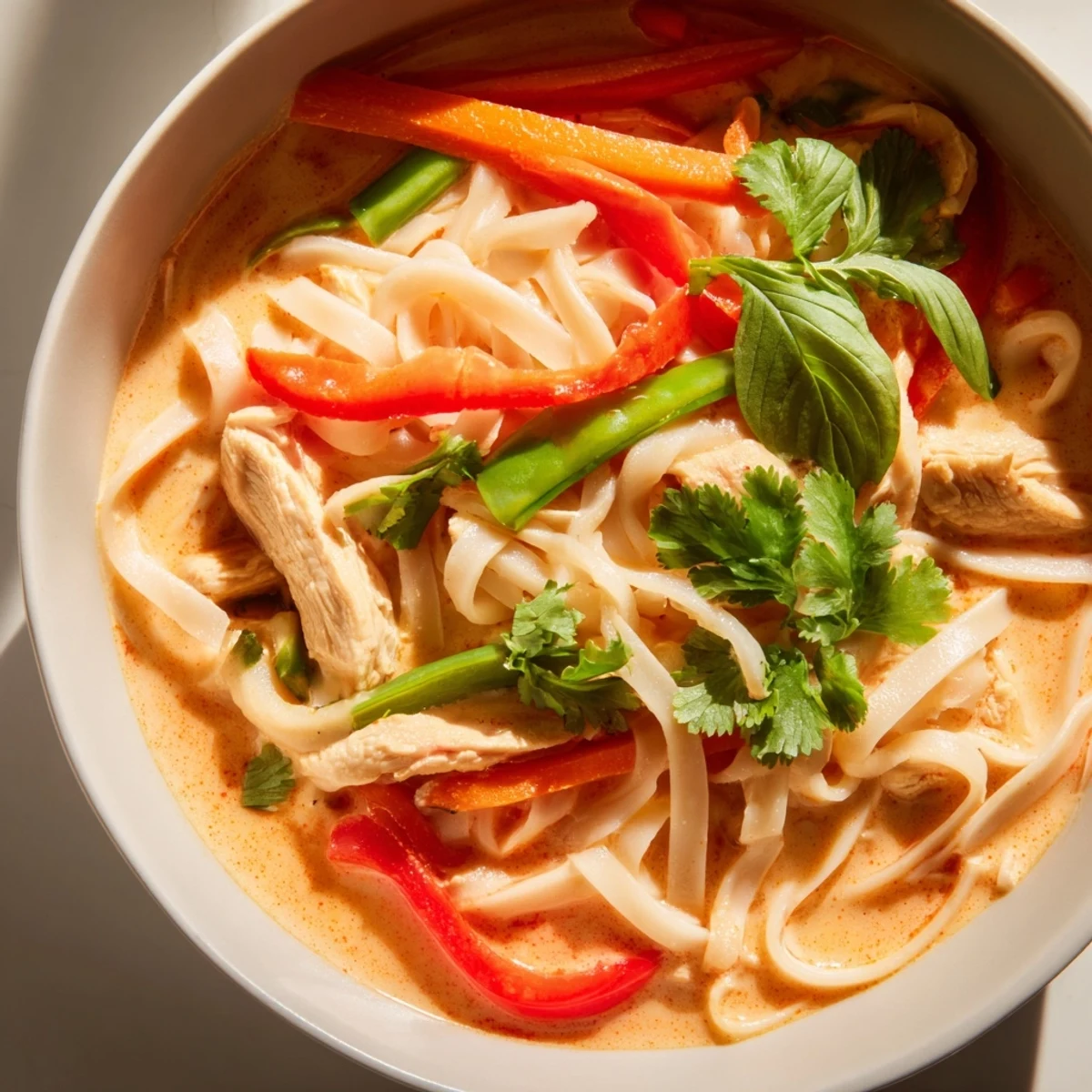
 There's a moment right after you add the lime juice when the whole kitchen smells like Thailand—coconut and curry and bright citrus all at once. That's when you know you've gotten it right, and it never gets old.
The Secret to Creamy Broth
The magic here is letting the coconut milk and curry paste toast together in oil before the liquid goes in. A lot of people skip this step or rush it, but that 1 minute of cooking transforms the paste from something that tastes raw into something rounded and complex. It also helps the curry paste dissolve evenly into the broth instead of settling in little pockets. Once you experience the difference, you'll never skip this step again.
Balancing Heat and Flavor
Thai red curry paste can vary wildly in heat level depending on the brand, so taste it on a tiny spoon before committing to the full amount. I've had batches where 2 tablespoons made a soup that was gently spicy, and others where that same amount made my eyes water. The fish sauce, soy sauce, and brown sugar work together to balance the heat—if you find the soup is too spicy, a pinch more brown sugar and a squeeze of extra lime juice will help smooth things out without making it taste diluted.
Making It Your Own
This recipe is honestly a foundation, and I've made it dozens of ways depending on what's in my fridge and what mood I'm in. Some nights I add mushrooms for earthiness, other times I throw in bok choy or baby corn for a different textural experience. The constant is the broth, the noodles, and that moment of brightness at the end with the lime and fresh herbs. As long as you respect those three things, everything else is fair game.
- Fresh mushrooms like shiitake or cremini add a deeper, earthier note that pairs beautifully with the curry.
- If you can't find Thai basil, regular basil works, but seek it out at an Asian market if you can—the anise-like flavor is worth the trip.
- Serve this immediately for the best noodle texture, but don't stress about perfection; a soup that's slightly softer is still delicious and comforting.
 Pin it
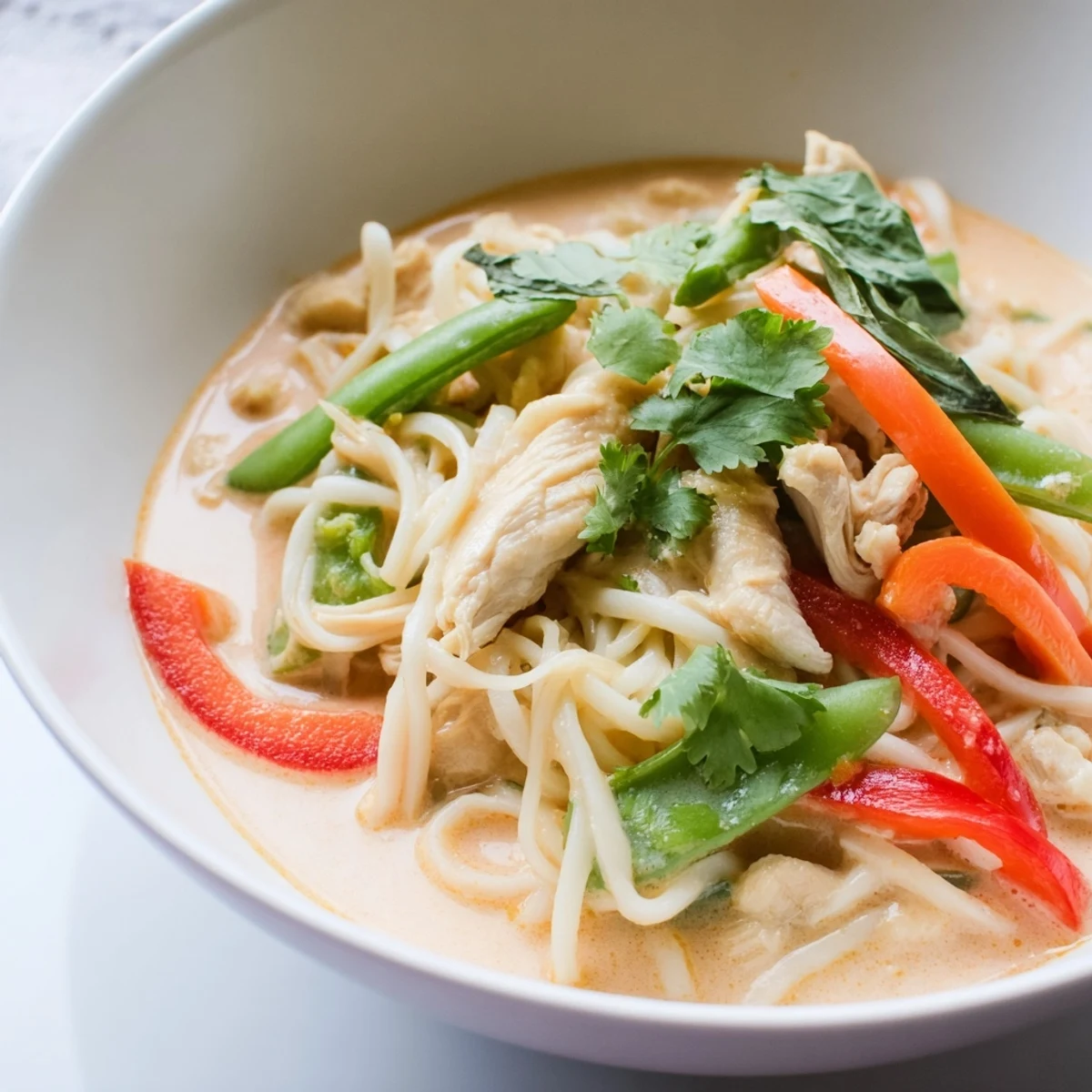
 This soup has become my answer to almost everything—a rough day, a craving for something warm, a way to show someone I care without making it a whole production. It's the kind of meal that tastes like you've been cooking all afternoon even though you're eating it in 45 minutes.
Recipe FAQs
- → Can I use tofu instead of chicken?
-
Yes, tofu can replace chicken for a vegetarian option. Use vegetable stock and a vegetarian alternative to fish sauce for best results.
- → How do I soak the rice noodles properly?
-
Soak the rice noodles in hot water according to package instructions until just tender, then drain before adding them to the soup.
- → What is the purpose of fish sauce in this dish?
-
Fish sauce adds a salty, umami depth to the broth, enhancing the complexity of flavors in the curry base.
- → How can I adjust the spice level?
-
Modify the amount of Thai red curry paste used or add sliced red chili to increase spiciness to your taste.
- → Are there suggestions for additional vegetables?
-
Yes, mushrooms, baby corn, or bok choy can be added to enrich the vegetable mix and texture.