 Pin it
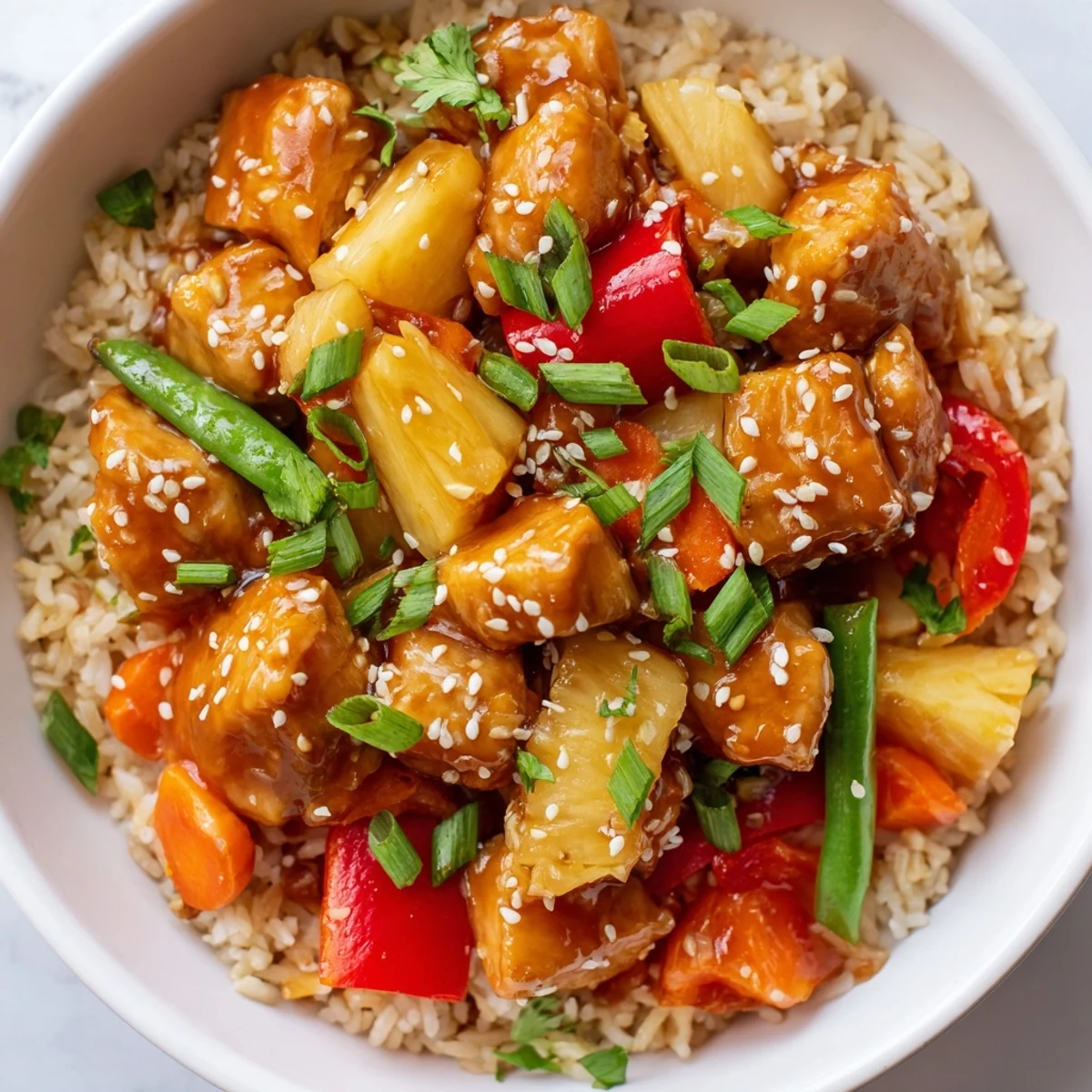
 This pineapple chicken rice bowl brings together tender, marinated chicken breast with fresh pineapple chunks and crisp vegetables in a savory-sweet soy-honey sauce.
Served over fluffy jasmine rice and finished with sesame seeds and cilantro, it delivers bold Asian fusion flavors in just 35 minutes.
Perfect for busy weeknights, the dish balances sweet, tangy, and umami notes while staying dairy-free and easy to customize with your favorite vegetables or heat level.
The sizzle of chicken hitting a hot wok on a Tuesday evening is its own kind of therapy, and this pineapple chicken rice bowl has rescued more weeknights than I can count. Something about the way caramelized soy sauce clings to golden pineapple chunks makes the whole kitchen smell like a beachside food stall. I stumbled onto this combination during a phase when I was determined to use up a lingering can of pineapple that had been staring at me from the pantry for weeks. It took exactly one bite to realize this was never leaving the rotation.
My roommate walked in while I was tossing the vegetables and declared it smelled better than any restaurant she had been to that month, which turned into a standing dinner invitation every Wednesday after that.
Ingredients
- Chicken breast (500 g): Cut into even pieces so everything finishes cooking at the same moment.
- Soy sauce (2 tbsp): The salty backbone of the sauce, and you can swap in tamari to keep it gluten free.
- Honey (1 tbsp): Balances the salt and helps the edges of the chicken caramelize beautifully.
- Rice vinegar (1 tbsp): A mild acid that brightens every bite without overpowering the sweet notes.
- Sesame oil (1 tbsp): Toasted sesame oil adds a nutty aroma that immediately signals something special is cooking.
- Cornstarch (1 tbsp): This is the secret to that velvety sauce texture that coats every piece.
- Garlic and ginger: Freshly minced is nonnegotiable here because the paste versions dull the punch.
- Jasmine rice (2 cups cooked): Fluffy and fragrant, it soaks up sauce like a sponge without turning mushy.
- Fresh pineapple (1 cup chunks): Canned works in a pinch, but fresh fruit gives you those charred edges that change everything.
- Red bell pepper, carrot, and snap peas: A crunchy colorful trio that keeps the bowl lively and textured.
- Green onions, sesame seeds, cilantro, and lime wedges: Finishers that make each bowl feel assembled with care.
Instructions
- Whisk the marinade together:
- Combine soy sauce, honey, vinegar, sesame oil, garlic, ginger, and cornstarch in a bowl until smooth, then tumble the chicken in and let it soak up all that flavor for at least ten minutes.
- Sear the chicken:
- Heat your wok or skillet over medium high and spread the chicken in an even layer, letting it sit undisturbed until the edges turn golden before you start tossing.
- Add the vegetables:
- Toss in the bell pepper, carrot, and snap peas, stir frying until they soften slightly but still have a satisfying snap when you bite them.
- Toss in the pineapple:
- Add the chunks and let them warm through for a minute or two so their juices mingle with the sauce without cooking away.
- Build the bowls:
- Spoon rice into bowls and ladle the hot chicken and pineapple mixture over the top so the sauce drapes down into every grain.
- Garnish generously:
- Scatter green onions, sesame seeds, and cilantro across each bowl and hand out lime wedges for a final bright squeeze.
 Pin it
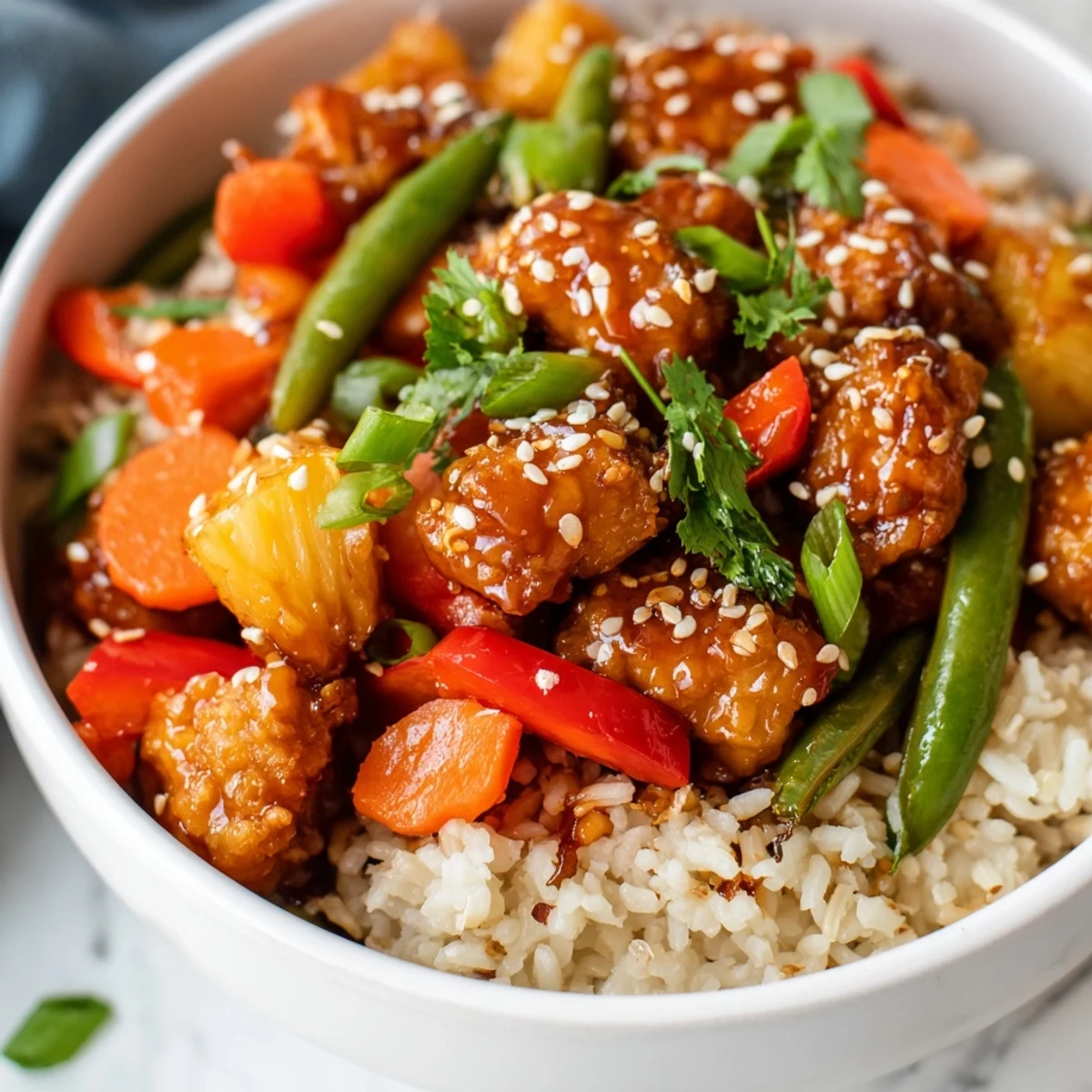
 The evening I served this to my parents, my father went back for a second bowl before anyone else had finished their first, and my mother quietly asked for the recipe on the drive home.
Wok Versus Skillet, What Actually Works
A flat bottomed wok gives you the best toss and the most surface area for that caramelized char, but a large stainless steel or cast iron skillet will do the job if that is what you have. The key is making sure the pan is genuinely hot before the chicken goes in, because a cold pan guarantees soggy edges.
Making It Your Own
Chicken thighs swap in seamlessly and actually stay juicier if you tend to overcook, while a handful of chili flakes or a drizzle of sriracha turns the whole bowl into something bolder. Cauliflower rice works surprisingly well for a lighter version, though you lose some of that sauce soaking magic.
Leftovers and Lunch the Next Day
This bowl reheats beautifully for lunch the next day if you store the rice and the chicken mixture separately so nothing gets soggy overnight.
- A splash of water in the pan while reheating brings the sauce back to life.
- A fresh squeeze of lime over the top makes leftovers taste like you just made them.
- Do not skip the garnish even on day two because it pulls everything together.
 Pin it
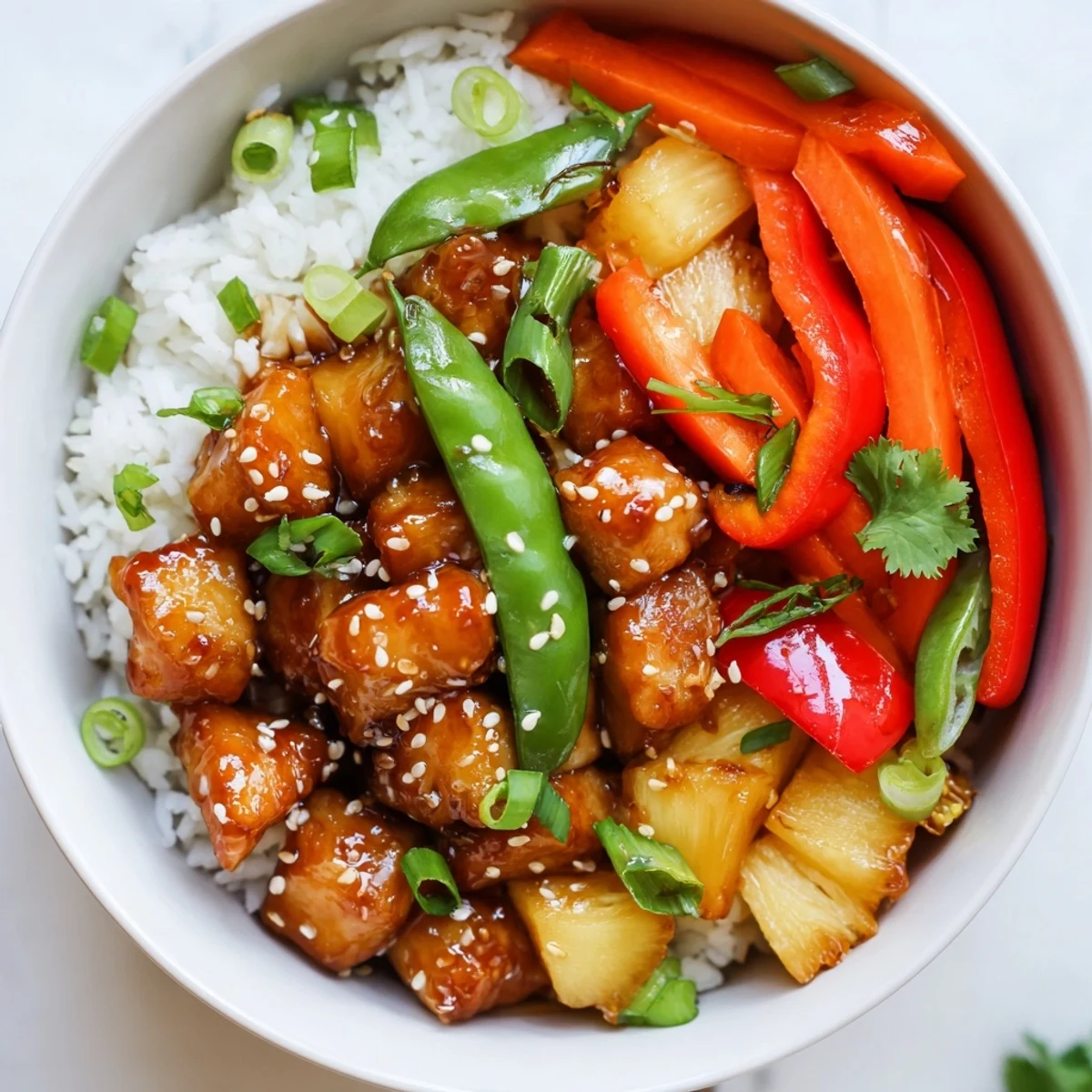
 Some recipes earn their place in your kitchen through sheer reliability, and this one rewards you every single time with almost no effort and a whole lot of flavor.
Recipe FAQs
- → Can I use canned pineapple instead of fresh?
-
Yes, canned pineapple chunks work well. Just make sure to drain them thoroughly before adding to the wok so the sauce doesn't become too watery.
- → What can I substitute for chicken breast?
-
Chicken thighs are a great alternative and will give you a juicier, more flavorful result. You can also use shrimp or tofu for a different protein option.
- → How do I make this dish low-carb?
-
Swap the jasmine rice for cauliflower rice. Simply pulse raw cauliflower in a food processor and sauté briefly until tender. This significantly reduces the carbohydrate content while keeping all the great flavors.
- → How should I store leftovers?
-
Store the chicken-pineapple mixture and rice separately in airtight containers in the refrigerator for up to 3 days. Reheat in a skillet or microwave until warmed through.
- → Can I add more spice to this bowl?
-
Absolutely. Add chili flakes, Sriracha, or sliced fresh jalapeños during the stir-fry step. You can also drizzle extra hot sauce over the finished bowl to taste.
- → Is this dish gluten-free?
-
It can be. Simply substitute regular soy sauce with tamari or a certified gluten-free soy sauce. Double-check all other sauce ingredients for hidden gluten as well.