 Pin it
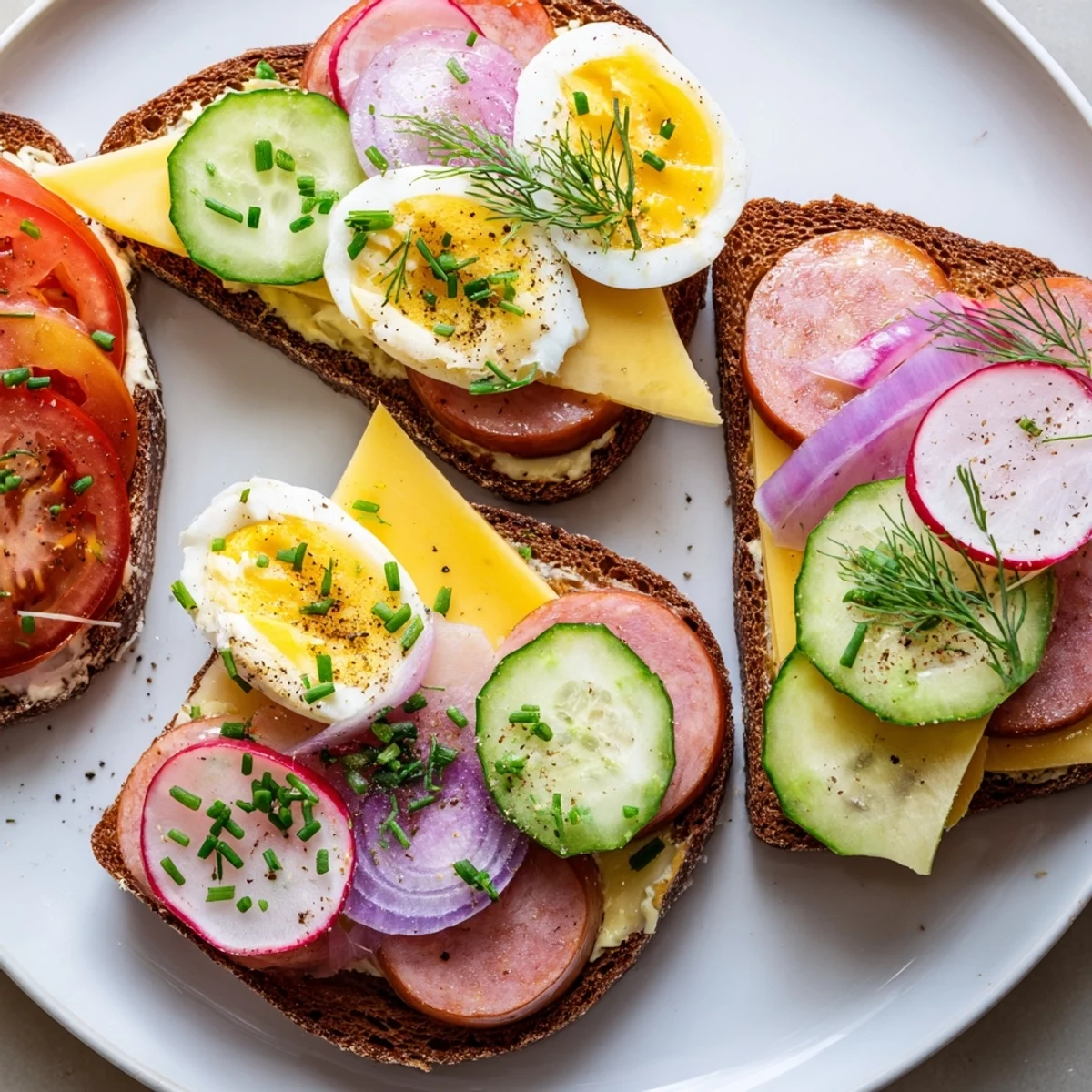
 Open faced Polish kanapki are a beloved staple of Polish cuisine, featuring slices of sturdy rye bread or baguette generously topped with a variety of savory ingredients.
Each sandwich is built on a butter-spread base, then layered with proteins like kielbasa, smoked ham, or hard-boiled egg, paired with yellow cheese such as Edam or Gouda.
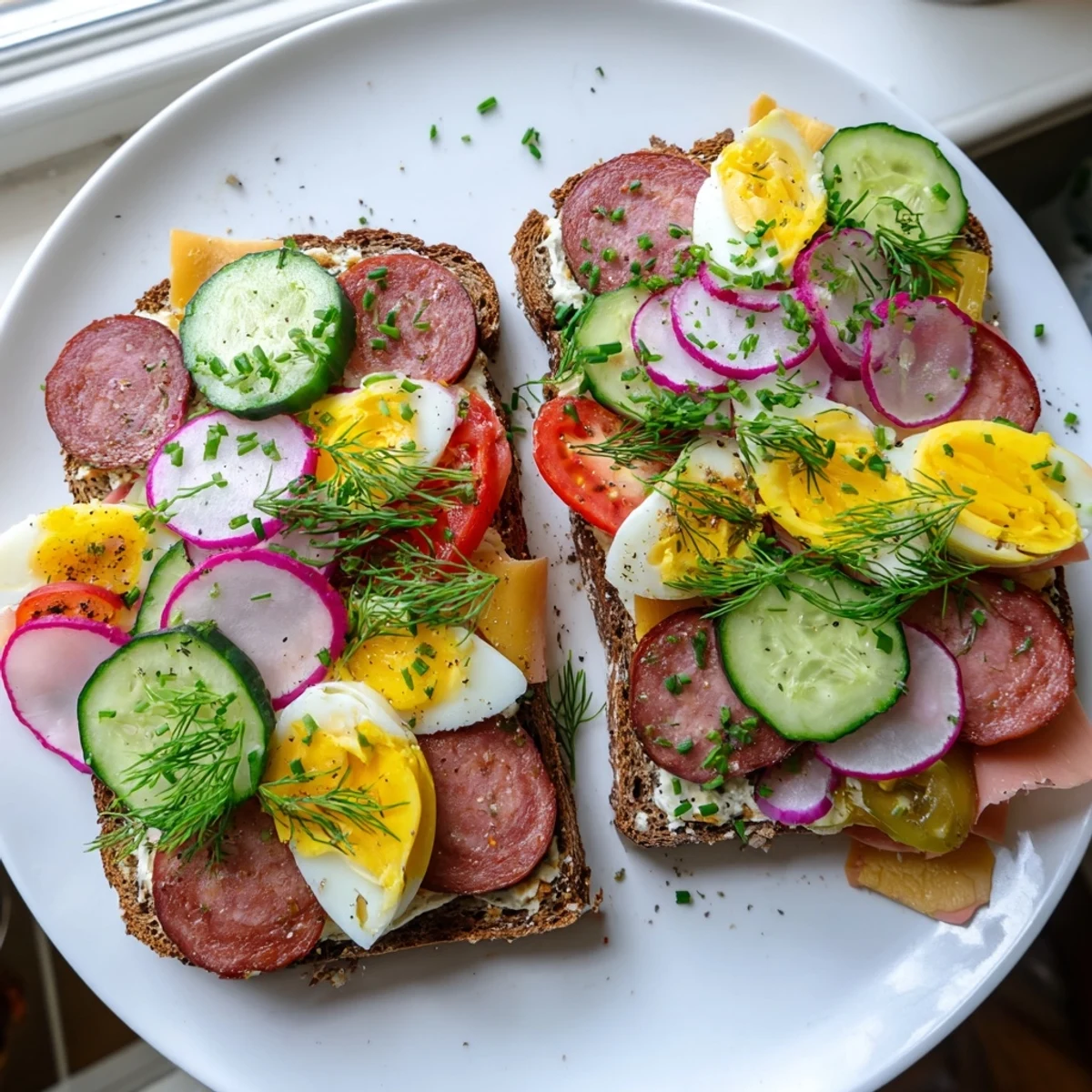
Fresh vegetables including thinly sliced tomatoes, cucumbers, radishes, and red onion add crunch and color, while chopped chives or dill bring a bright herbal finish. Ready in just 15 minutes with no cooking required, these sandwiches are ideal for breakfast, a light lunch, or as an eye-catching party appetizer.
My babcia would line up open faced sandwiches on a wooden board every Sunday morning, each one a tiny edible portrait with its own personality. She never followed a recipe, just layered whatever the garden and pantry offered that day. The fridge door would swing open, and out came radishes, butter, eggs, and whatever sausage my grandfather had brought home from the butcher. I learned that kanapki are less about precision and more about generosity with your hands and your time.
I brought a platter of these to a friend's potluck last winter and watched three grown adults ignore a table full of hot dishes to hover over the kanapki instead. There is something about a beautiful open sandwich that makes people feel cared for in a way that a casserole simply cannot. My friend Marta later confessed she ate four of them standing up before dinner even started.
Ingredients
- Rye bread or baguette (8 slices): Dense, sour rye is traditional and holds up beautifully under layers of toppings without collapsing under pressure.
- Unsalted butter, softened (3 tbsp): Let it sit out for thirty minutes so it spreads without tearing the bread, which is a small detail that matters enormously.
- Cream cheese (2 tbsp, optional): A thin layer under the butter adds tang and acts as extra insurance against soggy bread.
- Kielbasa or smoked ham (4 slices): Thinly sliced so every bite gets meat without overwhelming the other toppings.
- Hard cooked egg (4 slices): Cook them gently so the yolk stays bright yellow, not gray, which makes the sandwiches look as good as they taste.
- Yellow cheese such as Edam or Gouda (4 slices): A mild cheese lets the vegetables and herbs shine instead of competing with them.
- Tomato (1, thinly sliced): Use a serrated knife for clean cuts and seed the slices slightly to prevent the bread from getting wet.
- Small cucumber (1, thinly sliced): Leave the skin on for color and a satisfying snap in every bite.
- Red onion (1/4, thinly sliced): Soak the slices in ice water for five minutes if you want to tame the sharp bite without losing the crunch.
- Radishes (8, thinly sliced): Their peppery bite is what makes these sandwiches feel truly Polish and utterly refreshing.
- Fresh chives or dill, chopped: Do not skip the herbs, as they are the finishing touch that transforms simple toppings into something memorable.
- Salt and freshly ground black pepper: A generous pinch of flaky salt on top of each sandwich makes every flavor underneath wake up.
Instructions
- Prepare the bread foundation:
- Lay all eight slices flat on a clean cutting board and check that each one is thick enough to support toppings without bending. If using a baguette, slice it on a slight diagonal for a wider surface area and a more elegant look.
- Spread the base layer:
- Use a butter knife to spread each slice edge to edge with softened butter, or cream cheese if you are using it, making sure to reach the corners. A thin even layer is all you need, as this is your moisture barrier between bread and toppings.
- Build the protein layer:
- Arrange one slice of kielbasa, ham, egg, or cheese on each piece of bread, folding or trimming to fit neatly. Mix and match across the platter so everyone finds something they love.
- Add the vegetable crown:
- Layer tomato, cucumber, red onion, and radish slices on top, letting colors overlap and spill slightly over the edges. Arrange them with some intention, as the visual appeal of kanapki is half the pleasure.
- Finish with herbs and seasoning:
- Scatter chopped dill or chives generously over each sandwich, then finish with a pinch of salt and a few grinds of black pepper. Step back and admire your work before serving immediately while the bread is still fresh and the vegetables are crisp.
 Pin it
 One Christmas Eve I sat with my cousin in a quiet kitchen long after everyone had gone to bed, eating leftover kanapki by the light of the refrigerator. The rye had softened just enough to feel indulgent, and the dill still smelled like summer. We did not say much, just passed the plate back and forth and let the food do the talking.
Choosing the Right Bread
The bread is the quiet hero of every kanapka, and after years of experimentation I can tell you that not all loaves are created equal for this job. A dense sour rye with caraway seeds is the gold standard because it has structure, flavor, and just enough chew to stand tall under a mountain of toppings. Sourdough works in a pinch, especially if it has a sturdy crust, but avoid anything too airy or delicate because it will collapse and leave you with a soggy mess. Slice it about half an inch thick, which is thick enough to be sturdy but thin enough to let the toppings take center stage.
Making It Your Own
The beauty of open faced sandwiches is that there is no wrong way to build them, only ways you have not tried yet. Some days I go fully vegetarian with roasted red peppers and pickled beets, and other times I layer on smoked salmon with capers and a squeeze of lemon. My neighbor swaps the butter for hummus and adds roasted eggplant, which sounded strange until I tasted it and immediately asked for seconds. Let what is seasonal and available guide you, because that is exactly how my babcia did it.
Serving and Sharing
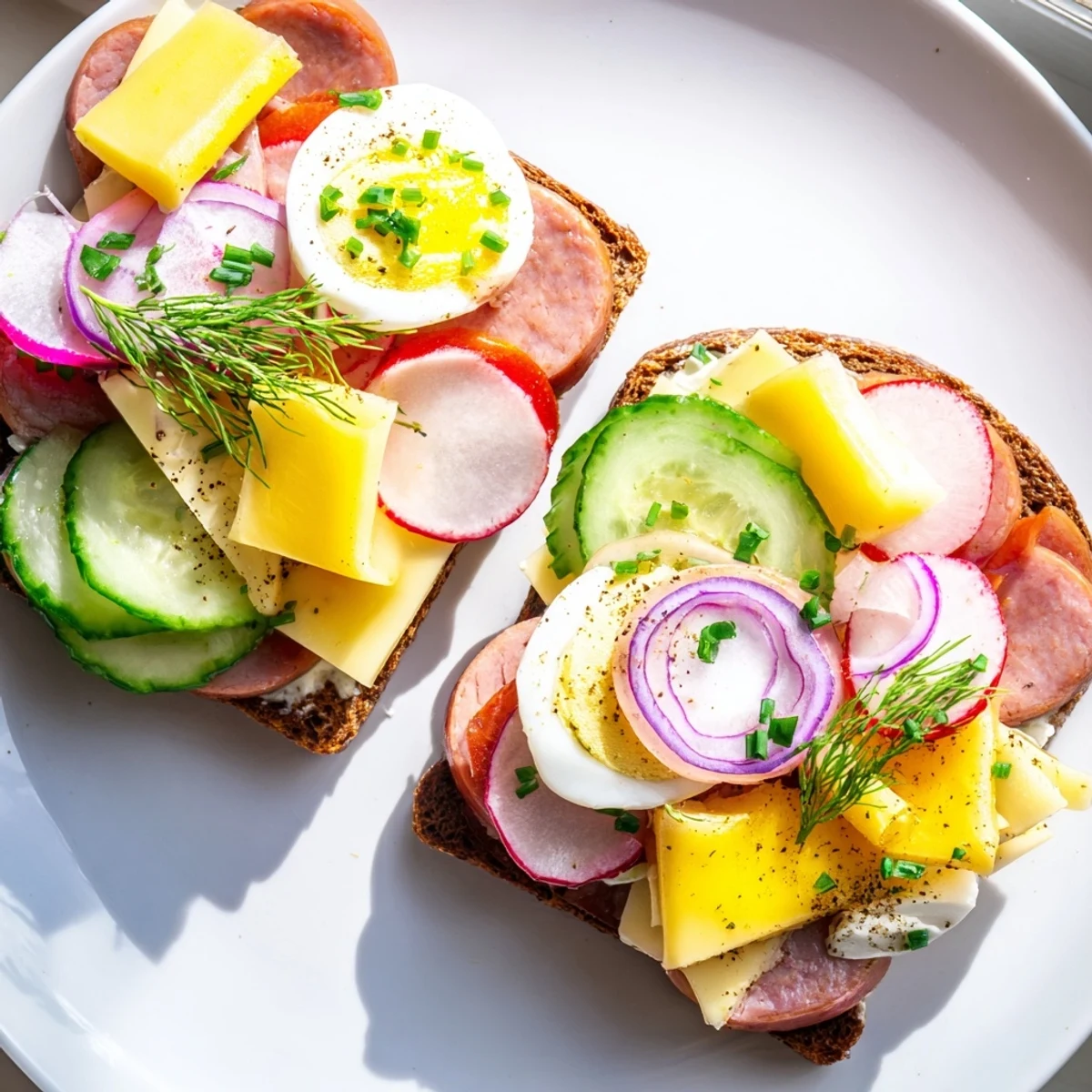
Presentation turns simple sandwiches into something worthy of a celebration, and a little effort here goes a long way. Arrange them on a wooden board or a ceramic platter with some extra herbs scattered between them, and watch how people gravitate toward the table before you even announce the food is ready.
- Pair these with strong black tea or a cold lager for the full Polish experience.
- Set out small bowls of pickles and horseradish so guests can customize each bite.
- Always make a few extra, because they disappear faster than you think.
 Pin it
 Keep a platter of kanapki in your repertoire and you will never be caught without something wonderful to offer unexpected guests. They are proof that the simplest food, made with care and good ingredients, is always enough.
Recipe FAQs
- → What type of bread works best for kanapki?
-
Traditional Polish kanapki are made with dense, hearty rye bread that holds up well under toppings without becoming soggy. A fresh baguette, sourdough, or whole grain bread also works beautifully as alternatives.
- → Can I prepare kanapki ahead of time?
-
For the best results, assemble kanapki close to serving time so the bread stays fresh and the vegetables remain crisp. You can prepare individual toppings like sliced eggs, cheese, and vegetables in advance and store them separately in the refrigerator.
- → What are traditional toppings for Polish kanapki?
-
Classic toppings include kielbasa slices, smoked ham, hard-boiled egg, yellow cheese like Edam or Gouda, pickles, and fresh vegetables such as tomato, cucumber, and radish. Fresh herbs like dill or chives are essential for authentic flavor.
- → Are kanapki served warm or cold?
-
Kanapki are typically served cold or at room temperature, making them a convenient no-cook option. The bread is usually spread with softened butter or cream cheese straight from there, and toppings are arranged fresh.
- → How do I make kanapki vegetarian-friendly?
-
Simply omit the kielbasa and ham, and focus on toppings like hard-boiled egg slices, various cheeses, and an abundance of fresh vegetables. Marinated mushrooms, roasted peppers, and hummus also make excellent vegetarian additions.
- → What drinks pair well with Polish kanapki?
-
In Poland, kanapki are commonly enjoyed with a cup of hot black tea or alongside a cold crisp lager. They also pair well with mild herbal teas, sparkling water with lemon, or a light pilsner beer.