 Pin it
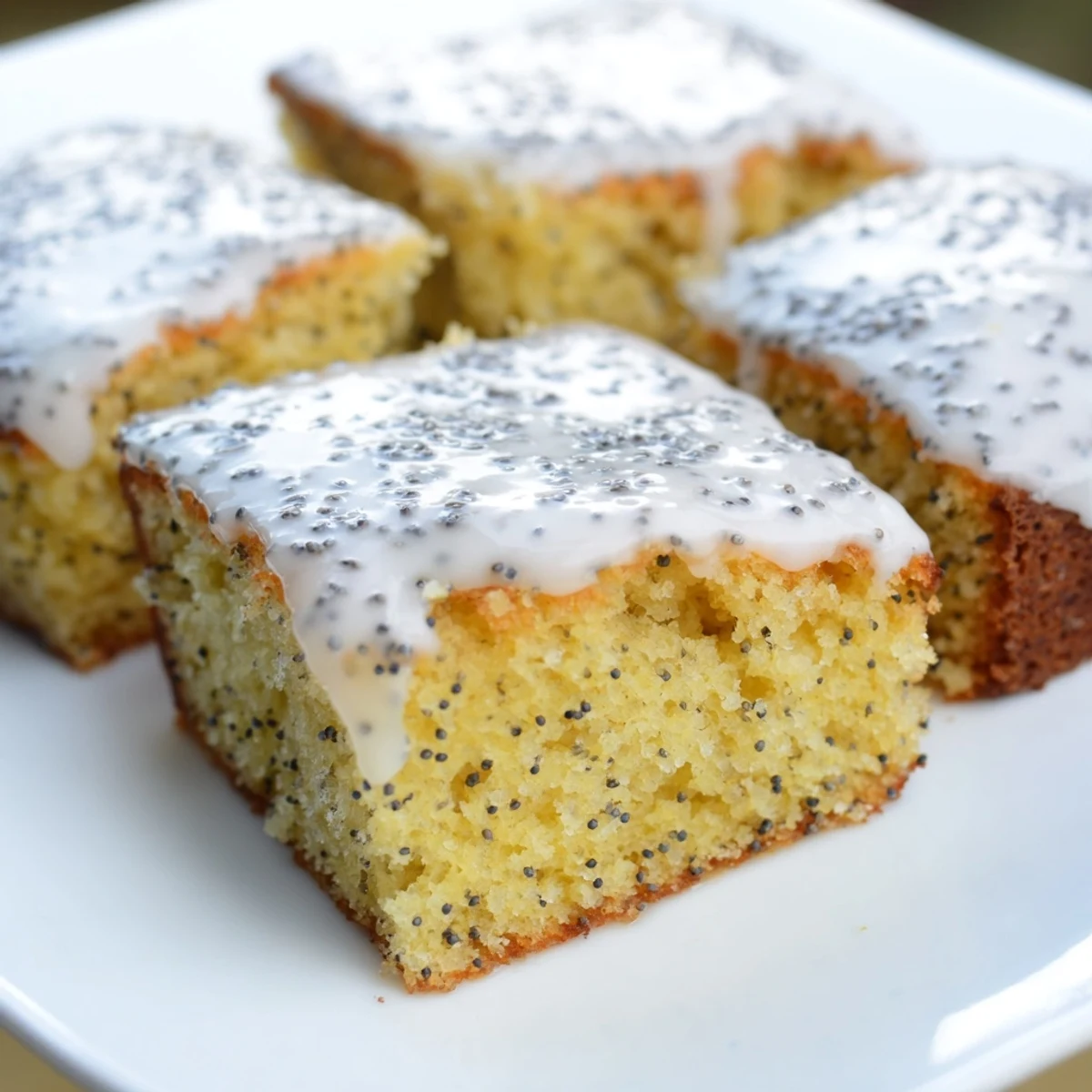
 This moist and zesty traybake combines the fresh, vibrant flavor of lemon with the subtle crunch of poppy seeds throughout. Creamed butter and sugar form a light base, enhanced by lemon zest and vanilla. The citrus drizzle adds tangy sweetness, soaking into the warm baked squares for extra moisture and zing. Perfectly golden and tender, this traybake is simple to prepare and cuts easily into shareable squares. Ideal as a bright, flavourful dessert or teatime treat, it pairs beautifully with creamy accompaniments or a cup of Earl Grey.
There's something about the smell of lemon zest hitting hot butter that instantly transports me back to my mum's kitchen on a grey afternoon. She'd be humming to herself, filling the whole house with that bright citrus scent while a tray of golden cake cooled on the counter. I've made countless versions since, but this one—with its subtle crunch of poppy seeds and that tangy drizzle soaking into warm sponge—feels like the one she always meant to make.
I made this for a bake sale at work once, and someone came back asking for the recipe because apparently it disappeared in the first ten minutes. That small victory—watching someone's face light up as they bit into that zesty, tender crumb—reminded me why I love baking. It's not just about feeding people; it's about giving them a moment of uncomplicated joy.
Ingredients
- 225 g unsalted butter, softened: Room temperature butter creams smoothly with sugar, trapping air bubbles that make the cake light and fluffy instead of dense.
- 225 g caster sugar: The fine grains dissolve easily, creating that pale, fluffy base that's the secret foundation of any good cake.
- 4 large eggs: Add them one at a time so they fully incorporate; rushing this step can make your batter curdle.
- 250 g self-raising flour: This has leavening built in, so you don't need to think about baking powder—one less thing to worry about.
- 2 tbsp poppy seeds: They add a subtle nuttiness and those charming little specks; toast them lightly for deeper flavor if you're feeling adventurous.
- Zest of 2 lemons: Use a microplane or fine grater to catch all that fragrant oil; the finer the zest, the more even it distributes throughout the batter.
- 2 tbsp milk: Just enough to loosen the mixture to a dropping consistency without making it wet or heavy.
- 1 tsp vanilla extract: It rounds out the lemon without competing with it, like a quiet friend who makes everything better.
- ¼ tsp fine salt: This tiny amount enhances sweetness and balances the brightness of the lemon.
- Juice of 2 lemons: Squeeze and strain out any pips; fresh juice makes all the difference in the drizzle.
- 100 g icing sugar: When mixed with lemon juice, it sets into a thin, sweet-tart glaze that cracks slightly as it cools.
Instructions
- Preheat and prepare:
- Set your oven to 180°C (160°C fan, 350°F) and line your traybake tin with baking parchment, letting it come up the sides. A lipped tin is easier to handle, and the parchment means you can lift the whole cake out once cooled without breaking it.
- Cream the butter and sugar:
- Beat them together for about 3 minutes until the mixture turns pale, fluffy, and falls from the spoon in ribbons. This is where the magic begins—you're building a foundation of tiny air pockets that'll keep your cake tender.
- Add the eggs:
- Drop them in one at a time, beating well after each one so they fully incorporate. If the mixture looks a bit curdled, don't panic; a spoonful of flour stirred in will bring it back together.
- Fold in the dry ingredients and zest:
- Gently fold the flour, poppy seeds, lemon zest, salt, and vanilla into the wet mixture using a spatula or wooden spoon. Keep stirring until no flour streaks remain, then add the milk to bring everything to a smooth, dropping consistency.
- Fill the tin:
- Pour the batter into your prepared tin and spread it level. The mixture should be thick but not stiff, spreading easily without leaving peaks.
- Bake until golden:
- Bake for 28 to 32 minutes until the top is golden and a skewer poked into the center comes out clean. If the edges are browning too fast, tent the tin loosely with foil, but resist opening the oven door too often.
- Make the drizzle:
- While the cake bakes, whisk the lemon juice and icing sugar together until smooth. A few small lumps are fine; they'll dissolve into the hot cake.
- Drizzle while warm:
- The moment the cake comes out of the oven, poke holes all over with a skewer and pour the drizzle evenly across the surface. Watch it soak in—this is where the magic happens, the liquid gold soaking into warm sponge and making each square impossibly moist.
- Cool completely:
- Let the cake cool in the tin for at least an hour, which lets the drizzle set and the cake firm up enough to cut into neat squares. Once cool, run a knife around the edges and lift out on the parchment.
 Pin it
 The real turning point came when a friend mentioned she always dried out cakes trying to make them healthier. I gave her a slice of this and watched her expression change—she couldn't believe something so moist and vibrant could actually be simple to make. That's when I realized this traybake isn't just cake; it's proof that good things don't need to be complicated.
Why Lemon and Poppy Seeds Work So Well Together
Lemon and poppy seeds have been paired for centuries, but not by accident—the citrus cuts through the seed's subtle earthiness while the seeds add texture and visual interest that plain lemon cake can't quite achieve. There's also something about the slight bitterness in poppy seeds that makes the sweetness of the drizzle feel more balanced, less cloying. Together, they create a flavor that feels elegant without being fussy, familiar without being boring.
Storage and Serving Suggestions
This traybake keeps beautifully for four days in an airtight container at room temperature, and honestly tastes even better on day two as the flavors settle and the cake softens further. Serve squares at room temperature with a cup of Earl Grey tea or a dollop of Greek yogurt, which adds a cool, tangy contrast to the sweet-sharp cake. If you're bringing it somewhere, leave it in the tin until you're ready to serve—it's sturdier that way and always impresses when you lift it out whole.
Variations and Swaps You Can Try
Once you've made this once, you'll start seeing ways to make it your own. A tablespoon of finely chopped preserved lemon stirred into the batter adds an almost jammy depth, while swapping poppy seeds for chia seeds gives you a slightly earthier crunch. You could also try infusing the milk with a pinch of saffron, or replacing half the lemon zest with lime for a different brightness entirely.
- Brush the cooled cake with a thin layer of honey mixed with a splash of water for extra shine and subtle sweetness.
- Scatter a few candied lemon slices on top while the drizzle is still wet so they stick.
- Mix a tiny pinch of cardamom into the drizzle for an unexpected warmth that makes people ask what the secret ingredient is.
 Pin it
 This cake has become my go-to when I want to make someone smile without overthinking it. It's proof that the simplest things, made with care and fresh ingredients, often taste the best.
Recipe FAQs
- → How do I achieve a moist texture?
-
Use softened butter and cream it well with sugar to incorporate air. The lemon drizzle poured over warm traybake also locks in moisture.
- → Can I substitute poppy seeds with another ingredient?
-
Yes, chia seeds can be used as an alternative for a different but pleasant crunch and texture.
- → What is the best way to add lemon flavor without overpowering?
-
Incorporate both lemon zest into the batter and a tangy lemon drizzle on top to balance fresh citrus notes delicately.
- → How do I ensure even baking in a traybake?
-
Line the tray with parchment and bake at the recommended temperature, rotating once if needed for uniform color and doneness.
- → What accompaniments complement this traybake?
-
Serve with crème fraîche or Greek yogurt for creaminess, or enjoy alongside a cup of Earl Grey tea to enhance citrus flavors.