 Pin it
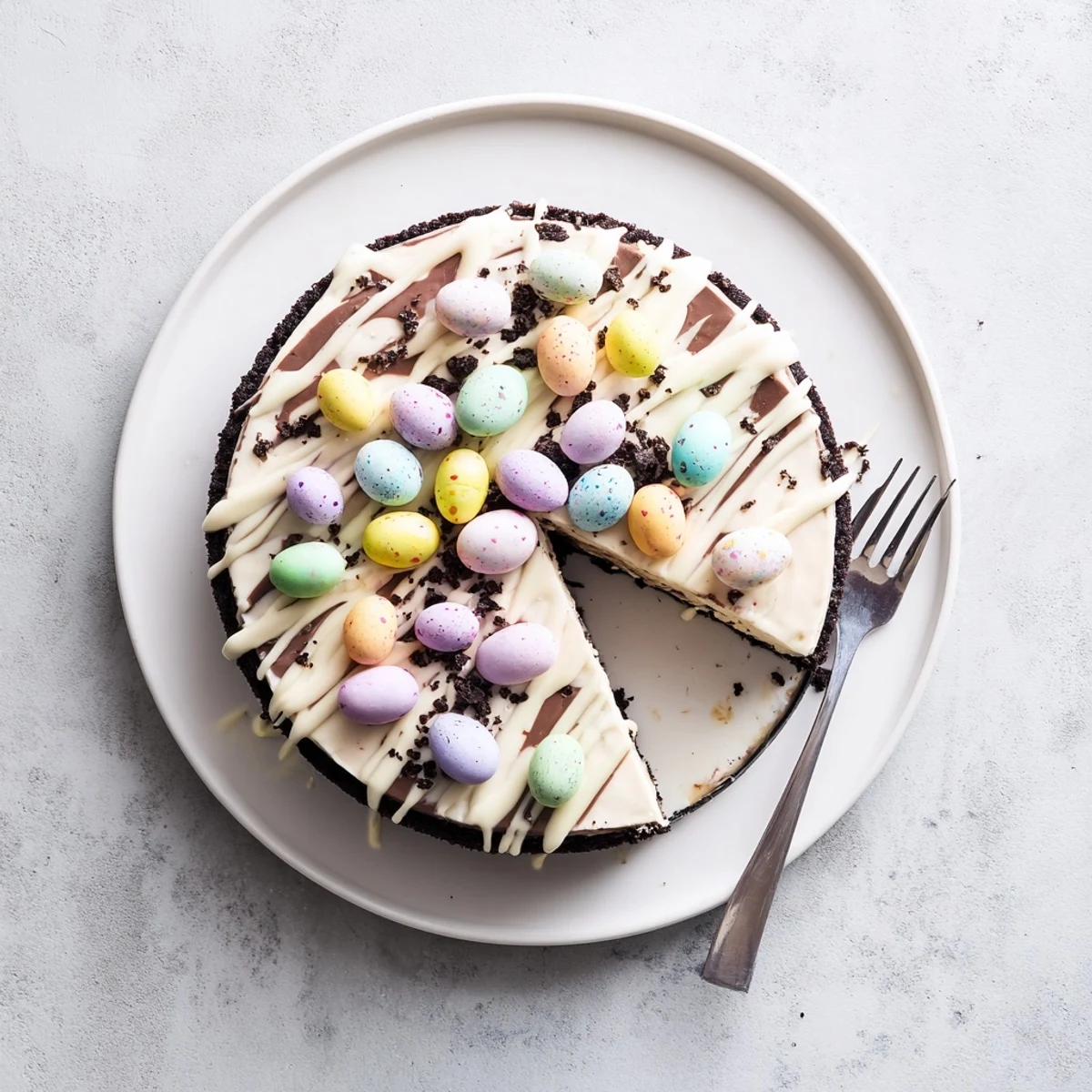
 This indulgent Easter dessert combines a rich chocolate sandwich cookie base with an exceptionally smooth cream cheese filling. The classic New York-style batter incorporates sour cream for tanginess and lemon zest for brightness, creating a perfectly balanced sweetness. After baking until just set with a gentle wobble at the center, the cheesecake cools gradually in the oven to prevent cracking. A minimum four-hour chilling period ensures the proper silky texture. The final touch involves arranging vibrant mini chocolate Easter eggs across the top, with optional melted white chocolate drizzling adding extra visual appeal and sweetness.
Last Easter, my youngest helped me press crushed Oreos into the springform pan, chocolate-smudged fingers and all. We decided last-minute to transform our usual cheesecake into something festive with those pastel mini eggs she'd been eyeing at the grocery store. The way they scattered across the finished cake made it look like a little edible garden, and honestly, it stole the show from the ham.
I learned the hard way that room temperature ingredients aren't just a suggestion when I once tried rushing this with cold cream cheese. The batter went lumpy, and no amount of beating would save it. Now I set everything out on the counter before I even start the coffee, and the difference in silkiness is worth every minute of patience.
Ingredients
- 200 g chocolate sandwich cookies: Oreos work beautifully here, and the cream filling inside means you don't need to add extra sugar to the crust
- 75 g unsalted butter, melted: Let it cool slightly after melting so it doesn't start cooking the cookie crumbs when you mix them
- 600 g full-fat cream cheese: Please don't use reduced-fat here, the texture simply won't set properly and you'll end up with something closer to a pudding cake
- 150 g granulated sugar: This sweetens without making it cloying—the sour cream and lemon zest balance everything out
- 2 tbsp cornstarch: The magic stabilizer that prevents cracks and gives the cheesecake structure while keeping it velvety
- 200 ml sour cream: Adds tang and moisture—Greek yogurt works in a pinch but the texture changes slightly
- 3 large eggs: Add one at a time and beat only until just incorporated to prevent incorporating too much air
- 1 tsp pure vanilla extract: Don't skip this—it bridges the gap between chocolate crust and creamy filling
- Zest of 1 lemon: Brightens the whole cake and cuts through the richness so every slice feels light
- 100 g mini chocolate Easter eggs: Press these gently into the top after chilling so they don't sink into the filling
- 50 g white chocolate, melted: The drizzle is purely optional but makes it look like something from a bakery window
Instructions
- Get your oven ready:
- Preheat to 160°C (320°F) and line the base of a 23 cm springform pan with parchment paper—I like to cut a circle just slightly smaller than the base so it doesn't peek out the edges.
- Build the chocolate foundation:
- Crush those cookies into fine crumbs, stir in the melted butter until it resembles wet sand, then press firmly into your prepared pan. Pop it in the fridge to set while you make the filling.
- Start the creamy base:
- Beat the cream cheese and sugar until completely smooth—this takes about 2-3 minutes and there should be zero lumps remaining before you move on.
- Add structure and tang:
- Mix in the cornstarch until you can't see white powder anymore, then blend in the sour cream until the mixture is glossy and uniform.
- Gently incorporate the eggs:
- Add eggs one at a time, mixing on low speed just until each disappears. Overbeating here adds air bubbles that cause cracks, so resist the urge to keep whipping.
- Finish with flavor:
- Fold in the vanilla and lemon zest by hand—the zest should be visible in tiny specks throughout the batter.
- Assemble and bake:
- Pour the filling over your chilled crust, smooth the top with an offset spatula, and bake for 50-60 minutes until the edges are set but that center still wobbles like gelatin when you gently shake the pan.
- The patience phase:
- Turn off the oven, crack the door open with a wooden spoon, and let the cheesecake cool inside for an hour—this slow cooling prevents the dramatic center crack that haunts bakers everywhere.
- Chill thoroughly:
- Cool completely at room temperature, then cover and refrigerate for at least 4 hours, though overnight is even better for flavor development and slicing.
- Make it festive:
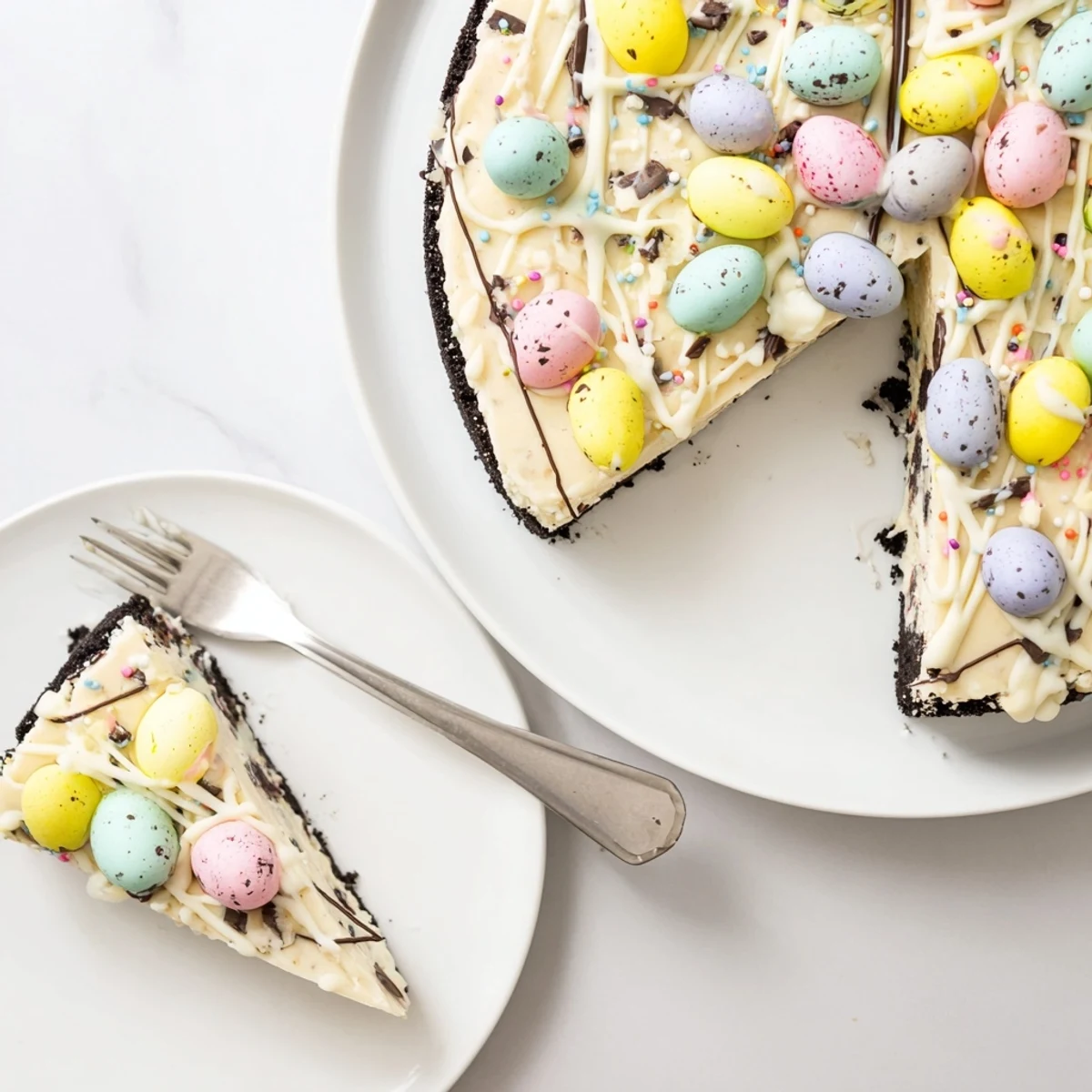
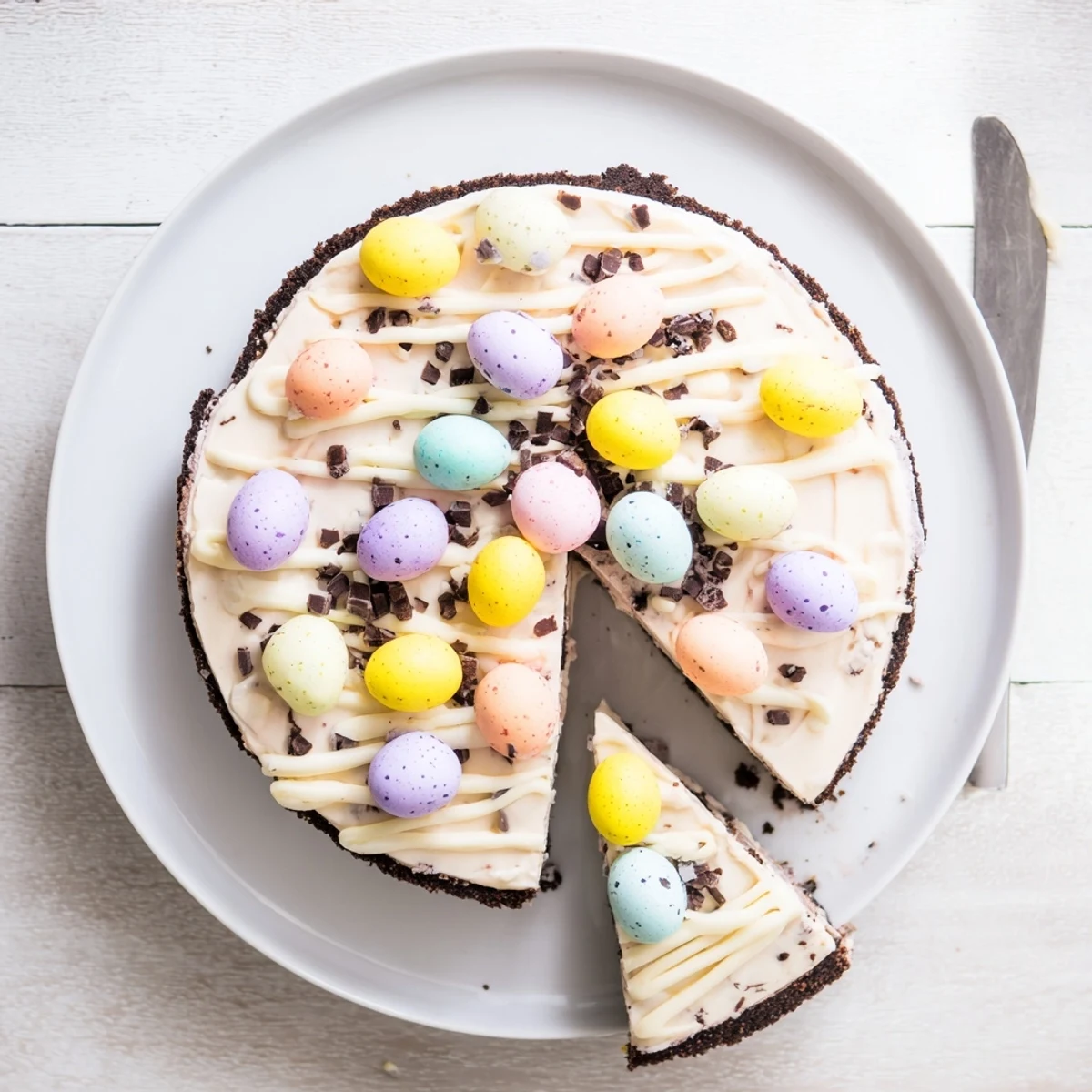
- Decorate with mini chocolate eggs and drizzle with melted white chocolate if you're feeling fancy, then release the springform ring and slice into wedges.
 Pin it
 When my sister-in-law first saw this on the dessert table, she thought I'd ordered it from a specialty bakery. Watching her face when I told her it was just Oreos and cream cheese was better than eating the first slice myself—almost, anyway.
Mastering the Water Bath
I'll be honest, I skip the traditional water bath for this recipe because the cornstarch stabilizes everything beautifully. If you're a perfectionist who wants restaurant-quality results, wrap your springform pan in foil and place it in a roasting pan with an inch of hot water. The steam creates the silkiest texture you'll ever experience, though honestly, nobody has ever complained about the version without it.
Storage Secrets
This cheesecake actually improves after a day in the refrigerator—the flavors meld together and the texture becomes impossibly smooth. Cover it tightly with plastic wrap once it's completely chilled, and it will happily wait in your fridge for up to five days. If you're making it ahead for Easter Sunday, you can even freeze the undecorated cake for up to a month—just thaw it overnight in the fridge before adding those colorful eggs.
Customization Ideas
Swap the lemon zest for orange if you want something that screams spring even louder. The chocolate-orange combination with the creamy filling is unexpectedly sophisticated, and I've had guests request that variation specifically. You could also fold crushed mini eggs directly into the batter before baking, though they sink to the bottom and create a marbled effect that's just as gorgeous as topping them at the end.
- Try crushing some speckled Easter eggs into the crust for extra color
- A dollop of mascarpone whipped cream on each slice elevates it to dinner-party status
- If serving kids, let them arrange the egg decorations themselves
 Pin it
 There's something deeply satisfying about cutting into that first slice and hearing the tiny crunch of the crust. Happy baking, and may your Easter table be filled with seconds and requests for the recipe.
Recipe FAQs
- → Can I make this ahead of time?
-
Yes, this cheesecake can be prepared up to 2 days in advance and kept refrigerated. The flavors actually develop and improve after resting overnight.
- → How do I prevent cracks from forming?
-
Cool the cheesecake gradually by turning off the oven and cracking the door open for 1 hour. Avoid overbeating the eggs, which incorporates too much air.
- → Can I use regular cookies instead of chocolate sandwich cookies?
-
You can substitute digestive biscuits, graham crackers, or chocolate chip cookies, though the flavor profile will change slightly.
- → What's the best way to slice clean pieces?
-
Use a sharp knife dipped in hot water and wiped clean between cuts. Run the knife under hot water and dry thoroughly for each slice.
- → Can I freeze this cheesecake?
-
Yes, freeze the undecorated cheesecake wrapped tightly in plastic and foil for up to 3 months. Thaw overnight in the refrigerator before adding decorations.