 Pin it
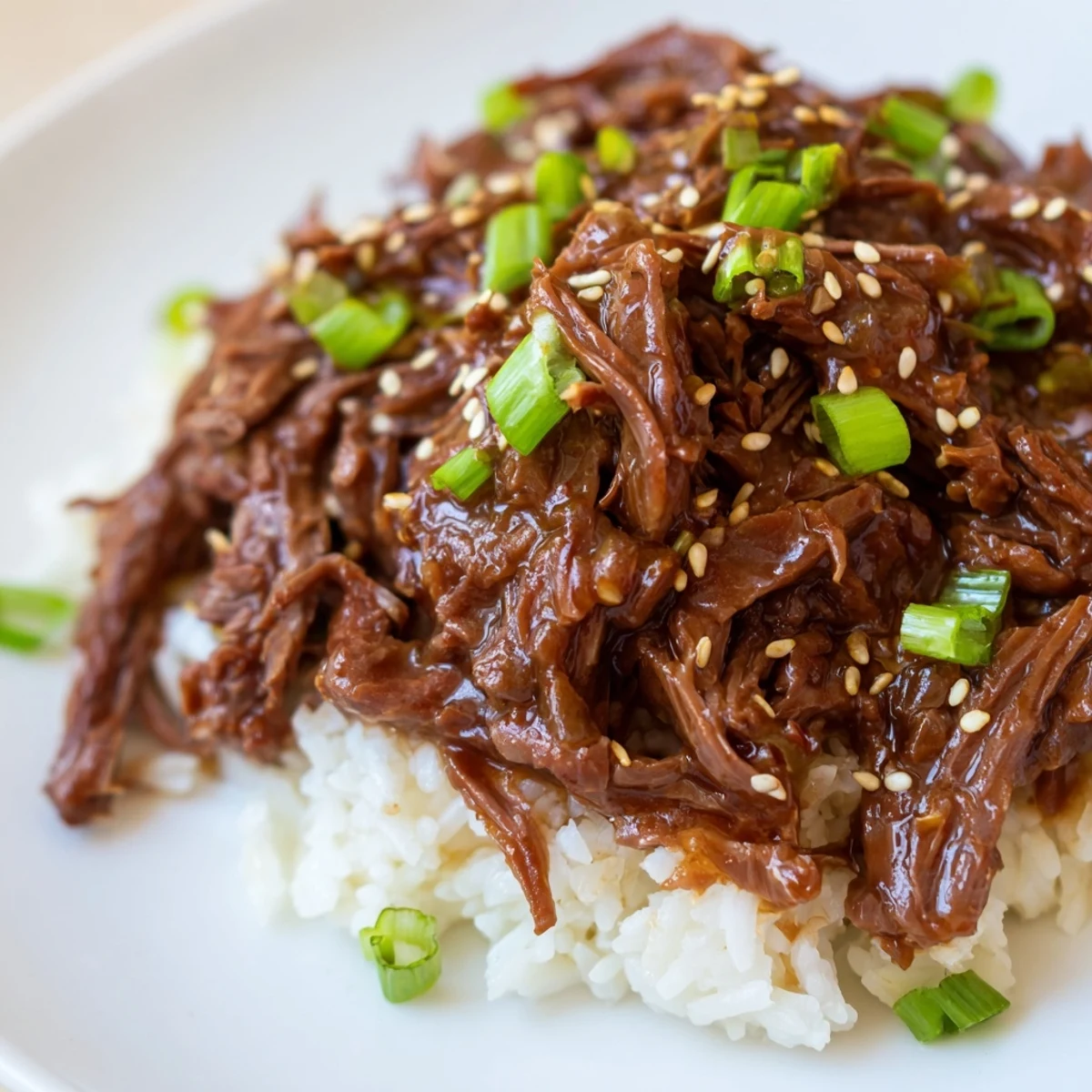
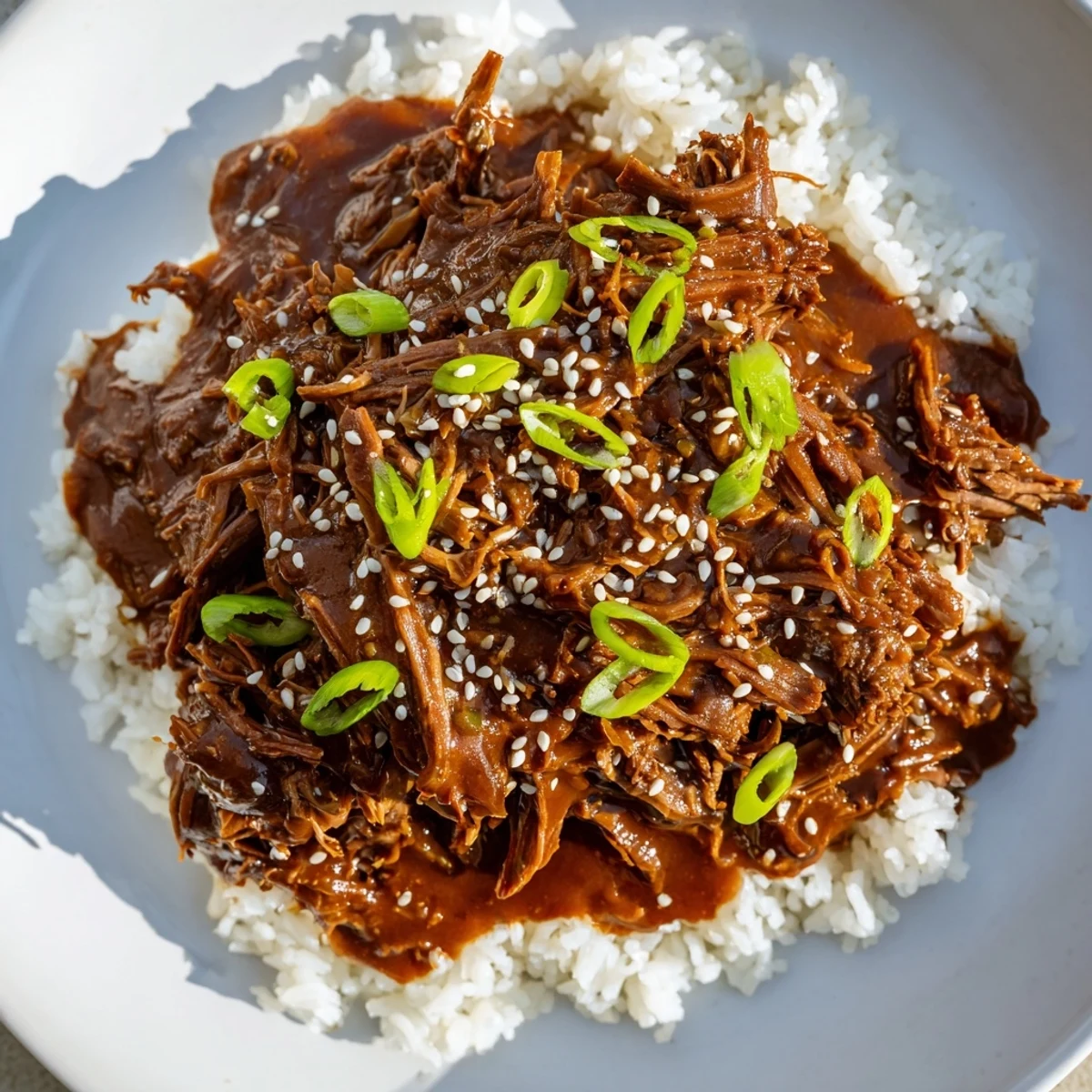
 Tender beef chunks slow-cooked in a savory-sweet Korean-inspired sauce with soy, brown sugar, ginger, garlic, and pear. Shredded and served over jasmine rice with green onions and sesame seeds. Perfect for easy weeknight dinners or gatherings.
The smell of sesame and garlic filled my tiny apartment that first winter I attempted Korean beef without a recipe. My roommate kept wandering into the kitchen, asking if it was done yet. That six-hour wait felt impossible, but the first bite made me understand why slow cooking is worth the patience. Now this is the meal I make when I want people to feel taken care of without me actually being in the kitchen.
I made this for my sister's family last month and her three kids who usually complain about anything spicy went back for thirds. The way the sweet pear balances with the gochujang creates this flavor that somehow works for everyone. My brother-in-law actually asked for the recipe before he even finished his plate, which is basically his highest compliment.
Ingredients
- 2 lbs beef chuck roast: Chuck has the perfect marbling for slow cooking, becoming meltingly tender while still holding its shape enough to shred beautifully
- ½ cup low-sodium soy sauce: Low-sodium lets you control the salt level since the sauce reduces and concentrates during cooking
- ⅓ cup brown sugar: Dark brown sugar adds a molasses depth that balances the salty soy sauce and creates that caramelized finish
- ¼ cup water: Just enough liquid to get things going, the beef will release its own juices as it cooks
- 2 tablespoons rice vinegar: Adds a subtle brightness that cuts through the richness and helps tenderize the meat
- 2 tablespoons sesame oil: Toasted sesame oil gives that unmistakable Korean flavor, but add it at the end to preserve its delicate aroma
- 1 tablespoon freshly grated ginger: Fresh ginger has a zing that powdered ginger can never replicate, and it cuts through the rich sauce
- 4 cloves garlic, minced: Garlic mellows and sweetens during long cooking, becoming aromatic rather than sharp
- 1 tablespoon gochujang: This Korean chili paste brings a complex heat with subtle sweetness, though red pepper flakes work in a pinch
- 1 Asian pear, grated: The pear's enzymes tenderize the meat while its natural sweetness balances the salty sauce
- 1 tablespoon cornstarch: Essential for transforming the cooking liquid into that glossy, clingy sauce that coats every strand of beef
- 4 cups cooked jasmine rice: Jasmine rice's floral aroma pairs perfectly with Korean flavors, though short grain rice works too
- 2 green onions: Fresh green onion brings a crisp contrast to the tender beef and rich sauce
- 1 tablespoon toasted sesame seeds: These add a nutty crunch and make the dish look as good as it tastes
Instructions
- Whisk together the sauce:
- Combine soy sauce, brown sugar, water, rice vinegar, sesame oil, ginger, garlic, gochujang, and grated pear in a medium bowl until the sugar dissolves completely. Take a moment to appreciate how fragrant this mixture already is.
- Prep the beef and assemble:
- Place the beef chunks in your crock pot and pour that gorgeous sauce over everything, making sure each piece gets coated. The raw beef will look a bit naked swimming in all that liquid, but trust the process.
- Let the slow cooker work its magic:
- Cover and cook on low for 6 to 7 hours until the beef shreds with practically no effort. Your kitchen will start smelling incredible around hour four.
- Shred the beef:
- Remove the beef from the crock pot and use two forks to pull it apart into satisfying strands. This is the moment you realize this was worth the wait.
- Thicken the sauce:
- Skim any excess fat off the sauce, then stir in cornstarch mixed with cold water until the sauce glossy and coats the back of a spoon. Return the beef to the pot and toss it in that thickened sauce.
- Finish and serve:
- Let everything heat through on high for about 15 minutes, then pile over steaming rice and shower with green onions and sesame seeds. Watch people's faces when they take their first bite.
 Pin it
 This recipe became my go-to for new parents and friends recovering from surgery because it comforts without demanding attention. I've dropped off containers to three different neighbors this past year alone, and every single one texted me before they even finished the portion asking for the recipe. There's something about slow-cooked beef that says home.
Making It Ahead
This beef actually tastes better the next day after the flavors have had more time to mingle. I often make it on Sunday and let it cool in the refrigerator overnight, then gently reheat it Monday evening. The fat separates and makes it so easy to skim off before serving, resulting in a cleaner-tasting dish.
The Pear Secret
Traditional Korean marinades often use grated Asian or Korean pear because its enzymes naturally tenderize meat while adding subtle sweetness. I've used regular Bosc pears and even apples in a pinch, and they all work beautifully. Just grate it on the finest side of your box grater so it almost dissolves into the sauce.
Serving Ideas Beyond Rice
While rice is classic, I've piled this beef into lettuce cups for a lighter twist that's perfect for summer. It also makes incredible tacos with quick-pickled cucumbers and some extra gochujang mayo. My kids even love it over ramen noodles when they want something faster than waiting for rice to cook.
- Steamed broccoli or roasted bok choy soaks up that amazing sauce
- Kimchi on the side adds crunch and probiotic benefits
- A simple cucumber salad with rice vinegar helps cut through the richness
 Pin it
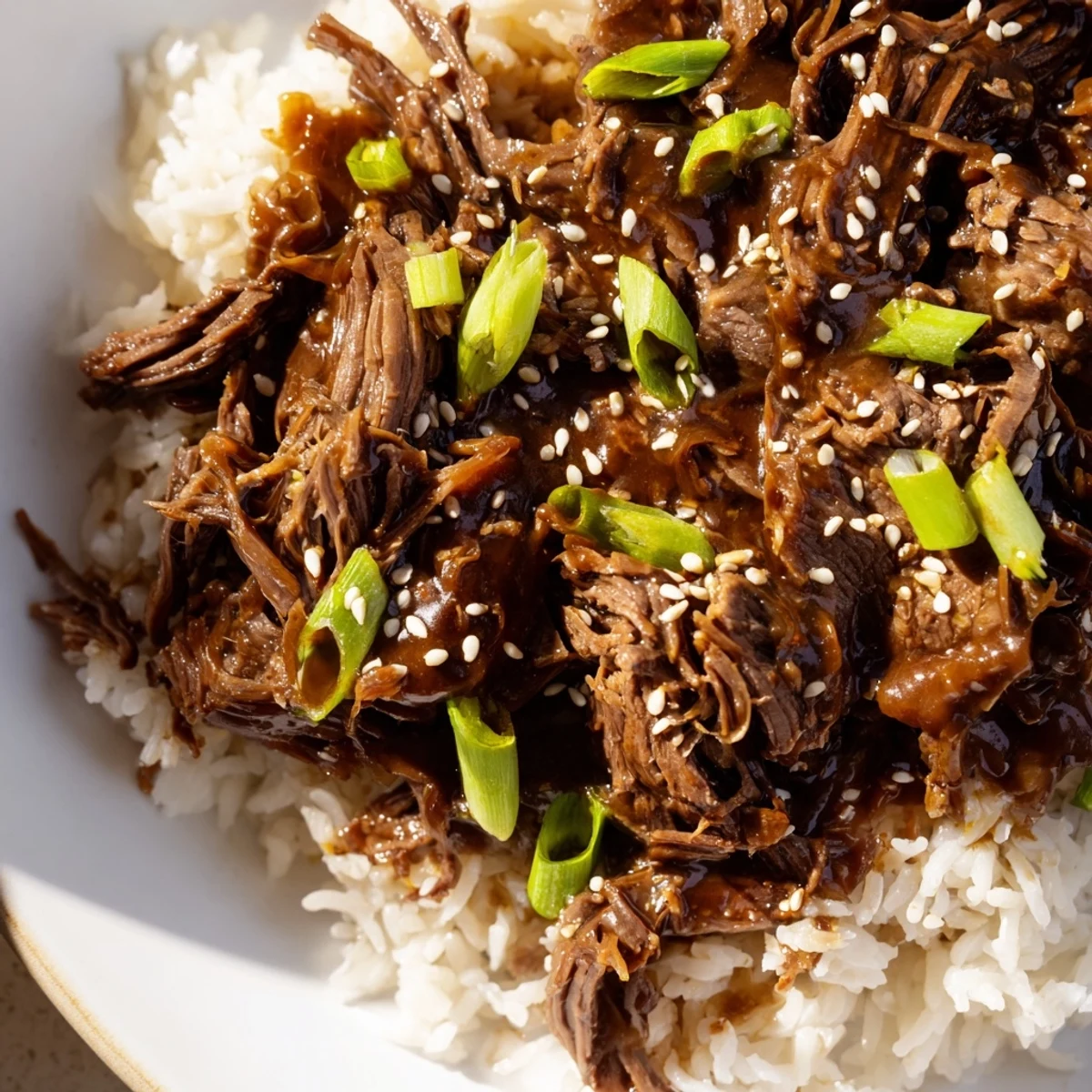
 There's nothing quite like lifting that slow cooker lid after six hours and seeing beef that practically falls apart at the touch of a fork. This is the kind of recipe that makes people think you spent all day cooking, even though you barely did anything at all.
Recipe FAQs
- → Can I use a different cut of beef?
-
Yes, you can substitute with boneless pork shoulder for a variation. The key is using a cut that becomes tender when slow-cooked for several hours.
- → What can I use instead of Asian pear?
-
Ripe Bosc pear or apple works well as substitutes for the grated pear in the sauce. The sweetness helps balance the savory flavors.
- → How do I make this gluten-free?
-
Use gluten-free soy sauce and check gochujang labels for wheat-free versions. The cornstarch thickener can be substituted with arrowroot powder if needed.
- → Can I cook this on high instead of low?
-
Yes, you can cook on high for 4-5 hours, but low heat produces the most tender results. Reduce final cooking time if sauce thickens too quickly.
- → What sides pair well with this dish?
-
Serve with jasmine or short grain rice, steamed broccoli, or sautéed vegetables. Kimchi makes an authentic addition to complete the Korean experience.