 Pin it
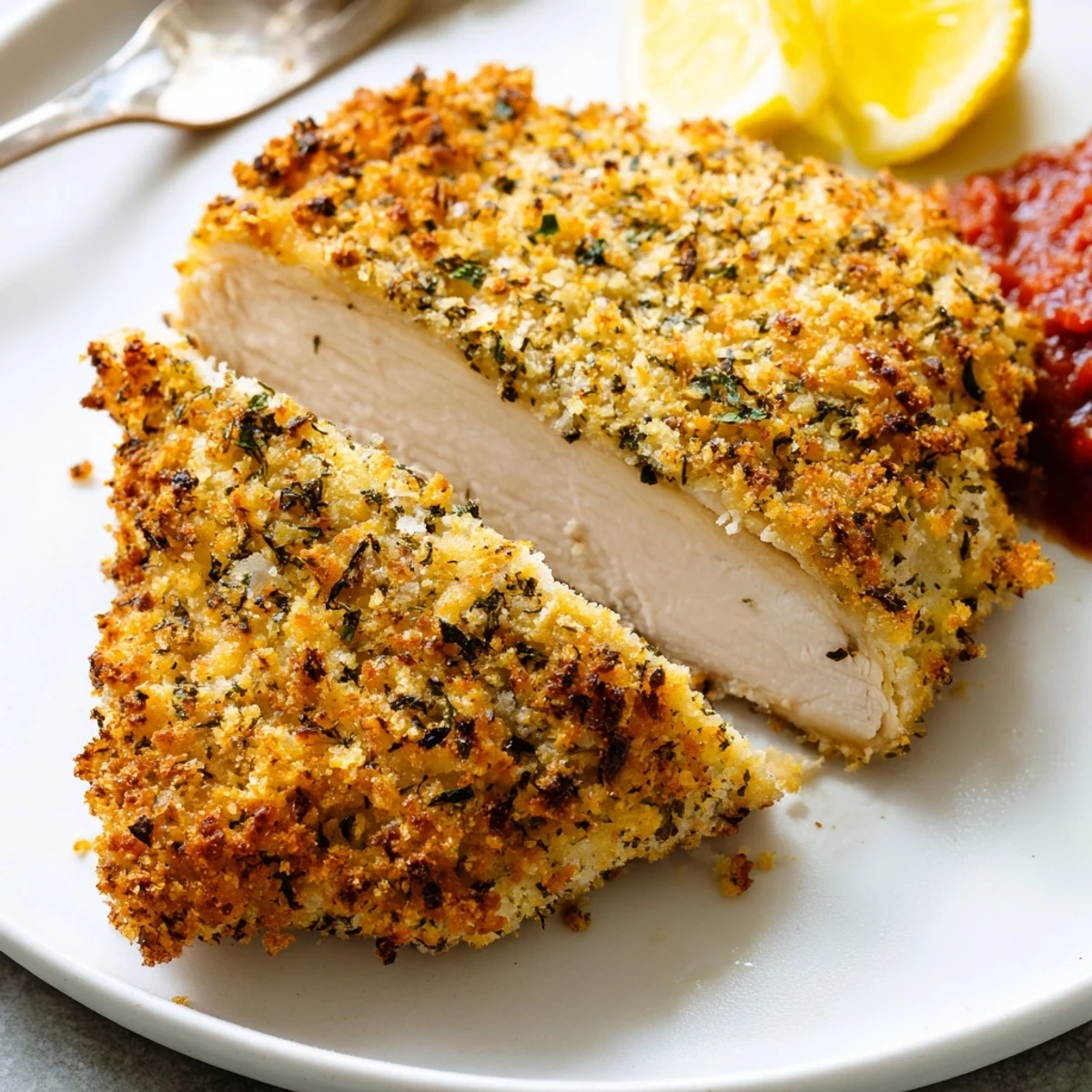
 Pound boneless chicken to an even thickness, then arrange a dredging station with flour, egg wash and a panko–Parmesan–herb mix. Coat and press the crumbs on, pan-fry in vegetable oil 2–3 minutes per side until golden, then transfer to a 200°C (400°F) oven for 12–15 minutes until 75°C internal. Rest 3 minutes before slicing; serve with lemon or marinara.
The sound of Parmesan hitting hot oil is one of those small kitchen pleasures that makes you stop and just breathe it in. I stumbled onto this method during a week when the grocery store had chicken breasts on sale and I had half a block of Parmesan going soft in the fridge. What started as a desperate clean out the fridge dinner turned into the most requested meal in my house. The double cooking trick, a quick pan fry followed by a oven finish, is the secret that separates a soggy cutlet from something truly unforgettable.
My neighbor Dave once knocked on my door asking what that incredible smell was while I was making this. I handed him a plate through the screen door and he stood there eating it on my porch in silence for about three minutes before saying anything at all.
Ingredients
- Chicken: 4 boneless, skinless chicken breasts, about 150 g each, pounded to an even thickness so they cook uniformly and stay juicy
- Panko breadcrumbs: 1 cup (60 g), the irregular shards create more surface area for crunch than regular breadcrumbs ever could
- Parmesan cheese: 3/4 cup (50 g) finely grated, use the real stuff in a block if you can because pre grated has anti caking agents that mute the flavor
- Dried Italian herbs: 1 tsp, or a blend of oregano and basil, this tiny addition gives the crust depth without overpowering the cheese
- Garlic powder: 1/2 tsp, distributed evenly through the breading so every bite has a subtle savory warmth
- Salt and pepper: 1/2 tsp salt and 1/4 tsp freshly ground black pepper, season the breading well since the chicken itself is unseasoned
- All-purpose flour: 1/2 cup (60 g), this first coat is the glue that holds everything else onto the chicken
- Eggs: 2 large eggs beaten with 1 tbsp water, the water thins the egg just enough for an even, light coating
- Vegetable oil: 1/3 cup (80 ml) for pan frying, neutral oil lets the Parmesan flavor shine without competing
Instructions
- Preheat the oven:
- Set your oven to 200 degrees C (400 degrees F) and line a baking sheet with parchment paper or a light slick of oil so nothing sticks later.
- Flatten the chicken:
- Sandwich each breast between two sheets of plastic wrap and use a meat mallet or rolling pin to gently pound them to about 1.5 cm (1/2 inch) thick, working from the center outward so they are even.
- Set up the breading station:
- Arrange three shallow bowls side by side with flour in the first, beaten eggs mixed with water in the second, and the panko, Parmesan, herbs, garlic powder, salt, and pepper all combined in the third.
- Bread the chicken:
- Dredge each piece in flour and shake off the excess, then dip it fully into the egg wash letting the extra drip away, and finally press it firmly into the panko Parmesan mixture, coating every edge.
- Get that crust golden:
- Heat the oil in a large skillet over medium high heat and fry each chicken breast for 2 to 3 minutes per side until you see a deep golden crust form, then transfer them to your prepared baking sheet.
- Finish in the oven:
- Slide the baking sheet into the oven for 12 to 15 minutes until the internal temperature hits 75 degrees C (165 degrees F), which ensures the chicken is fully cooked but still moist inside.
- Rest and serve:
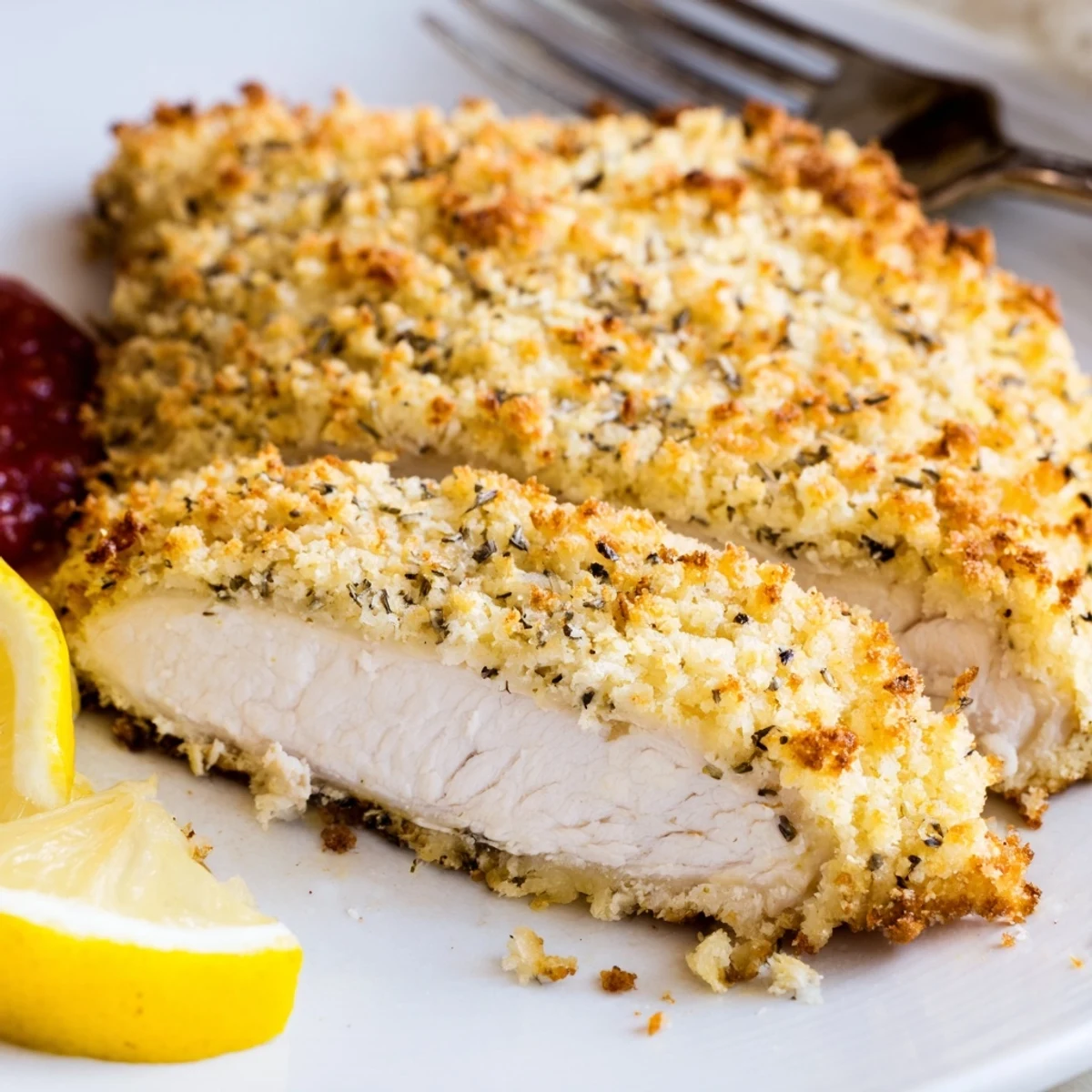
- Let the chicken rest for about 3 minutes before slicing so the juices redistribute, then serve with lemon wedges, marinara, or simply on its own.
 Pin it
 The first time I got the crust to stick perfectly without any bald patches, I actually called my mom to tell her about it. She laughed and said she still struggles with that, which made me feel like I had finally cracked some family code.
What to Serve Alongside It
A simple arugula salad with lemon vinaigrette cuts right through the richness of the cheese crust. Over the years I have tried this alongside roasted broccoli, buttered pasta, and even tucked into a sandwich with mayo and lettuce, and not one of those options was a mistake. A glass of crisp Pinot Grigio or a cold lager beside it on a Friday evening is honestly the way to go.
Making It Your Own
Once you have the basic breading method down, you can swap the herbs and spices to take it in any direction you want. A pinch of smoked paprika in the crumbs gives a subtle depth that people notice but cannot quite identify. I have also tried lemon zest and thyme when I wanted something brighter, and cayenne when I was feeling bold on a cold night.
Storage and Reheating
Leftovers keep well in the fridge for up to three days if you store them in an airtight container. The oven or an air fryer is your best friend for bringing back that crunch, while the microwave will make the crust soggy and sad. I rarely have leftovers but when I do, I slice them cold over a salad the next day and that crust still holds up surprisingly well.
- Reheat at 190 degrees C (375 degrees F) for about 8 minutes on a wire rack so air circulates underneath.
- Freeze breaded but uncooked cutlets between sheets of parchment for up to a month and fry straight from frozen.
- Always check the internal temperature reaches 75 degrees C (165 degrees F) no matter which method you use.
 Pin it
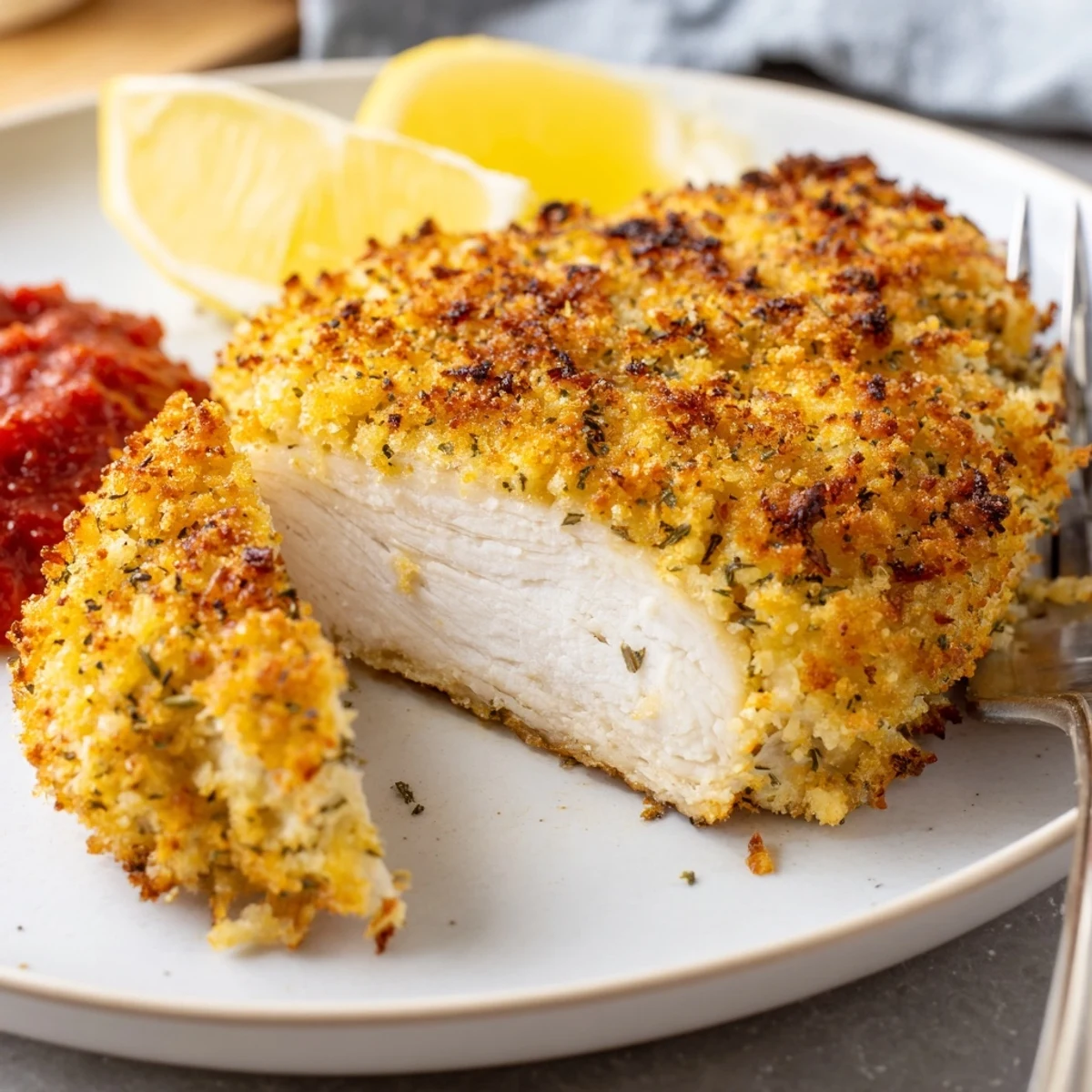
 Some recipes come and go in my kitchen but this one earned a permanent spot on the weeknight rotation. It is the kind of dish that makes people think you spent hours when really you just respected the crust.
Recipe FAQs
- → How do I ensure the crust stays crispy?
-
Press the panko-Parmesan mixture firmly onto the chicken so it adheres well, use medium-high heat to quickly brown the crust, avoid overcrowding the pan, and finish briefly in a hot oven to set the exterior.
- → Can I bake instead of pan-frying?
-
Yes — brush the coated breasts with a little oil and bake at 200°C (400°F) on a lined sheet for 20–25 minutes, turning halfway, until the crust is golden and the internal temp reaches 75°C.
- → Are chicken thighs a good substitute?
-
Boneless thighs work well and stay very juicy; adjust cooking time — pan-fry until browned, then oven-finish 15–20 minutes depending on thickness, ensuring 75°C internal temperature.
- → How can I adapt this for gluten-free needs?
-
Swap panko and all-purpose flour for certified gluten-free breadcrumbs and flour or rice flour. Press the coating thoroughly and follow the same pan-fry and oven-finish steps.
- → What oil and temperature are best for frying?
-
Use a neutral oil with a high smoke point, like vegetable or canola. Heat the skillet to medium-high so the oil shimmers; pan-fry 2–3 minutes per side to develop an even golden crust before oven finishing.
- → How should leftovers be stored and reheated?
-
Cool completely, refrigerate in an airtight container up to 3 days. Reheat in a preheated 180°C oven on a wire rack for 8–10 minutes to restore crispness; avoid microwaving if you want to keep the crust crunchy.