 Pin it
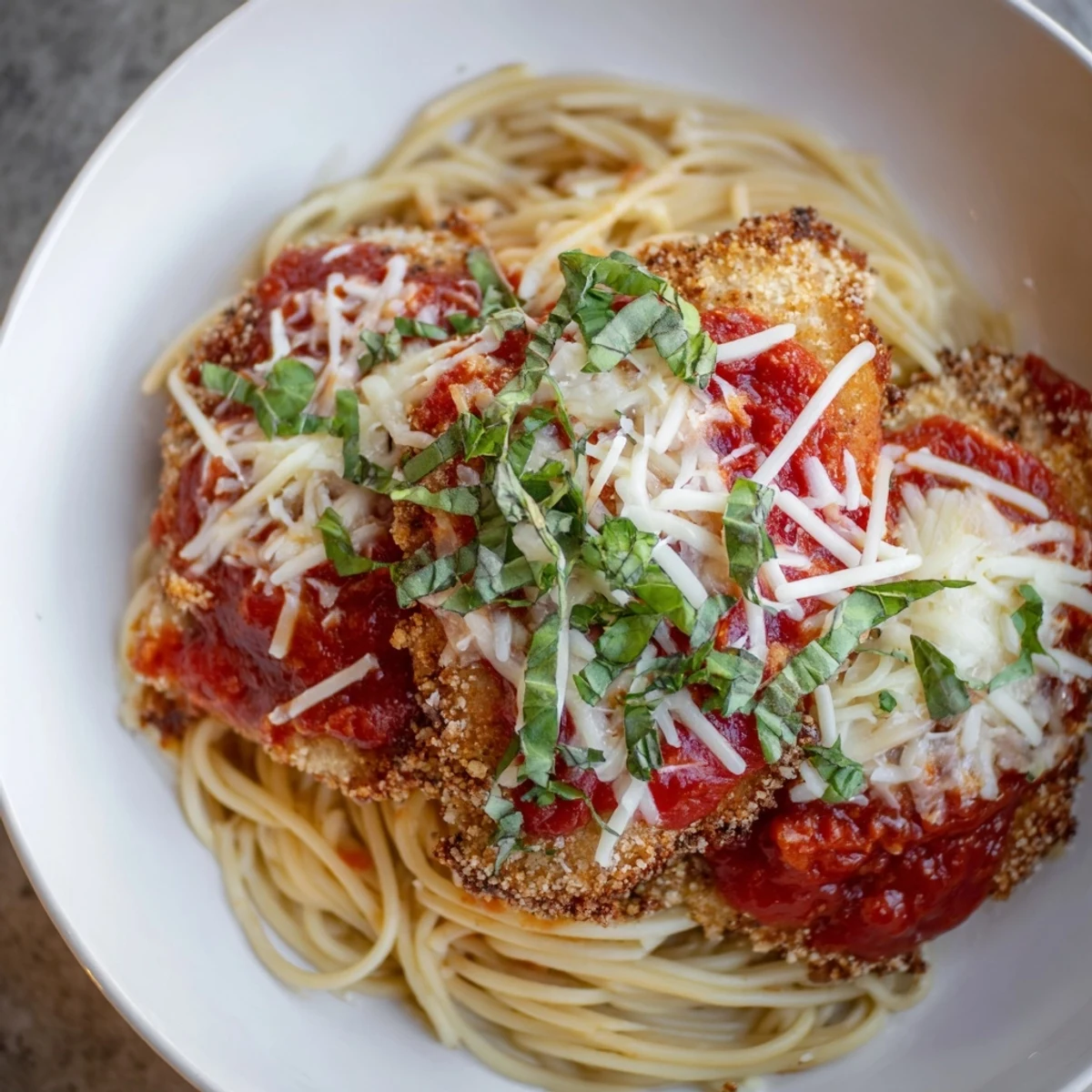
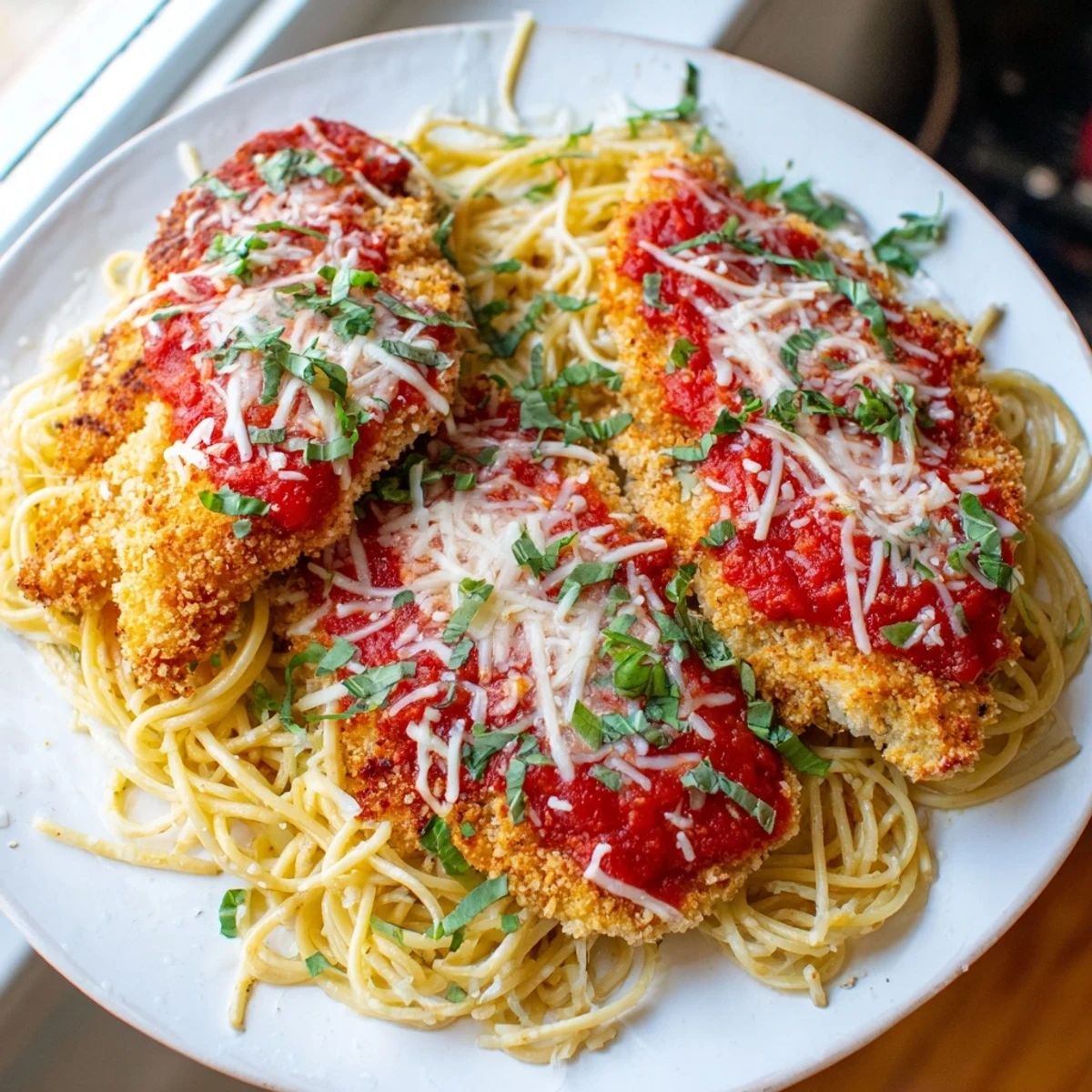
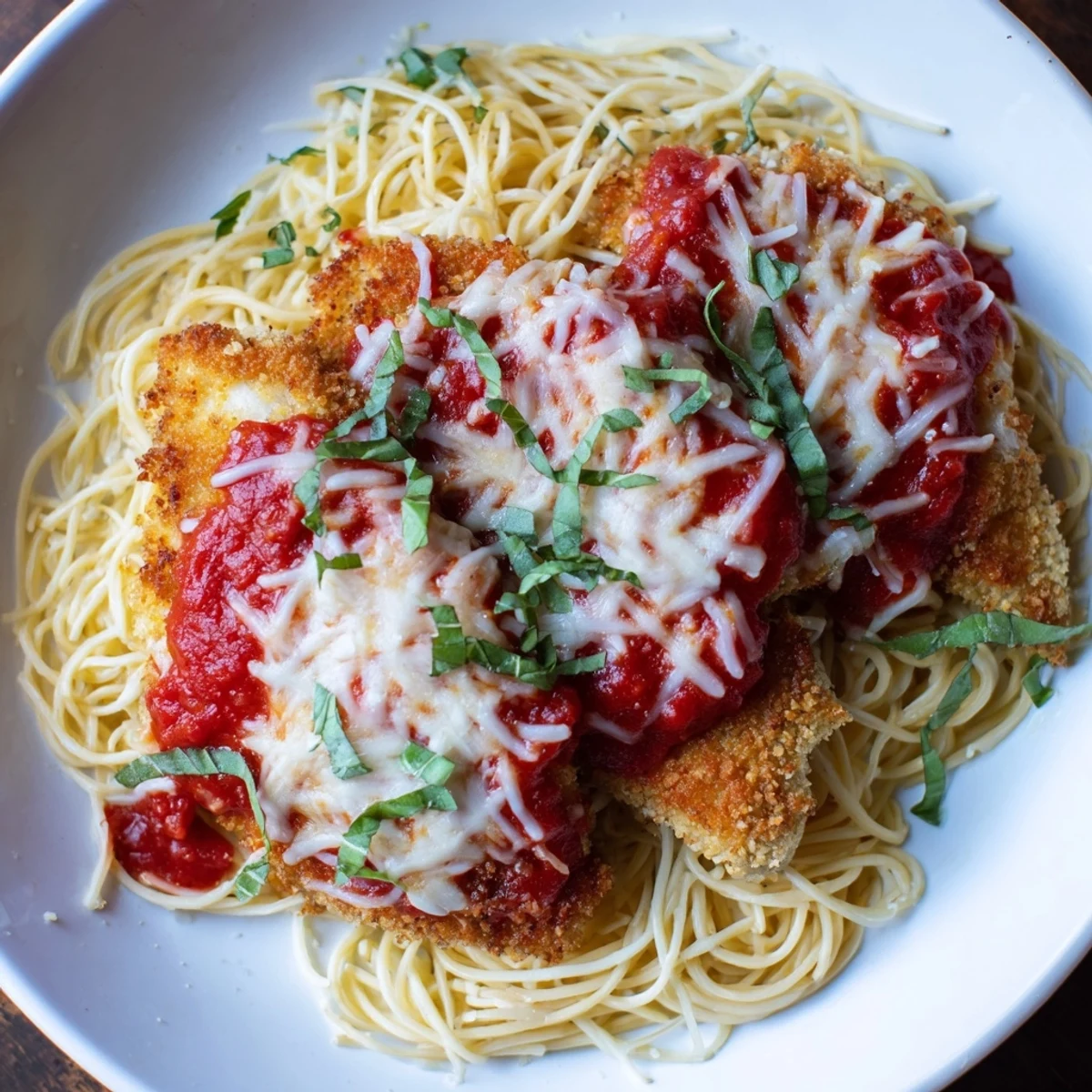
 This dish features tender chicken breasts coated in a seasoned breadcrumb mixture, fried until golden and crisp. Topped with rich marinara sauce and melted mozzarella and Parmesan cheeses, it's baked to bubbly perfection. Served over a bed of perfectly cooked spaghetti, this Italian-American classic offers a comforting blend of textures and bold flavors. Fresh basil adds an optional aromatic touch to finish the dish.
The first time I made chicken Parmesan, I was trying to impress someone who kept ordering it everywhere we went. I stood in my small kitchen on a Tuesday evening, chicken breasts slapping against the cutting board as I pounded them thinner, and something just clicked—the smell of garlic and tomato sauce simmering, that satisfying crunch when the breaded cutlet hit the hot oil. Now it's the dish I make when I want to feel like I'm cooking something both impressive and deeply comforting.
I remember my neighbor asking what smelled so incredible one evening, and I ended up making two extra portions just to share. Watching her face light up when she bit into it made me realize this dish has a way of making people feel cared for, like you've given them something more than dinner.
Ingredients
- Chicken breasts (boneless, skinless): Four pieces give you four generous servings, and pounding them to half-inch thickness is the secret to them cooking evenly while staying juicy inside.
- All-purpose flour: The base of your breading station—it helps the egg stick, and honestly, a little extra is never a problem.
- Eggs and milk: Two eggs whisked with two tablespoons of milk create the glue that holds everything together, and it's more forgiving than using eggs alone.
- Italian-style breadcrumbs: One and a half cups mixed with half a cup of Parmesan cheese gives you that savory, crispy coating that's the whole point.
- Olive oil: Half a cup gets you started, but keep more nearby—you'll want enough to maintain a good fry without crowding the pan.
- Marinara sauce: Two cups of your favorite bottled or homemade sauce, and yes, the quality matters here because it's the flavor backbone of the whole dish.
- Mozzarella and Parmesan cheeses: Use one and a half cups of shredded mozzarella for that melty blanket and a quarter cup of Parmesan for depth—fresh grated tastes noticeably better.
- Spaghetti: Twelve ounces cooked to al dente, which means it should have just a tiny bit of resistance when you bite it.
- Fresh basil: Two tablespoons chopped at the end is optional, but it adds a brightness that makes people say 'wow, what's that flavor?'
Instructions
- Set up your workspace:
- Preheat your oven to 400°F and line a baking sheet with parchment paper. Having everything ready before you start means you won't be scrambling or running back and forth—trust me, this matters when you're working with hot oil.
- Pound the chicken:
- Lay each chicken breast between two sheets of plastic wrap and use a meat mallet to pound it to about half-inch thickness. You'll hear it go from thwacking hard to a soft sound when it's done—that's your cue to stop.
- Season generously:
- Salt and pepper both sides of the pounded chicken, being a little more generous than you think you should be. The coating will dilute some of it, so don't hold back.
- Build your breading station:
- Arrange three shallow bowls in a line: flour in the first, whisked eggs and milk in the second, and breadcrumbs mixed with Parmesan in the third. This assembly-line approach keeps things neat and your hands relatively clean.
- Bread each piece:
- Dredge a chicken breast in flour, tap off the excess, dip it in the egg mixture, then coat it thoroughly in the breadcrumb mixture. Press the crumbs on gently so they stick, and set it aside on a clean plate.
- Fry until golden:
- Heat olive oil in a large skillet over medium-high heat until it shimmers slightly. Fry the chicken in batches for three to four minutes per side until deeply golden and crispy—don't crowd the pan or the temperature will drop and you'll get soggy chicken instead of crunchy.
- Cook the pasta:
- While the chicken is frying, get your spaghetti going according to package instructions and drain it when it's al dente. The pasta will finish cooking slightly in the oven's heat, so don't overcook it now.
- Assemble for the oven:
- Place the fried chicken on the prepared baking sheet, spoon marinara sauce over each piece generously, then top with mozzarella and extra Parmesan. It should look a little messy and loaded—that's exactly right.
- Final bake:
- Bake for about fifteen minutes until the cheese is melted and bubbly and the internal temperature of the chicken hits 165°F. Watch for the cheese to start getting little browned spots on top—that's when it's perfect.
 Pin it
 There's something about the moment when you pull this dish from the oven—the cheese is bubbling at the edges, basil is scattered on top, and you know everyone at your table is going to be genuinely happy. That's when you realize it's not really about the technique or the ingredients; it's about the comfort of something done right.
The Breading Technique Matters
I used to skip the pounding step or do it halfheartedly, and the chicken would come out tough and uneven. Once I committed to actually flattening it properly, everything changed—the chicken stays juicy, the coating adheres better, and the whole thing just tastes more professional. The three-bowl breading station looks fussy, but it genuinely works; each step has a purpose, and your hands stay relatively clean if you use one hand for dry ingredients and one for wet.
Oil Temperature and Frying Strategy
Getting the oil temperature right is everything, and I learned this the hard way by burning countless batches. Too cold and the breading soaks up oil instead of crisping; too hot and the outside burns before the inside cooks. Medium-high heat with a quick sizzle when you add the chicken is your guide—if it doesn't immediately sizzle, wait another minute. Frying in batches instead of crowding the pan keeps the oil temperature stable, which means every piece comes out golden instead of pale and greasy.
Beyond the Basics
This dish is forgiving and rewarding once you nail the fundamentals, but there's always room to make it your own. Some nights I add a pinch of red pepper flakes to the breadcrumb mixture, other times I nestle fresh mozzarella balls under the shredded cheese so you get pockets of creaminess. The sauce is flexible too—use a homemade marinara if you have time, or lean into a good quality jarred sauce and nobody will know the difference.
- If you want to lighten it up, bake the breaded chicken at 400°F for about twenty minutes instead of frying it.
- Fresh basil sprinkled on top after baking makes a huge difference, so don't skip it if you can help it.
- A simple green salad dressed with lemon and olive oil cuts through the richness and makes the meal feel complete.
 Pin it
 This is the kind of dish that feels like a small victory every time you make it—impressive enough to serve to people you want to impress, simple enough that you can make it on a regular Tuesday. That's when you know a recipe has really earned its place in your kitchen.
Recipe FAQs
- → How do I ensure the chicken is crispy?
-
Dredging the chicken in flour, egg wash, and Italian-style breadcrumbs with Parmesan before frying creates a golden, crispy crust.
- → Can I bake the chicken instead of frying?
-
Yes, baking the breaded chicken is a lighter alternative that still yields a tender and flavorful result.
- → What type of pasta pairs best?
-
Spaghetti complements the sauced chicken perfectly, soaking up the marinara and cheese flavors.
- → How do I prevent the breading from falling off?
-
Ensure each chicken piece is evenly coated and pressed gently into the breadcrumb mixture before frying.
- → Can I add fresh herbs to the dish?
-
Chopped fresh basil sprinkled on top before serving brightens the flavors wonderfully.